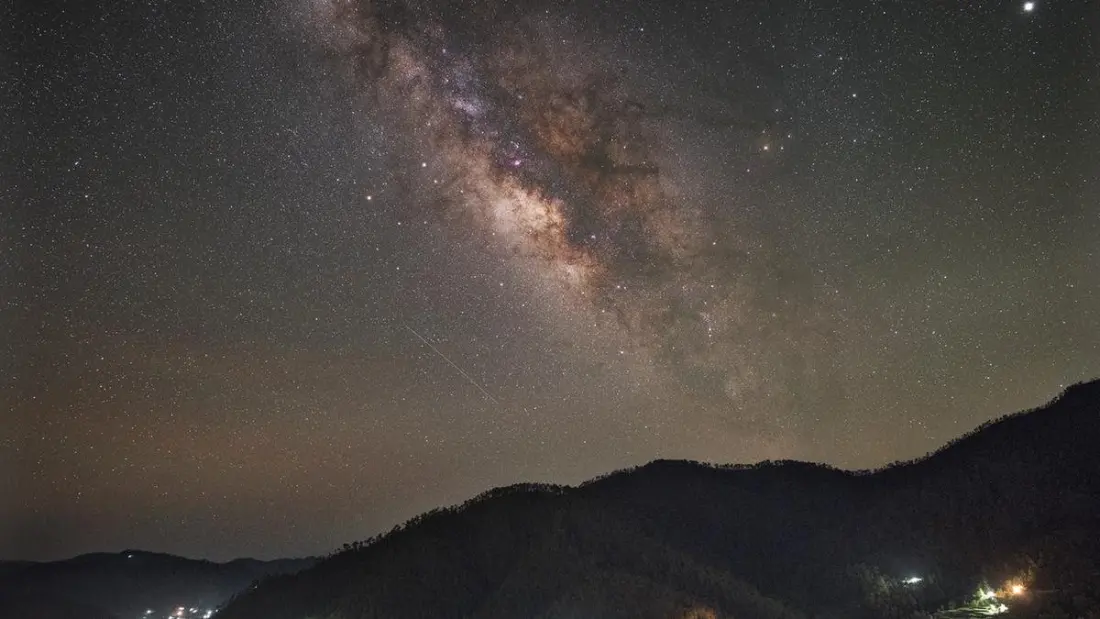
India's night skies are turning into a proper holiday activity. Astrotourism — travelling to dark-sky spots to watch meteor showers, photograph galaxies or simply sleep under the stars — is spreading from Rajasthan's salt flats to tiger country in Madhya Pradesh, and the range of experiences now covers nearly every budget.
The Geminids meteor shower, which peaks in mid-December and can produce up to 120 meteors an hour in ideal conditions, is a good entry point. Jaipur Experiences runs overnight Geminids outings at Sambhar lake, about 90 minutes from Jaipur, priced at ₹3,600 per person for the December 12–15 window. Its founder counted 168 meteors in a single night there — and guests have photographed the Milky Way, the Andromeda galaxy and nebulae with the naked-eye-friendly dark skies.
Government backing is helping too. Starscapes, a Delhi-based astrotourism company, has signed a five-year MoU with Gujarat Tourism to develop dark-sky destinations in North Gujarat, plus a deal with Nagaland to build astronomy tourism statewide — including stargazing at the Hornbill Festival in Kisama, where it has been allotted space in the heritage village for a telescope-building experience centre and a dark-sky conservation walkway woven with Naga tribal stories.
Luxury and wilderness properties are baking stars into the stay itself. At Lchang Nang Retreat in Nubra Valley, Ladakh, guided stargazing is free for guests, with private dune sessions and barbecues at about ₹10,000, paired with Silk Route navigation lore from a traditional local astrologer. Jamtara Wilderness Camp in Pench lets guests sleep on outdoor 'Star Beds' inspired by farmers' watch platforms, with a naturalist pointing out constellations, nightjars and owls — an extra ₹9,750. The Doksa in Spiti Valley, at roughly 12,000 feet, dims its lights after dinner and reports over 80% of guests joining its complimentary telescope sessions.
For something different, Constance Bay in South Andaman runs a two-hour Celestial Tides experience (₹2,500) using a 10-inch Dobsonian and smart telescopes — the islands have Bortle Class 1 dark-sky potential and a dedicated Astro Tourism Policy. Near Lonavala, D.A.T.A. Resort folds celestial navigation into a military-style survival night led by ex-Army instructors (₹3,500 plus taxes), teaching you to find Polaris via Ursa Major. And if you'd rather not pay commercial rates, volunteer clubs like the Chennai Astronomy Club (700-plus members since 2013) run monthly star parties two to three hours outside the city, costs split equally.
Why it matters: stargazing pairs naturally with trips you may already be planning — a Ladakh or Spiti holiday, a Pench safari, an Andaman beach break — and often costs nothing extra. The Geminids each December are the ideal first date with the night sky.