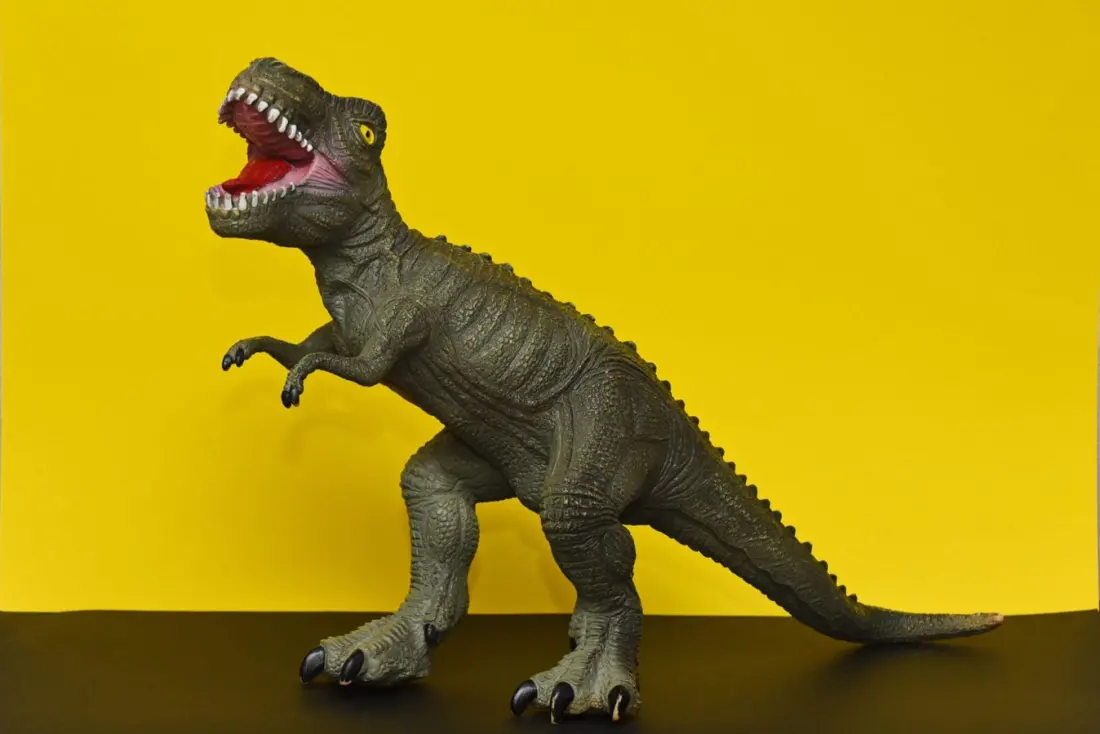
The Tyrannosaurus rex has been puzzling people since long before the movies got hold of it. The first fossil ever recovered was a single tooth, dug up in 1874, and it took until 1992 for palaeontologists to pull together a relatively complete skeleton with about 70 per cent of its bones. What they pieced together was a giant: an adult roughly 12 to 13 metres long, standing 3 to 4 metres at the hip, with a skull up to 1.5 metres long. And then there are those arms — shorter than the animal's own head, just 60 to 70 centimetres from shoulder to wrist, about the same length as yours. Imagine your arms ending shorter than your face and you get the idea.
So why did one of history's largest land predators carry around what looks like a pair of afterthoughts? A recent study in Proceedings of the Royal Society B tackled the question by comparing T. rex's family, Tyrannosauridae, with four other groups of two-legged theropod dinosaurs. The researchers measured the ratio of skull length to forearm length and assessed how robust each skull was. A pattern emerged: as the arms shrank, the skulls grew bigger and heavier. Their conclusion is neatly pragmatic — once a predator evolved jaws powerful enough and a skull sturdy enough to do the killing on their own, arm length simply stopped mattering. Evolution didn't bother keeping equipment it no longer needed.
But that's probably not the whole story. Even the puniest theropod arms came with seriously strong shoulder muscles and joints, which raises an obvious question: why build that hardware for limbs that supposedly did nothing?
One answer lies in the nose. T. rex had exceptionally large olfactory nerves and bulbs, suggesting an extraordinarily keen sense of smell. That has led some scientists to argue the animal may have worked partly as a scavenger — tracking down carcasses by scent, then using those short, powerful arms to help pin down or process already-dead meat. A different kind of grip for a different kind of dinner.
And if you'd rather have a laugh than a lecture, there's always the theory doing the rounds that T. rex was simply furious about never being able to hug anyone, and took it out on the rest of the Cretaceous. The science doesn't rule it out, strictly speaking.
Why does any of this matter if you're not a palaeontologist? Because these are the stories that make natural history museums worth planning a trip around. Stand under a mounted T. rex skeleton and those comically small arms suddenly make sense in context — a head the size of a bathtub, twelve metres of muscle, and two little limbs that have been dividing scientific opinion for 150 years. Whether you're dragging kids through a dinosaur hall or just indulging your own inner eight-year-old, the ongoing debate over what those arms were for is exactly the kind of detail that turns a museum visit from a wet-afternoon filler into something you actually remember. Science is still arguing about it, and you can watch it happen.
Read the original at Australian Geographic.