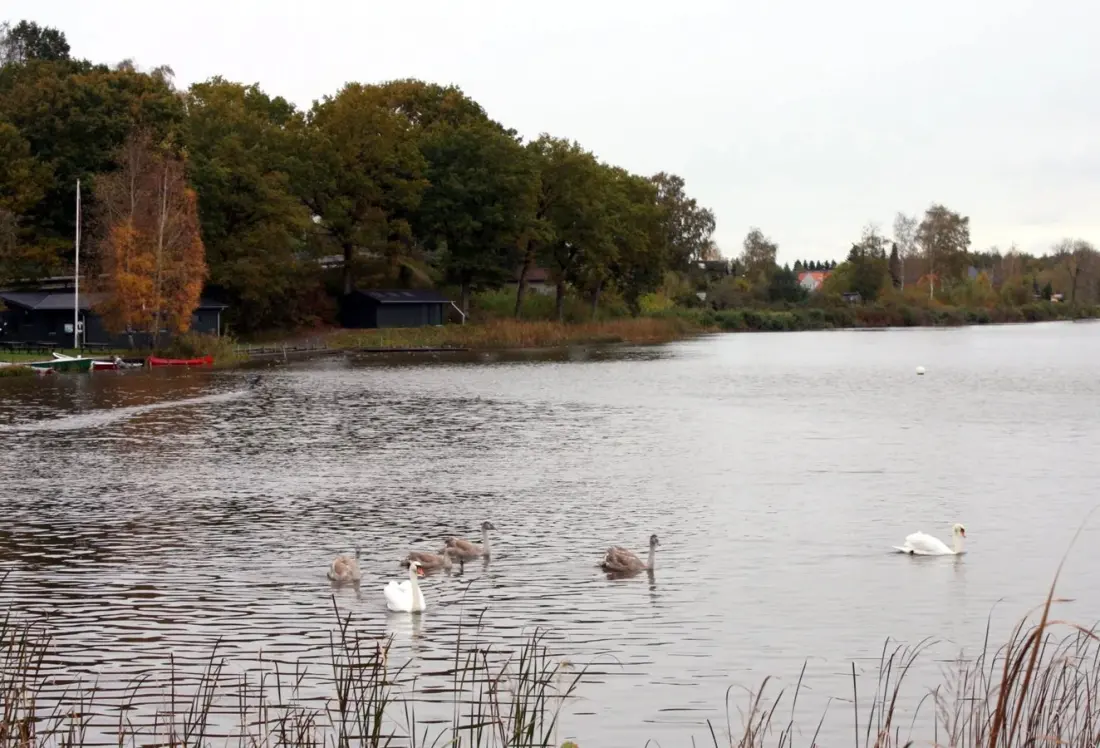
A century-old dam turned a stretch of the Gudenå River into Denmark's largest man-made lake, and it has quietly become one of Jutland's best low-key outdoor destinations. Tange Sø, formed in 1920 to feed a hydroelectric power station, sits between the small towns of Ans and Bjerringbro, within easy reach of Viborg and Silkeborg.
Fishing is the headline draw. The lake holds pike, perch, zander, roach, brown trout and eel, and anglers chasing pike are pointed towards headlands and reed-fringed shores. You will need the appropriate Danish fishing licence, plus possible extra permits depending on where and how you fish. Local rules matter too: there are size limits, closed areas during breeding seasons and designated zones to respect. If you want to cook your catch, campsites and self-catering stays around the lake make that easy.
Not an angler? The shoreline trails thread through woodland, pasture and small villages, with plenty of picnic-worthy spots along the way. In summer there are designated swimming areas, including Tange Sø Marina at Ans.
The lake's industrial origins are part of the appeal. From May to September a solar-powered boat runs seasonal trips across the water, passing the historic Tange hydroelectric power station. Next door, the Energimuseet (Energy Museum) offers a hands-on look at electricity generation — a surprisingly good fit for a rainy afternoon or a family itinerary.
What makes Tange Sø worth a detour is the pace. This is rural Denmark at its calmest: forested banks, still water and villages where nothing much happens fast. If your Denmark plans start and end with Copenhagen, this is a completely different country within a couple of hours' travel — lake country best explored on foot, by bike or from a boat.
Base yourself in Viborg or Silkeborg for hotels and restaurants, or go rural with a lakeside campsite if you want the water on your doorstep. Spring and autumn suit hikers and anglers; summer adds swimming and the solar boat to the mix.