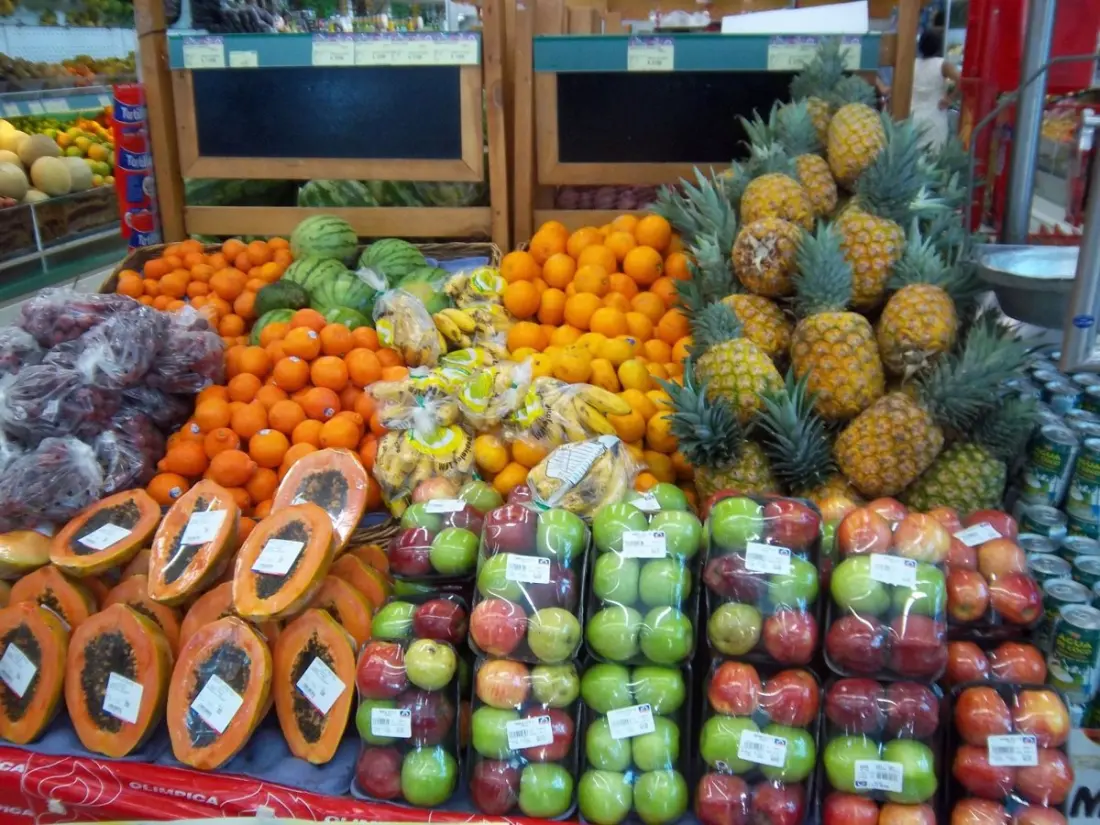
Colombia's fruit bowl runs far deeper than bananas and mangoes. Thanks to the country's spread of ecosystems — Andean valleys, Caribbean coast, Pacific rainforest, Amazon jungle — travellers can taste fruits here that barely exist outside the continent, and many of them never make it onto a hotel breakfast buffet.
Start with the crowd-pleasers. Soursop (guanabana) is a big, spiky green fruit with creamy white pulp that hits a sweet-tart note; it's everywhere in juices, smoothies and ice cream. Lulo, a small orange fruit with tart green flesh, is the backbone of Colombian juice culture — try it blended with milk. Both are easy to find in supermarkets and markets nationwide.
Then there are the regional specialists. On the Caribbean coast, sapote offers brown skin and caramel-sweet orange flesh (Cartagena, Barranquilla and Santa Marta are your best bets), while corozo — tiny, dark purple and sharply tart — turns up in juices, jams and traditional fermented drinks. Chontaduro, the peach palm fruit, is a Cali street-food staple, sold cooked and skewered with salt, honey or lime.
Further afield, things get more interesting. Cholupa, a passion fruit cousin, grows mainly in Huila. Borojo, from the humid Pacific, produces dense, dark pulp usually sold as a thick smoothie base. The Amazon yields cupuaçu (white cacao — think chocolate crossed with pineapple) and the rarer maraco and almirajo, which you'll need local markets or specialty shops to track down.
The practical reality: Colombia has no four seasons, so availability depends on rainfall, altitude and each region's harvest calendar. A fruit that's abundant in one department may be absent in another the same month. Frozen pulp is a good fallback — most of these flavours survive the freezing process just fine.
Your best hunting grounds are the big city markets. Paloquemao in Bogotá and Plaza Minorista in Medellín stock produce from across the country, while Cartagena's traditional stalls are the place for Caribbean fruits like corozo, sapote and mamoncillo. For Amazonian and Pacific varieties, ask at local-product shops and regional markets rather than expecting supermarket shelves to cooperate.
Why bother? Eating your way through these fruits is honestly one of the most enjoyable ways to understand Colombia's regional differences — a juice you can only get in Cali tells you as much about the place as any museum. It's also cheap, safe and endlessly delicious: just peel, scoop, blend or ask a vendor to make it into a batido. Anyone spending more than a few days in the country, especially in Cartagena, Medellín or Bogotá, should build at least one market visit into the itinerary.