Britain does eerie extremely well, and a Guardian Travel round-up has gathered ten of its most atmospheric oddities just in time for Halloween. The list spans the whole country, from derelict follies to drowned churches, and most of them cost nothing to see.
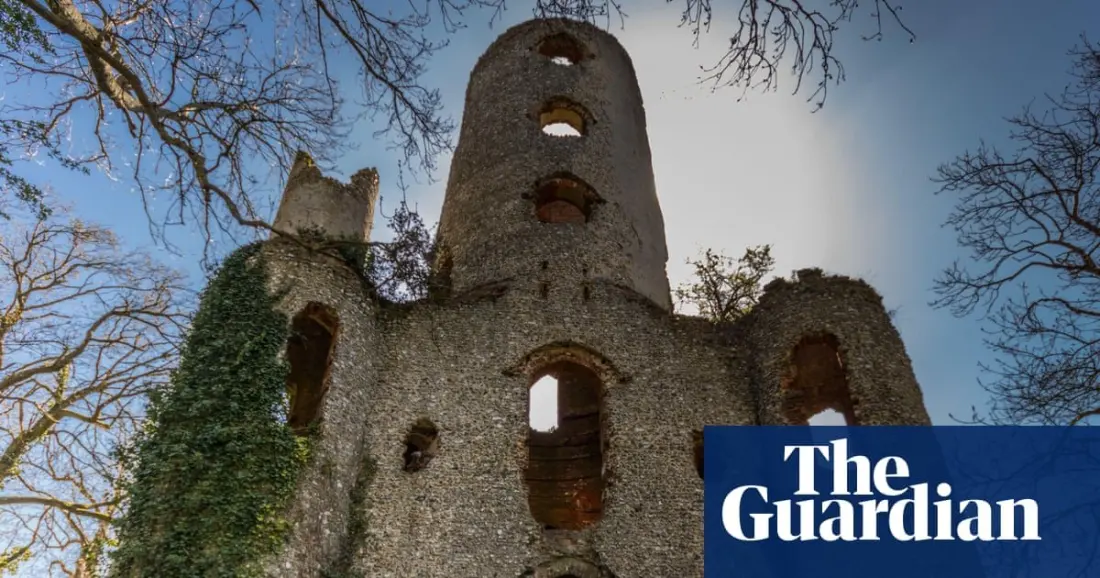
In West Sussex, Racton Monument near Chichester is a 24-metre redbrick and flint folly, roofless and gutted, commissioned by the second Earl of Halifax for reasons nobody can quite pin down. Locals report a ghostly woman and sudden manic laughter on the site. It sits on private land and is unsafe to enter, but footpaths give a good view.
Wales offers the giant bell-mouth spillway at Pontsticill reservoir in the Bannau Brycheiniog national park, a vast stone plughole that looks like something from science fiction. When droughts drop water levels, remains of the drowned village below, including a 15th-century church, resurface. Richard Ayoade filmed scenes of his 2010 film Submarine there.
In north Kent, the Chetney Marshes come with place names like Deadman's Island and Bedlam's Bottom, plus a scatter of decaying hulks that may be old Thames barges or, more tantalisingly, Victorian prisoner ships. Essex's contribution is Kelvedon Hatch, a Cold War bunker disguised as a bungalow, with three storeys underground built to house up to 600 people, including the prime minister, and now one of the world's largest Cold War museums.
Further north, the Singing Ringing Tree on the Lancashire moors above Burnley is a three-metre sculpture of tuned steel pipes that moans discordantly in the wind. In the Lake District's Tilberthwaite valley, the abandoned Hodge Close slate quarry resembles a skull in the right light — Witcher fans may recognise it. London's Crossbones graveyard near the Shard, a paupers' burial ground for an estimated 15,000 people, is now a garden of remembrance open for guided walks.
Rounding out the ten: the Cateran Hole, a 35-metre smugglers' cave hidden on Bewick Moor in Northumberland with no lighting or safety rails; Matt Baker's Quorum carved stone faces staring from a drystone wall in Dumfries and Galloway; and Normanton Church, which appears to float on the mist over Rutland Water most cold mornings.
What makes this list genuinely useful is that nearly all of these are free, outdoorsy and work as short detours on a walking trip — ideal for an autumn weekend when you want somewhere moody without queueing. Bring proper footwear for the marshes and moors, check opening times for the bunker and Crossbones, and keep a torch handy for that Northumberland cave.