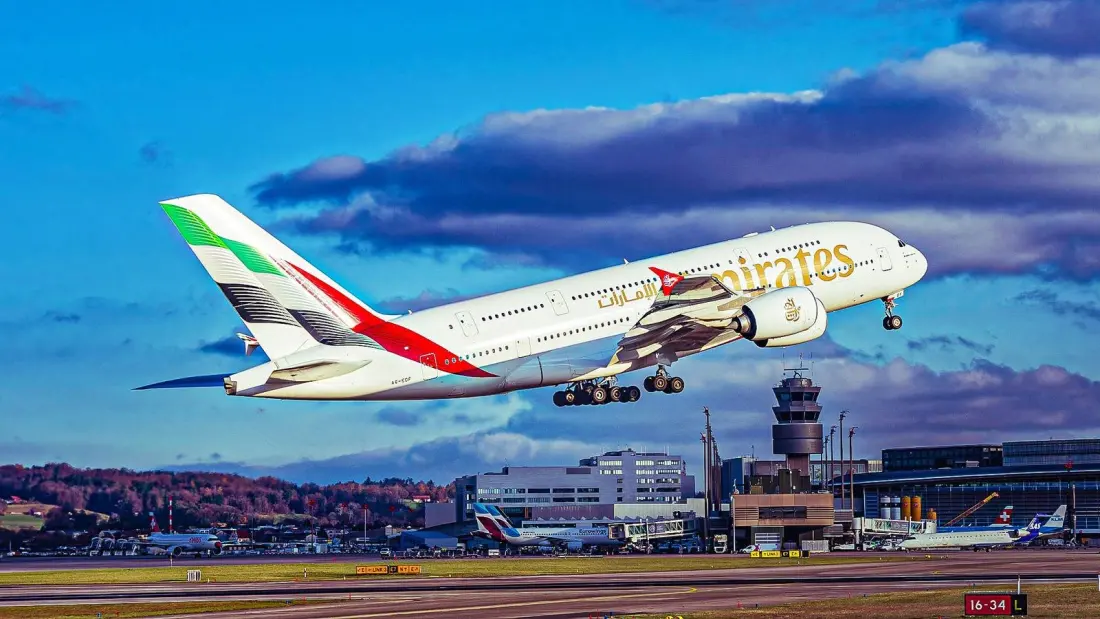
The world's largest passenger jet can cruise for roughly 14.5 to 16 hours without stopping for fuel, according to an analysis of Airbus data and real airline operations. That's enough to link Dubai with Los Angeles or Sydney nonstop while carrying more than 500 people — a combination no other commercial aircraft can match.
The headline numbers come straight from the spec sheet: a maximum range of about 8,200 nautical miles (15,200 km) on a normal load, extendable past 8,800 nautical miles on a ferry flight with maximum fuel. The A380 holds around 85,500 gallons (320,000 litres) spread across its wing and trim tanks, and at a typical cruise speed of Mach 0.85 it covers roughly 480–510 knots true airspeed. Do the maths and you land at that 14.5–16 hour window.
Real-world operations back it up. Emirates, by far the biggest A380 operator, routinely runs 13–15.5 hour sectors to Los Angeles, San Francisco and Sydney. Singapore Airlines validated the endurance claims early on with its Singapore–London services after launching the type into service. Crucially, airlines never plan to the absolute limit — regulations require fuel for alternates, contingencies and holding, so even a 15-hour flight lands with legally mandated reserves in the tanks.
Endurance isn't fixed, though. Payload matters: a full 500-plus passenger load burns more fuel than a light one, and high-density configurations like Emirates' shave a little off maximum range. Weather is another factor — strong headwinds on westbound routes can stretch flight times while shrinking effective range. And economics play a role too: just because the jet can fly 16 hours doesn't mean it's profitable to do so, which is partly why many carriers now prefer smaller, more efficient twin-engine types.
How does it stack up against rivals? The Boeing 747-8i comes closest, with a slightly shorter range of about 8,000 nautical miles and 470 seats. Newer twins can actually fly longer — the A350-900ULR regularly exceeds 18 hours — but with far fewer passengers aboard. The A380's trick is doing 14–16 hours with a full widebody's worth of people, plus cargo and onboard extras like bars and showers.
For travellers, this is why the A380 remains a genuinely comfortable choice for ultra-long-haul trips. The extra space means wider seats, quieter cabins and room to move around on a flight that can eat most of your day. Emirates still deploys it on some of the longest routes in its network, so if you're booking Dubai to Australia or the US West Coast, checking whether an A380 operates your flight is worth a few seconds — production ended in 2021, and the fleet is gradually shrinking, making these flights a diminishing experience.
Full analysis at Simple Flying.