Trail-weary feet and achy backs usually get treated with a stretch, an ibuprofen, and hope. A growing number of hikers are borrowing something better from an unlikely source: the dance studio. Gyrotonic and Gyrokinesis, two movement systems originally developed to help dancers rehab injuries, are finding a second life as post-hike recovery routines — and they work surprisingly well in a campsite.
Gyrotonic uses specialised equipment that looks a bit like Pilates apparatus, but its principles come from qigong and tai chi: slow, circular, spiralling movements that take joints through their full range while pairing motion with focused breathing. Gyrokinesis strips away the machines entirely. Everything happens on a stool or mat, which is exactly what makes it practical for hikers — a log or a rock will do.
Certified instructor Leslie Hubbard, who owns Hidden Root Studio in Maple Falls, Washington, describes the method as circular and three-dimensional, treating the body as one connected system rather than isolated muscle groups. Movements start small and safe, building strength from the core outward — useful for anyone hauling a loaded pack over uneven ground. The aim is to boost circulation and help the body repair itself, easing stiffness and rehabbing old niggles along the way.
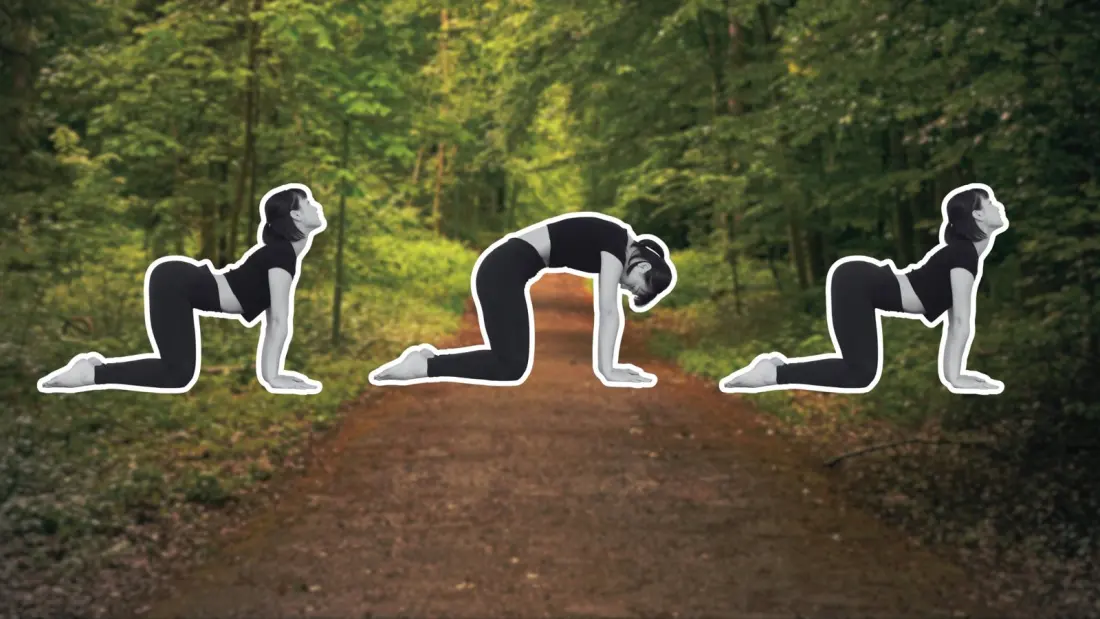
The beauty for hikers is that the key sequences need no gear. A spine mobilisation done seated — arching, curling, then spiralling the trunk side to side, all driven from the pelvis rather than the neck — undoes the compression of a day under a pack. Think seated cat-cow, with side leans and a wave-like curl-and-arch thrown in.
For feet, the routine is more hands-on. Shoes and socks off, one ankle across the opposite knee: thumb-massage the sole from heel to toes, stretch each toe individually, then thread your fingers between your toes and draw the foot and ankle in circles in both directions. Finish by lightly slapping the sole to bring blood to the tissue and shaking the ankle out. Hubbard's promise: put that foot down next to the untouched one and you'll instantly feel the difference.
Ankle and arch work rounds it out — kneel with the tops of your toes on the floor to stretch the front of the ankle, roll outward from big toe to little, then practise lifting, spreading and gripping with your toes to wake up the arches. Standing ankle circles with hands braced on a log finish the job.
The golden rule throughout is to work within a comfortable range. Hubbard stresses these aren't cookie-cutter sequences — a tiny, satisfying motion beats forcing a joint somewhere it doesn't want to go, especially after a long day on trail. Stop if anything hurts.
Why should a traveller care? Because recovery is the difference between a great multi-day trek and a miserable one. These moves take ten minutes, need nothing but a place to sit, and target exactly the bits hiking punishes — feet, ankles, and the low back. Whether you're doing a hut-to-hut in the Alps or a week in the backcountry, it's worth learning before your next trip.