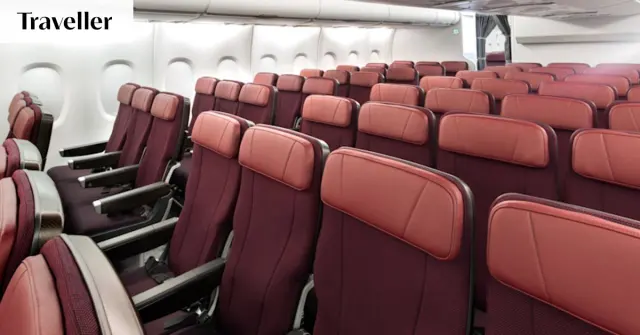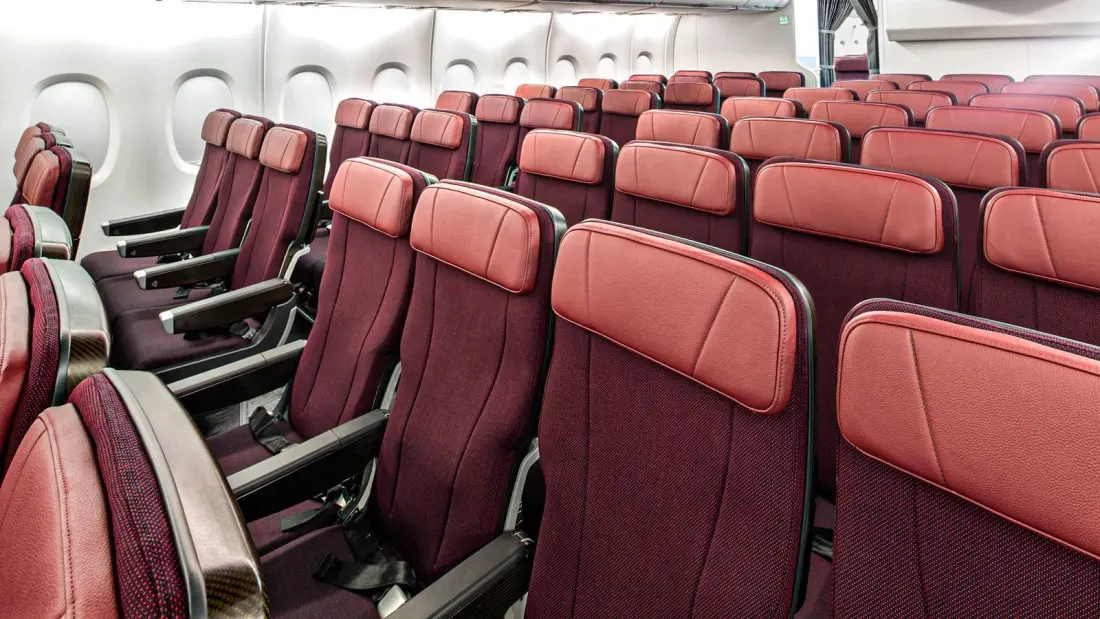
If you book row 70 in economy on a Qantas Airbus A380, you might notice something odd on the seat map: 70D simply isn't there. It's not a booking glitch. The gap in the floor hides a spring-loaded emergency escape hatch leading straight down into a hidden crew dormitory buried in the forward section of the aft cargo hold.
The A380's double-deck design means there's no spare ceiling space for crew bunks like on a normal widebody, so Qantas installed a 12-berth rest module below the economy floor instead. Cabin crew reach it via a steep, narrow staircase behind a locked door between rows 65 and 66. Inside, it's often compared to a Japanese capsule hotel: stacked padded mattresses, reading lights, sound-dampening curtains, USB and AC power, intercoms and oxygen masks. The module is sealed off from the cargo bays by reinforced bulkheads and thermal insulation, with its own independent air supply keeping it quiet and climate-controlled even with freight running below.
The missing seat exists because safety rules demand it. Under EASA Special Condition D-04, any below-deck crew compartment must have two widely separated emergency exits, so sleeping crew are never trapped if the main stairwell is blocked by smoke or structural damage. During certification trials, flight attendants have to evacuate the module in seconds under simulated zero-visibility, heavy-smoke conditions. The hatch under where 70D would sit sits flush with the carpeted floor and can be pushed open from below with quick-release latches — no tools, no help needed from passengers above.
Pilots sleep elsewhere entirely. Behind the cockpit on the upper deck there's a private rest room with an armchair, a full-length bunk and its own climate controls — roomier than the crew pods and closer to the flight deck, reflecting different fatigue-management rules.
When Qantas gave its ten reactivated A380s a multi-million-dollar cabin overhaul — 341 economy seats on the main deck, 70 business suites and 60 premium economy up top, plus 14 first suites — the underground rest module stayed exactly as built. Relocating firewalls, wiring looms and cargo framing would have triggered eye-watering recertification costs, so engineers simply worked around it, refreshing seats, bulkheads and carpet above while leaving the safety infrastructure untouched.
Why should a traveller care? If you're flying Sydney to Los Angeles or Melbourne to Dallas, that missing seat is a quiet reminder of the engineering keeping ultra-long-haul crews rested and legal. And if you're choosing seats: row 70's centre block still exists, but the D gap means nobody squeezes past you on one side. Knowing where crew sleep — and that the A380's three-level fuselage is why these bunks are possible at all — adds a fun layer to picking your spot on one of the world's biggest passenger planes.