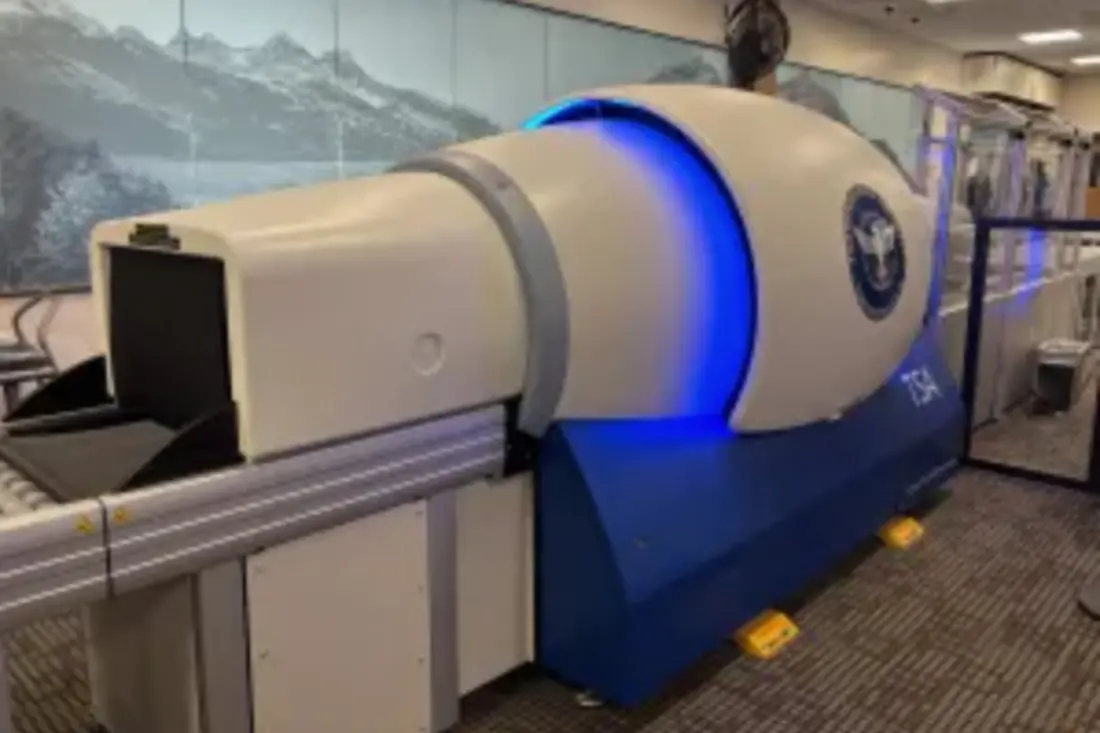
If your carry-on strategy involves cramming in as much as physically possible, US airport security is about to make life harder. The Transportation Security Administration is rolling out new CT (computed tomography) scanners at checkpoints across the country, and while the technology is a genuine upgrade, it comes with a catch: the machines have a smaller opening than the old units.
That means bags which used to squeak through may now simply not fit. The TSA says the narrower design is needed to house the advanced imaging technology and keep it performing well, and travellers whose bags don't make it into the machine could be forced to check them at the gate — with the fees and delays that come with it. The practical rule of thumb: standard airline carry-on limits, typically 22 x 14 x 9 inches, will fit the new scanners. Anything bigger is a gamble.
There is a real upside, though. Because the scanners produce a three-dimensional image that officers can rotate and examine from any angle on a monitor, they can clear a bag without opening it. In practice, that means laptops and other electronics can stay where they are — no more juggling your tablet, charger and toiletries into plastic bins. It also cuts down on manual bag inspections, so fewer travellers get pulled aside for a physical rummage through their luggage.
A TSA spokesperson told FOX 13 that officers are on hand to help travellers with larger items or special needs, and the agency is framing the tighter opening as a necessary trade-off for faster, more accurate screening overall.
For travellers, the takeaway is simple: the era of generously interpreting carry-on rules at security is ending. If your bag technically exceeds airline limits, you've been relying on leniency — first at the gate, and now potentially at the scanner itself. Measuring your bag before you fly, or upgrading to one that genuinely fits the standard dimensions, could save you an unexpected checked-bag fee and a mad scramble at the checkpoint. It's also worth expecting a transition period: as airports swap in the new machines, procedures may vary from one terminal to the next, so give yourself a little extra time at security until you know how your home airport is handling the changeover.