Only three countries operate large strategic bomber fleets, and the United States stations its 130-aircraft force at a handful of sprawling installations dotted across the American interior. A recent breakdown ranked the four largest by bomber count, and the picture is striking: Whiteman in Missouri and Ellsworth in South Dakota each host 19 bombers, Dyess in Texas holds around 33, and Barksdale in Louisiana tops the list with more than 60.
Whiteman Air Force Base is the world's only home for the B-2 Spirit stealth bomber, flown by both active-duty and Missouri Air National Guard units. The base has an odd backstory for aviation fans: it spent the Cold War as a Minuteman II missile site with over 150 silos, only converting to bombers after the 1991 arms reduction treaty. It's also slated to become the second operational base for the incoming B-21 Raider.
Ellsworth, near Rapid City, is next in line for the B-21 — the first stealth bombers are due there in 2027, backed by a $1.5 billion construction programme. Its B-1B Lancer squadrons train over the PRTC, the largest low-level training airspace in the contiguous US, covering parts of four states. The B-1 fleet itself is on borrowed time: nine aircraft retire in 2028, ten more in 2029, and the type is expected to be gone by 2036.
Dyess, in Abilene, Texas, trains every B-1B crew in the Air Force and shares its tarmac with the world's largest C-130J Super Hercules airlift wing. It was the first Department of Defense installation powered entirely by wind energy and is the biggest employer in the Abilene area, pouring over $3.6 billion a year into the local economy.
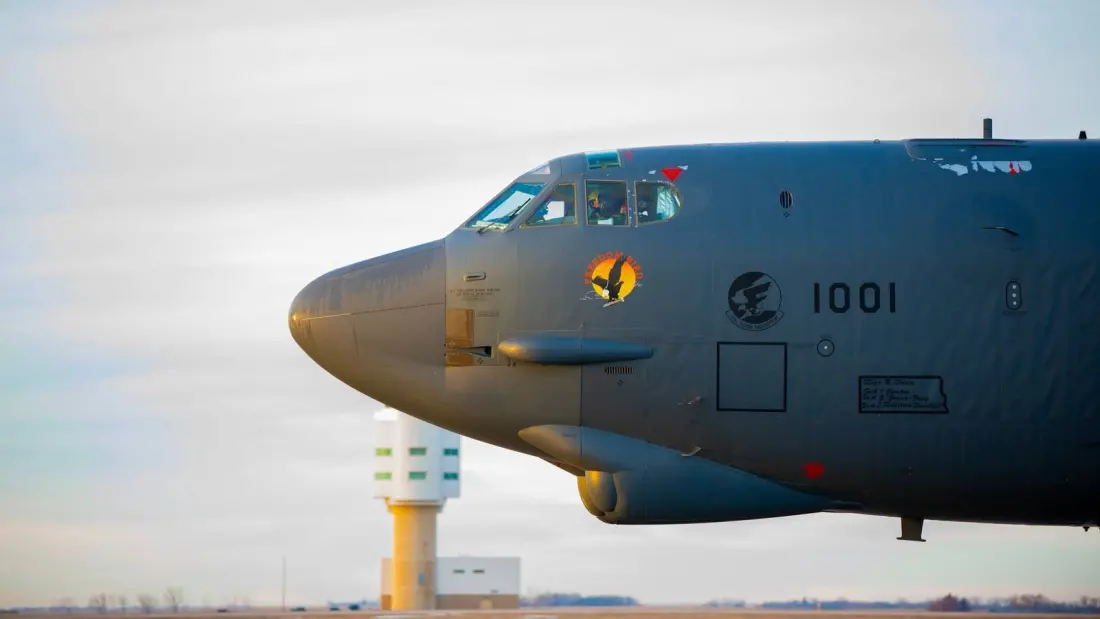
Barksdale, near Shreveport, Louisiana, is the nerve centre. Around 44 B-52s fly with the 2nd Bomb Wing, plus 18 to 20 more with an Air Force Reserve unit, and the base houses the headquarters of Air Force Global Strike Command as well as the legendary 'Mighty Eighth' Air Force. Its B-52Hs are being upgraded to the B-52J standard — new Rolls-Royce F130 engines offering roughly 30% better fuel efficiency, a radar borrowed from the F/A-18 Super Hornet, and digital cockpits that cut crew from five to four. The plan is to keep the 1950s-era design flying into the 2050s, working alongside the stealthy B-21 as a standoff missile 'arsenal ship.'
Why should a traveller care? Aviation enthusiasts have a rare window here: Ellsworth already draws visitors to its air and space museum near Rapid City, and base open houses and airshows at these installations offer close-ups of aircraft types civilians rarely see anywhere else. Route a Great Plains road trip through Rapid City, Abilene or Shreveport and you're passing living aviation history mid-transition — the biggest shake-up in American airpower in decades, happening at bases you can actually visit. For anyone who plans trips around airshows, museums and Cold War sites, these four bases are worth plotting on a map.