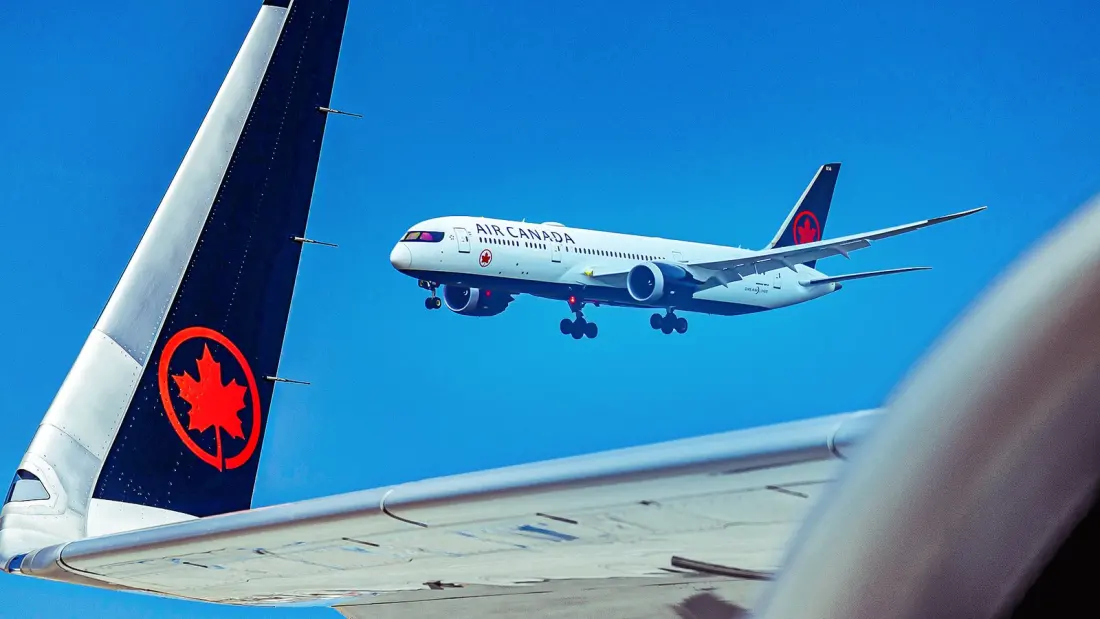
Air Canada is quietly reshaping its transatlantic network, and if you've booked or are eyeing a flight to Europe from Canada, the aircraft at the gate may be about to change. The airline is pulling its Boeing 787 Dreamliners off 11 routes over the coming months, replacing them on six of those with its new Airbus A321XLR — a long-range narrowbody with a fraction of the seats.
The affected routes include Calgary-London, Ottawa-London, Montreal-Toulouse, Porto, Copenhagen, Paris, Edinburgh, Casablanca and Berlin, plus Toronto-Zurich and Toronto-Venice. Some will get a Boeing 777 or Airbus A330 instead, but the A321XLR is taking over at least some frequencies on six of them, timed with Air Canada's 2026/2027 winter and 2027 summer schedules.
For passengers, the practical difference is noticeable. A 787-8 carries 255 seats including 20 in business and 21 in premium economy; a 787-9 has 298 seats with 30 in business. The A321XLR has just 182 seats, 14 in business, and no premium economy at all. It's a deliberately leisure-focused layout aimed at routes where premium demand is thin — and swapping a big jet for a small one helps Air Canada keep fares healthy on routes that were underperforming.
The upside is that the freed-up 787s aren't sitting idle. They're being redeployed to new and longer routes the A321XLR can't reach: Toronto-Barcelona gets the 787 in December, Vancouver-Sapporo launches the same month, and May 2027 brings Vancouver-Guangzhou and Montreal-Dubrovnik. The 787 will also return to Montreal-Tel Aviv, Toronto-Prague and Toronto-Stockholm. Meanwhile, the A321XLR fleet — five in service, 25 more coming, out of 30 ordered — is opening smaller European destinations including Basel, Oslo, Shannon and a new winter-seasonal Seville route from September 2027.
Fuel is the driver behind much of this. Oil prices sit near $90 a barrel, roughly double a year ago, and the A321XLR burns far less fuel than even a Dreamliner. That economics have bite is clear from Air Canada's decision to axe its Vancouver-Singapore nonstop — its longest route — from January 2027. On the other side of the fleet, the larger 787-10 arrives before the end of 2026, with 332 seats and no retirements planned, so it's pure growth aimed at the busiest European cities.
Why does this matter if you're planning a trip? If you're flying economy to a secondary European city from Montreal or Toronto, expect a sleeker but simpler cabin — and fewer premium seats to redeem for. On longer or Asia-bound routes, you'll increasingly find yourself on the fuel-efficient 787. Check the aircraft type before booking if premium economy matters to you, because on the six A321XLR routes it simply won't exist. Data via Simple Flying.