France has over 30,000 villages, and according to a new region-by-region ranking, the prettiest ones are almost never where the tour buses go. The list rounds up 25 standouts — most of them members of the official Les Plus Beaux Villages de France association — and groups them by region so travellers can link several into a single route rather than treating them as scattered day trips.
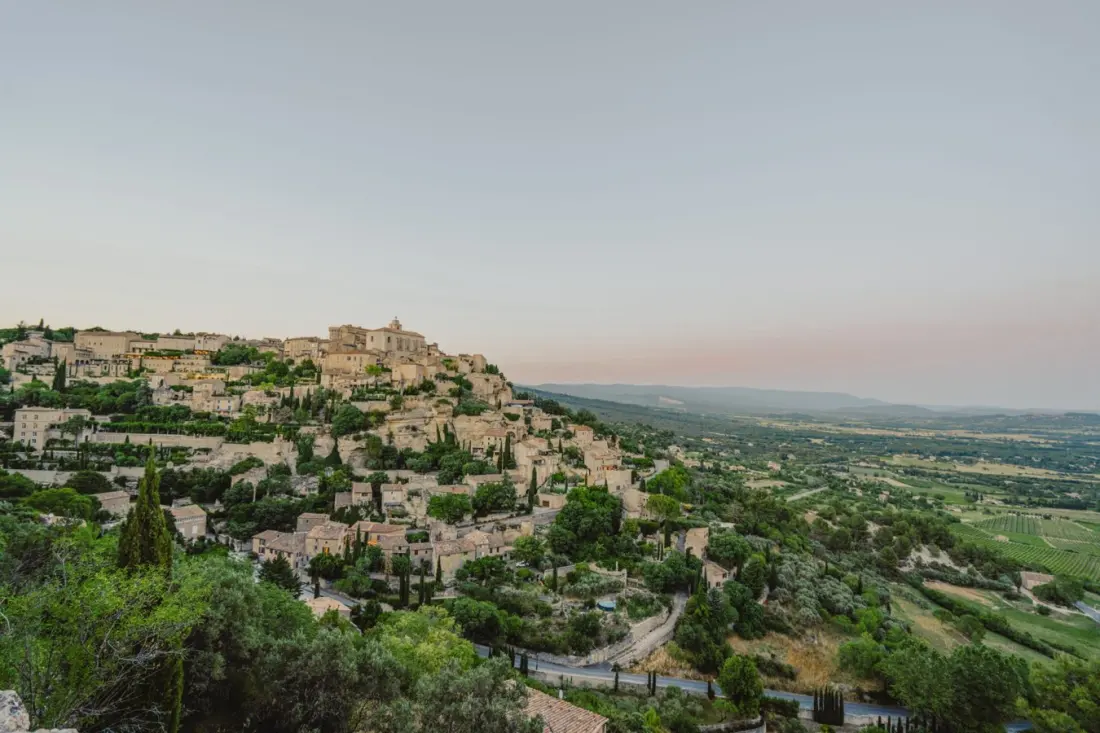
The south gets top billing. In the Luberon, Gordes is the archetypal Provençal hillside village, with a 16th-century château at its peak and the lavender-flanked Sénanque Abbey just 4 km away (go at 8am; by 10am the car park is full). Ten minutes down the road, Roussillon glows in ochre because it sits on one of the world's largest ochre deposits — walk the Sentier des Ocres through the old quarries. Lourmarin, flat and liveable with a Friday market and Camus's grave, is pitched as the village to sleep in rather than just photograph. On the Riviera, Èze dangles 430 metres above the Mediterranean between Nice and Monaco — hike the Nietzsche path down to the sea — while walled Saint-Paul-de-Vence remains the artists' village where Chagall is buried and the Colombe d'Or still hangs Picassos collected in lieu of restaurant bills.
Alsace supplies the fairytale chapter: Riquewihr, whose 16th- and 17th-century half-timbered streets survived both world wars intact (and allegedly inspired Beauty and the Beast); Eguisheim, built in concentric rings around its castle and voted France's favourite village in 2013; and Kaysersberg, the only one with a river running through it. All three sit within 15 minutes of Colmar along the Route des Vins, which doubles as a Christmas-market circuit in December.
Further afield, Vézelay in Burgundy climbs to a UNESCO-listed Romanesque basilica that aligns with the noon sun around the summer solstice. Montrésor in the Loire — population 350 — wraps around a château still owned by the family of the Polish count who bought it in 1849. And in the Dordogne, La Roque-Gageac squeezes a single row of golden houses between cliff and river, best appreciated from a traditional gabarre boat on the water below.
The practical logic of the ranking is what makes it useful. Provence and the Riviera form a natural week-long loop from Marseille or Nice, with everything within 90 minutes of a base in Gordes, Lourmarin or Nice. Alsace needs two days by car from Strasbourg. Burgundy, the Loire and the Dordogne line up conveniently south-west of Paris. The Jura, Corsica and the south-west — including Baume-les-Messieurs, billed as the least touristy pick of the lot — are flagged for a second or third visit, which is precisely why they reward you with empty streets.
Who is this for? Anyone who has done Paris and Provence's big names and wants the France of postcards without the queues: honeymooners (Èze), wine drinkers (Alsace in December), art pilgrims (Giverny and Saint-Paul-de-Vence) and hikers with a weakness for lake views (Yvoire on Lake Geneva). Several villages, including Gordes and Giverny, are reachable as day trips, though a hire car unlocks most of the list.