
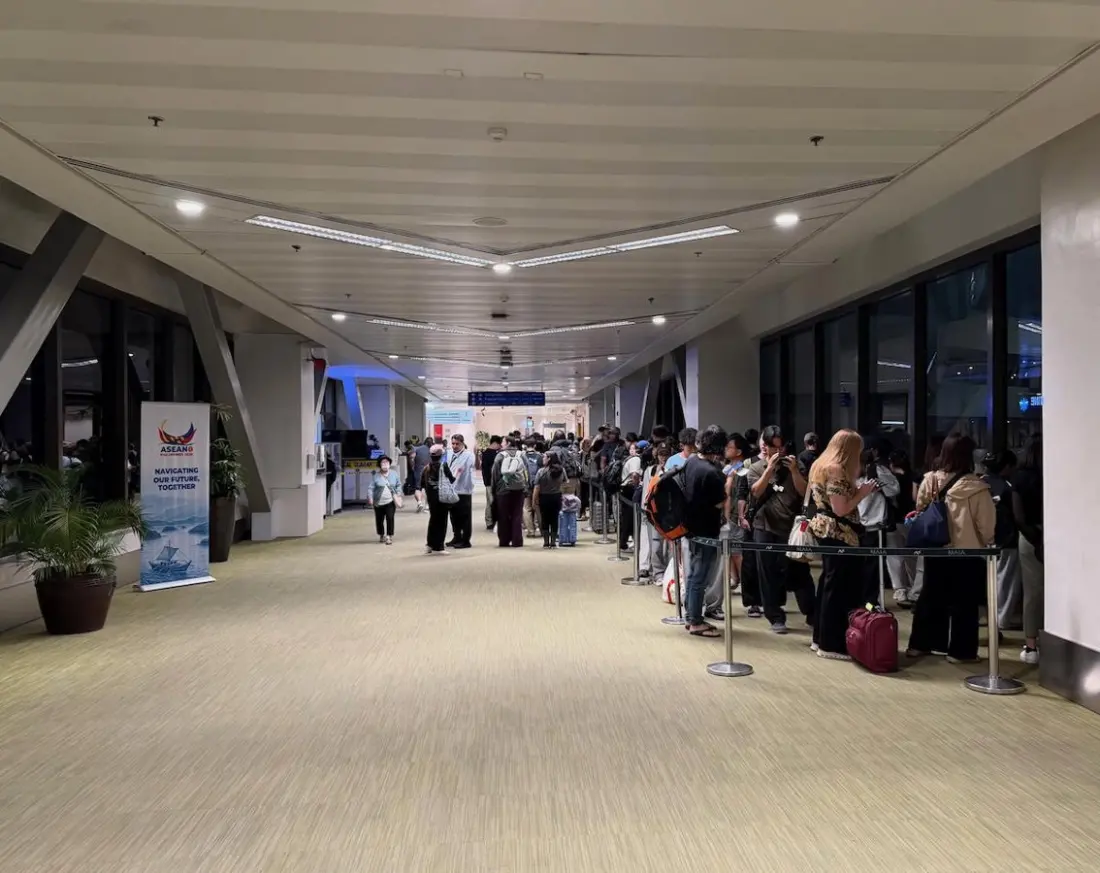
Manila's Ninoy Aquino International Airport has long had a rough reputation among connecting passengers, and a recent firsthand account of Philippine Airlines' flagship lounge at Terminal 1 suggests things haven't improved. The blogger behind One Mile at a Time, connecting between international flights on the carrier, found a ground experience that turned a routine transit into an endurance test.
The first hurdle came straight off the plane. International transit passengers at MNL funnel through a single security checkpoint with just one metal detector and one scanner — for an airline that's actively courting international connecting traffic. The queue took roughly 40 minutes to clear. Once through, there are no elevators for the stairs that follow, which is a real problem for older travellers; only wheelchair users get a separate accessible route.
Then came the treasure hunt. Signage for the Philippine Airlines Mabuhay lounge is so minimal that the writer spent about ten minutes circling the concourse, initially mistaking the lounge entrance for something related to Australia flights. The word "MABUHAY" is printed large, but "LOUNGE" is nearly invisible.
Inside, things didn't get much better. The lounge was packed to the point where finding a seat was a challenge. Wi-Fi refused to connect — and the explanation from staff was that laptops from other countries simply can't get online on the lounge network. Phones work; foreign laptops don't. It's a bizarre known issue that nobody seems to be fixing.
The real dealbreaker is the noise. The lounge echoes with a constant stream of boarding announcements, delivered at length and repeated. The Melbourne flight was called four separate times, each followed by a "once again" reprise, complete with filler about gathering belongings and "the heart of the Filipino." The reviewer eventually gave up and decamped to the gate area, which — remarkably — was quieter than the lounge.
To be fair, some of this is airport infrastructure rather than the airline's doing; transit security and staffing at MNL aren't Philippine Airlines' call. And lounge overcrowding at peak times is a familiar gripe at airports worldwide. But the lacklustre lounge — broken Wi-Fi for foreign devices, endless announcements, hidden signage — sits squarely on the carrier, especially as it positions itself as a transit hub and expands internationally.
For travellers, the takeaway is simple: if you're connecting through Manila on Philippine Airlines, budget extra time (an hour or more just for transit formalities isn't unreasonable), don't count on the lounge for quiet or connectivity, and keep an offline map of Terminal 1 handy so you're not hunting for the lounge entrance like the rest of us. Business class on the carrier's A350-1000 may still be worth the trip — just manage expectations on the ground.