Twenty-five years on from 9/11, the TSA is plotting its next quarter-century. In August, Administrator David P. Cummins unveiled Horizon 25, a strategy backed by roughly $781 million that will reshape how travellers move through American airport checkpoints through 2028 and beyond. For anyone flying in the US, the security line of the future is being designed right now.
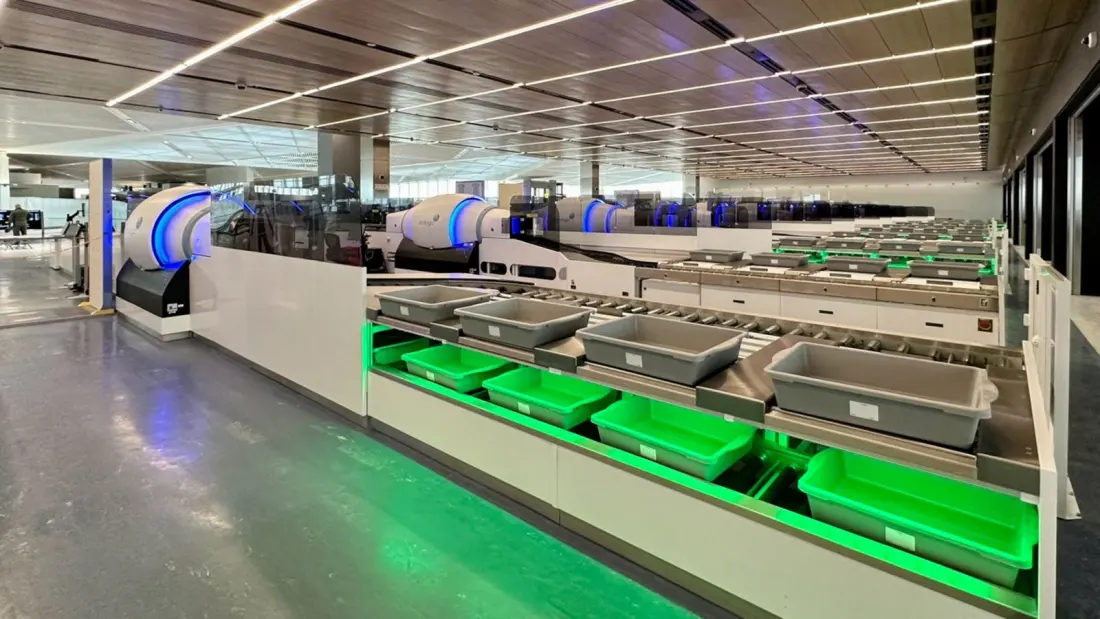
The agency faces a scale problem first. TSA screens more than 900 million passengers and around 2 billion carry-on bags every year, and demand keeps climbing. Its answer leans heavily on technology: the CT scanners that build detailed 3D images of your bag are already at 1,162 units across 296 airports, with $215 million in funding set aside for fiscal 2026 and $500-700 million expected to be spent on modernisation over five years. Around 1,200 millimeter-wave body scanners operate at nearly 400 airports, while facial comparison checks and CAT-2 ID-verification units have reached roughly 350 airports. Next up: e-gates with facial comparison and a new lane layout across all 400 TSA PreCheck lanes.
There is a structural shift too. TSA had floated a Gold+ programme letting airports hire private screening companies, but after scepticism over oversight and workforce protections — and Tampa International deciding to stick with federal screeners — the agency will instead expand its existing Screening Partnership Program, which already runs at 20 airports including San Francisco and Kansas City. Notably, during the government shutdowns of October 2025 and March 2026, privately staffed airports kept queues moving while federally staffed checkpoints struggled. That resilience is now a selling point.
Horizon 25 also looks past the checkpoint itself. Unauthorised drones have become a genuine disruption — the FAA logs over 100 reports near airports monthly, and flights at Reagan Washington National were halted for about 20 minutes after pilots spotted one over a runway. TSA is testing counter-drone systems at real airports through test beds at Miami International and LAX, examining detection range and false-alarm rates.
Why should a traveller care? Shorter waits, fewer removals of shoes and laptops as CT scanning spreads, faster ID checks via e-gates, and more reliable staffing through expanded public-private screening are all practical wins. Frequent flyers enrolled in PreCheck will likely notice the changes first, but the knock-on effect of better throughput should benefit everyone in the queue. The flip side is more biometric data being collected at airports — something privacy-conscious travellers may want to watch as facial comparison rolls out wider.
In short, the agency born from the post-9/11 overhaul is betting that smarter scanners, biometrics, flexible staffing models and drone defences can deliver what Cummins calls a "Golden Age of Travel" — or at least a less miserable security line.
Story via Simple Flying.