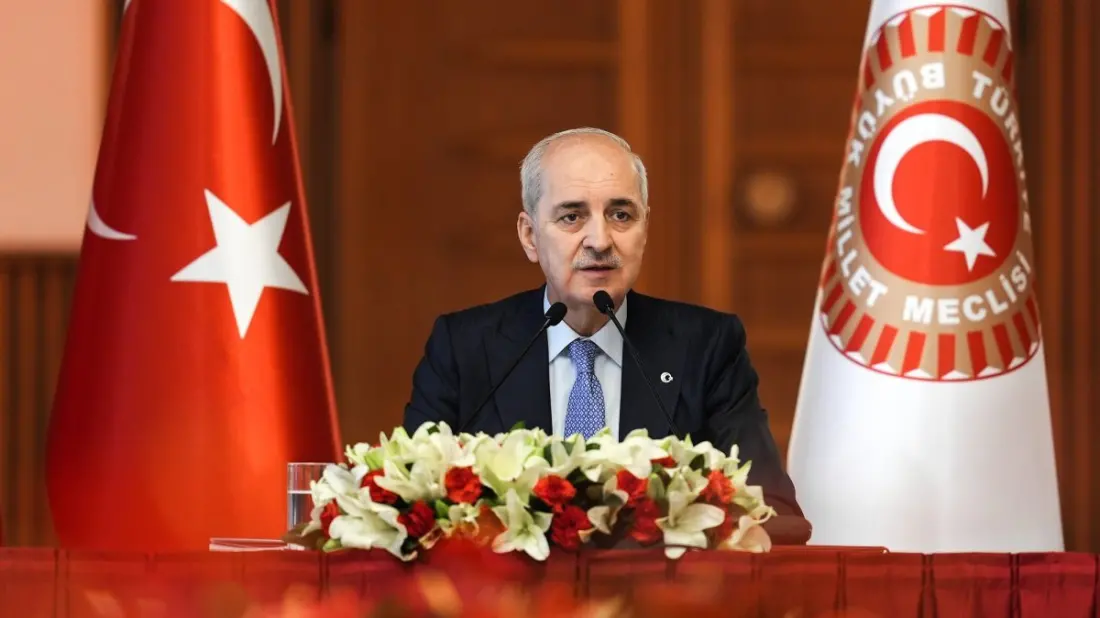
Türkiye's parliament has thrown its weight behind the government's "terror-free Türkiye" initiative, and the details shared by Parliament Speaker Numan Kurtulmuş sketch out one of the more ambitious political processes in the region.
Speaking at a meeting marking the fourth year of the 28th parliamentary term, Kurtulmuş revealed that lawmakers filed 571 bills over the legislative year, but the standout work was the National Solidarity, Brotherhood and Democracy Commission. That 50-member body held 21 meetings across 90 hours, taking testimony from civil society groups, academics, politicians and former parliamentary speakers. Its report was approved on 18 February with 47 votes, paving the way for the initiative. The follow-up bill on national solidarity and social integration then passed with 467 votes, which Kurtulmuş called the broadest consensus ever achieved on a bill in the parliament.
The process is also expanding beyond Türkiye's borders. Kurtulmuş pointed to the ongoing integration of YPG elements in Syria as a significant step, and said a disarmament process for armed militias in Iraq would start in early October. Domestically, a high-level coordination board chaired by Vice President Cevdet Yılmaz has begun work, and parliament will set up its own monitoring commission when it reopens, tasked with overseeing the process, checking that disarmament follows the law and drafting legislation if needed.
Notably, Kurtulmuş stressed that no foreign mediator will be involved. Unlike other conflict-resolution efforts, he said, the referee here is "the nation itself," represented by parliament.
For travellers, the relevance is straightforward: Türkiye is one of the world's most visited countries, and any lasting reduction in regional instability matters for how safe and open destinations feel, particularly in the southeast — cities like Diyarbakır, Mardin and Gaziantep that have huge tourism potential but have long been affected by the conflict. A genuine, parliament-backed peace process could gradually reopen parts of the country that most itineraries skip. That said, this is politics in motion, not a finished outcome, so anyone planning a trip should keep an eye on official travel advisories as the process develops.
Story via Daily Sabah Travel.