Havana is a long way from Funafuti, but Tuvalu has taken Cuba's side at the United Nations, with Prime Minister Feleti Teo telling the General Assembly in September that the long-standing US sanctions "inflict hardship on the Cuban people" and calling for their lifting. He was backed by Naoero President David Adeang, who noted the Assembly has called for an end to the embargo for 33 straight years, and by Vanuatu's ambassador Odo Tevi, who branded coercive measures against developing countries unfair and unjust.
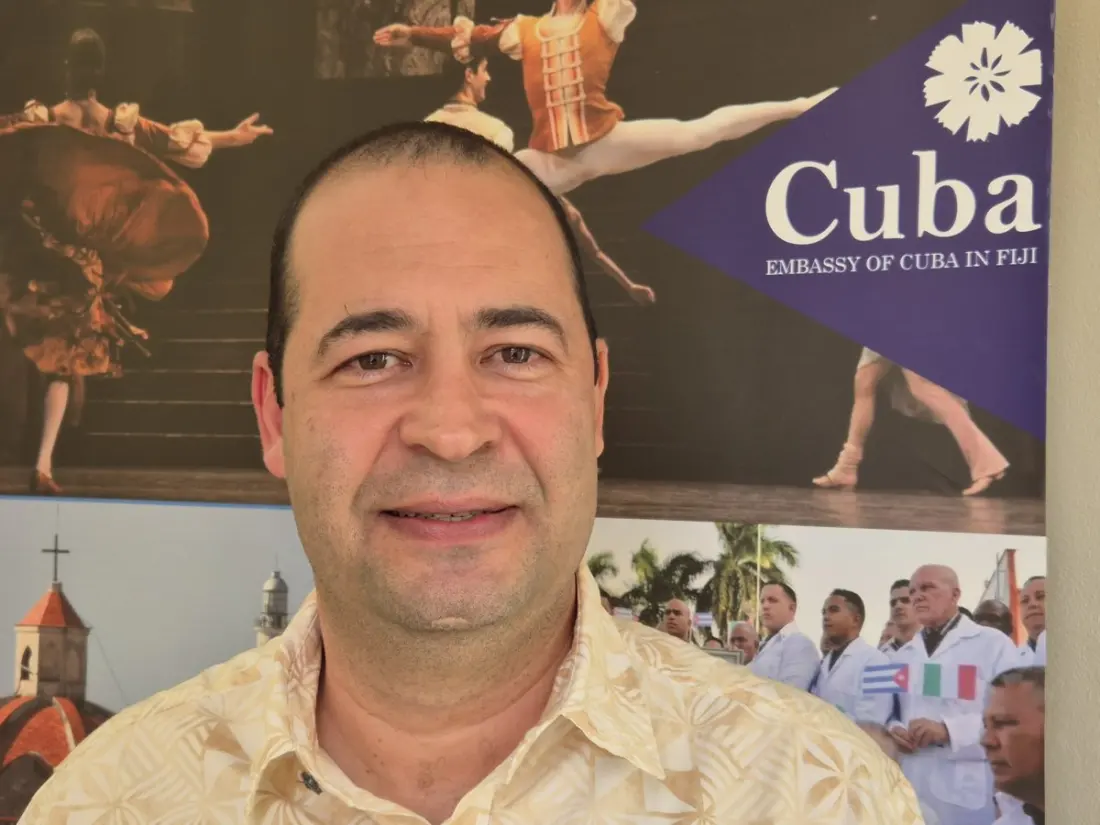
Why do Pacific microstates care about a Caribbean island 12,000 kilometres away? Health, mostly. Cuba's ELAM medical school in Havana has graduated 245 Pacific doctors — 104 from Solomon Islands, 33 each from Kiribati and Fiji, 22 from Tuvalu and more from Vanuatu, Tonga, Palau, Naoero and the Cook Islands — many now serving in remote communities. Cuba opened an embassy in Suva in 2017, holds "dialogue partner" status at the Pacific Islands Forum alongside the US, China and Japan, and has offered 12 new medical scholarships this year. It is also marketing Cuban biotech in the region, including Heberprot-P for diabetic foot ulcers and Neuralcim for Alzheimer's.
The trouble is that Cuba is in a deepening crisis. Under President Trump's renewed pressure, Washington has imposed an oil blockade that has battered the island's electricity grid, declared Cuba an "unusual and extraordinary threat", and threatened secondary sanctions on foreign banks, companies and fuel suppliers. UN Special Rapporteur Alena Douhan reported last July that the measures hit the poorest hardest, while Cuba's foreign minister told the Assembly that 70% of essential medicines are unavailable and some 100,000 people are awaiting surgery. Secretary of State Marco Rubio, son of Cuban exiles and a longtime hawk, is openly encouraging regime change.
At November's annual UN vote on ending the embargo, 130 countries backed Cuba — but that was a sharp slide from 187 in favour in 2024, suggesting US pressure on Caribbean and Latin American governments is working. For travellers, the practical reality is simple: fuel and food shortages mean blackouts, scarce supplies and strained services across the island, so anyone considering Cuba should monitor conditions closely, expect disruptions to transport and power, and carry cash, patience and flexibility.