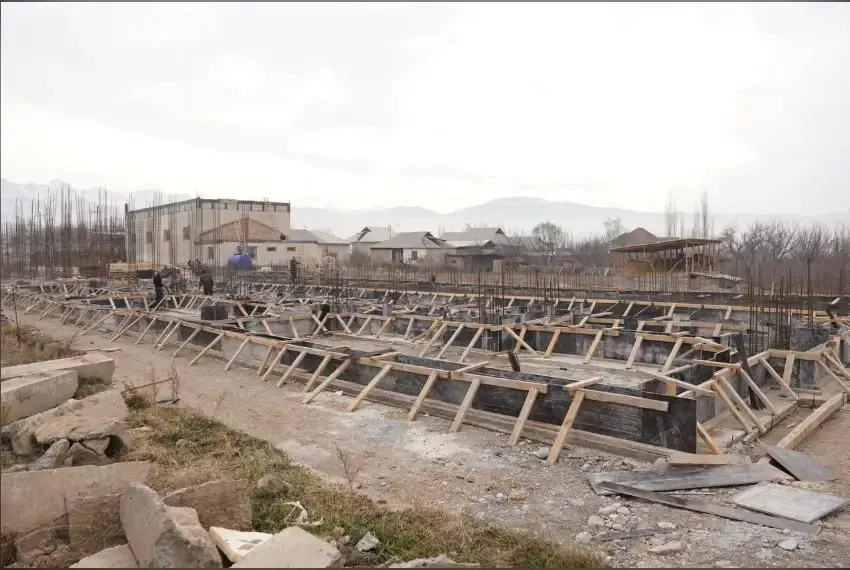
Kyrgyzstan's football federation has confirmed that two stadiums currently under construction in the southern cities of Nookat and Kyzyl-Kiya should be handed over in 2027. The news comes from a working trip by Kyrgyz Football Union secretary general Mederbek Sydykov to the Osh region, where he met local administrators, the contractor, and staff from the Asylbek Momunov Academy before inspecting both sites.
There was a second piece of good news for the region's football scene on the same visit: the Asylbek Momunov Academy has picked up two-star status under the AFC Elite Youth Scheme, a recognition from the Asian confederation that signals the academy meets defined coaching and development standards. The KFU used the trip to congratulate the academy's management and encourage it to keep meeting the requirements that come with the rating.
For Kyrgyzstan, the projects matter beyond football. The country's south — centred on Osh, the region's biggest city and a historic Silk Road hub — has long been the more rural, mountain-fringed half of a country most visitors skim on their way between Bishkek and the Issyk-Kul lake region. New sporting venues in Nookat and Kyzyl-Kiya suggest growing investment in local infrastructure, and once complete they could host regional fixtures and youth tournaments that draw visiting fans and families to towns that rarely feature on tourist itineraries.
The area itself rewards the detour. Kyzyl-Kiya sits in a coal-mining valley in the Batken region's orbit, while Nookat lies just off the road between Osh and the Alay valley — the gateway to Saimaluu-Tash petroglyphs and the trekking country around Peak Lenin base camp. Combine a match-day stop with the classic Osh-to-Sary-Tash drive and you get a slice of Kyrgyzstan that has little to do with the usual yurt-camp circuit.
That said, 2027 is a long way off, and there are no details yet on stadium capacity, ticketing or match calendars. If you're planning a football-tinged trip to southern Kyrgyzstan before then, Osh's existing facilities and the city's famous Sulaiman-Too holy mountain — a UNESCO World Heritage site — remain the anchor points.
For travellers who like to see where a country is heading rather than just where it has been, this is a small but genuine sign that sport and public investment are reaching the south. Worth a follow if the Alay mountains and Osh region are already on your list.