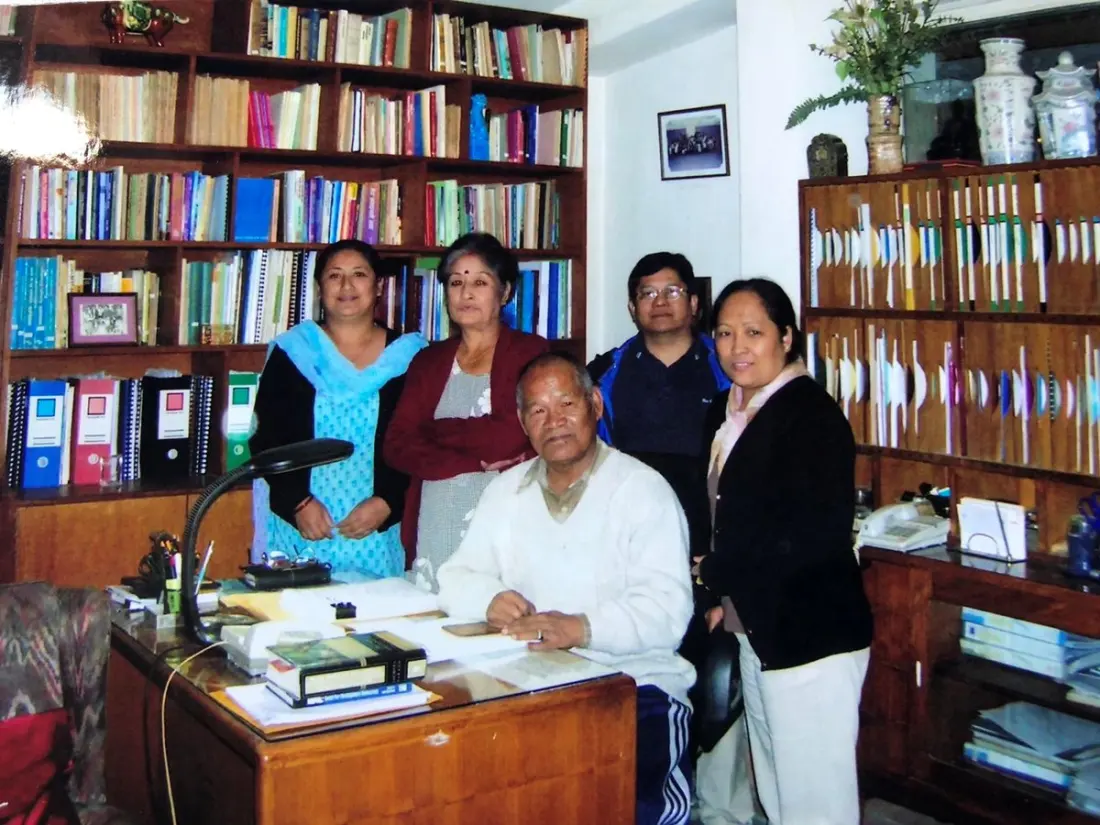
On 23 September 2006, a helicopter lifted off from Ghunsa in Nepal's Taplejung district carrying 24 people home from a landmark conservation event in the Kangchenjunga region. It never made it back. Everyone on board died, among them Dr Harka Gurung, one of the most influential figures modern Nepal has produced — a geographer, planner, mountaineer, writer and public intellectual whose fingerprints are on how the country thinks about its mountains, its people and its development.
Two decades on, the anniversary is a moment to take stock of what he left behind, and it reads like several careers rolled into one. Gurung earned his PhD at the University of Edinburgh in 1965, taught at SOAS in London and Tribhuvan University in Kathmandu, then moved into government, rising to Vice-Chairman of Nepal's National Planning Commission by the mid-1970s and later serving as a minister with portfolios spanning tourism, education, industry and public works. He kept writing throughout: books like Vignettes of Nepal, Annapurna to Dhaulagiri and From Exclusion to Inclusion tackled everything from mountaineering history to ethnic diversity and what Nepali nationalism should mean.
His core idea was deceptively simple and still radical: geography determines destiny. Nepal's mountains, hills and plains shape who gets roads, schools, opportunity — and who migrates or gets left behind. He also argued that protecting wild places only works when local communities benefit, a philosophy that culminated in the very initiative he was flying from: handing management of the Kangchenjunga Conservation Area to the people who live there. That community-led model has since become central to how Nepal runs its protected areas, and trekkers walking the Kangchenjunga trails today are experiencing its results firsthand.
For travellers, this story matters more than it might first appear. The trekking routes, conservation areas and tourism policies of the Nepal Himalaya were shaped by people like Gurung, who believed mountains should be understood, not just conquered or fenced off. The Ghunsa crash also wiped out an entire cohort of Nepal's conservation leadership — including Dr Chandra Gurung — a loss the country's environmental institutions still feel.
Kangchenjunga itself remains one of Nepal's great remote treks: a restricted-area permit region near the Sikkim border, with rhododendron forests, Tibetan-influenced villages and long views of the world's third-highest peak, far quieter than Everest or Annapurna. Twenty years after the crash, walking there is a fitting way to see the ideas of a scholar who believed Nepal's future lay in understanding its geography rather than ignoring it.