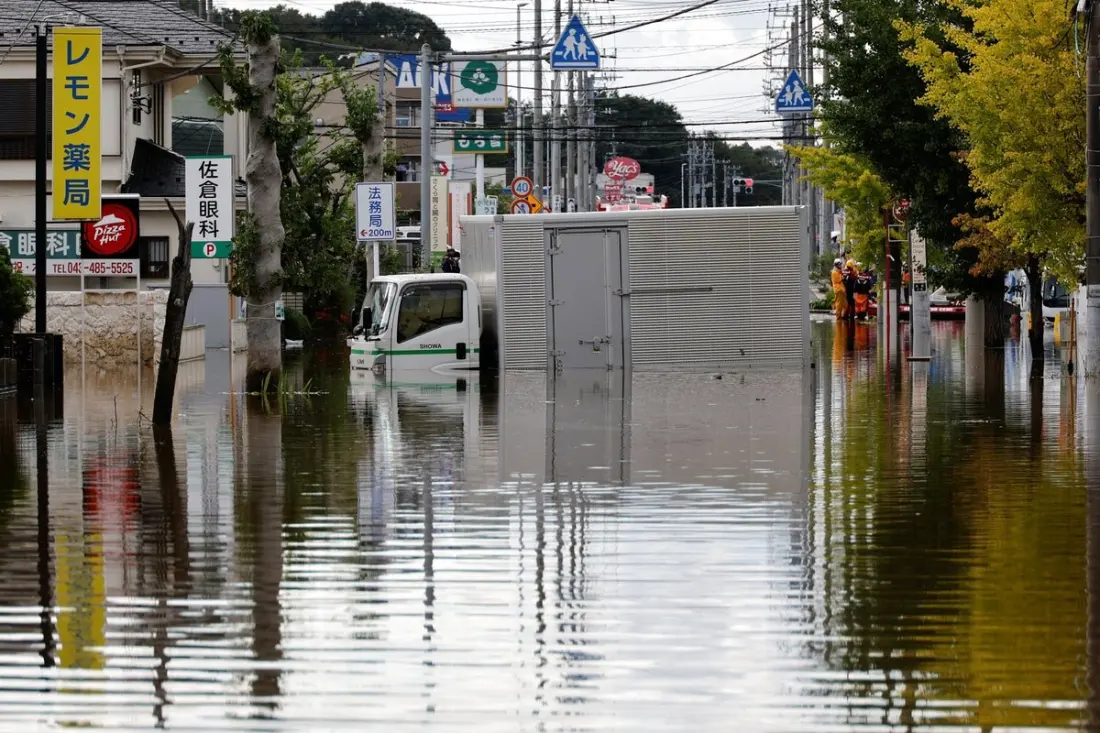
Tokyo's airports have been knocked sideways by Typhoon Dujuan, which tore across Japan's Pacific coast on Monday, killing five people and leaving six missing. More than 500 flights were delayed at Haneda and over 200 at Narita on Tuesday morning, on top of hundreds cancelled the day before — Japan Airlines pulled roughly 135 flights and All Nippon Airways about 140.
The storm dumped extraordinary rain as it approached the Kanto-Koshin region, which includes Tokyo, after passing near the Izu Islands. The Japan Meteorological Agency issued its highest-level landslide warning for parts of the islands, and warned that total rainfall through Tuesday could exceed the typical monthly total for September. Evacuation advisories covered more than 1.6 million people, including in Tokyo. The casualties so far span Chiba, Kanagawa and Miyazaki prefectures, and the Disaster Relief Act has been applied to dozens of municipalities in Chiba plus one Tokyo town.
Trains took a hit too. Sections of East Japan Railway's Sobu, Narita and Sotobo lines were disrupted, along with some bullet train services between Tokyo and Osaka — worth knowing if you've booked a rail-heavy itinerary this week.
So is it safe to go? The UK Foreign Office has not changed its advice for Japan following the typhoon. Its standing guidance notes that typhoon season runs from June to December, peaking July to September, with the highest risk in southern parts of the country. It recommends tracking storms via the Japan Meteorological Agency and following local authorities, including any evacuation orders.
Here's the part that matters most for your wallet: because the FCDO has not advised against travel, there are no special cancellation rights. Your options depend entirely on your holiday provider's terms, and you generally can't claim on travel insurance for cancelling over safety worries unless government advice changes. If you're due to fly in the next few days, contact your airline or operator directly — individual flight cancellations usually trigger rebooking or refund from the carrier itself, even when a whole-trip cancellation wouldn't.
The practical takeaway: Japan is a country well drilled for this. Warnings are clear, evacuations are orderly, and airports bounce back fast once a storm clears. If your trip is further out, there's little reason to change plans — just keep an eye on forecasts in the run-up, build some buffer into tight connections during typhoon season, and bookmark the JMA's English-language site before you go.