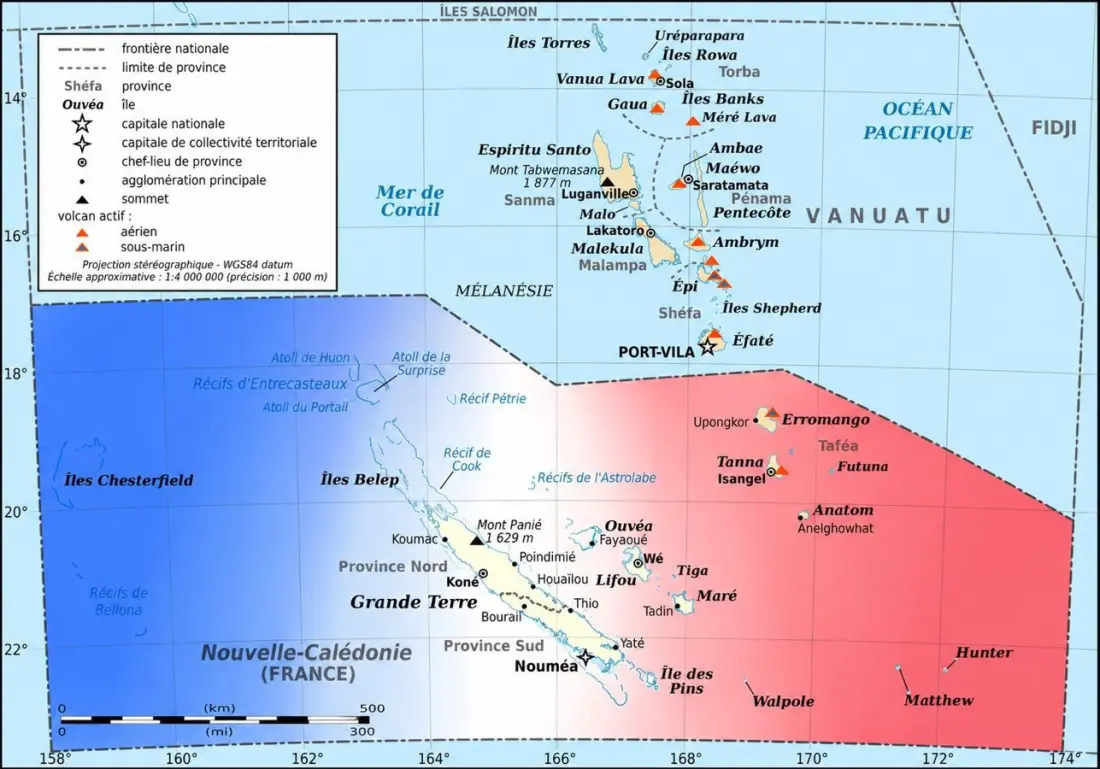
Two uninhabited volcanic specks in the Coral Sea are causing a very loud diplomatic storm. Matthew and Hunter — known in Vanuatu as Umaenupne and Umaeneag — sit between New Caledonia and southern Vanuatu, and both France and Vanuatu claim them. Now Vanuatu has escalated: on 28 September, its UN Ambassador Oda Tevi told the General Assembly that the country has applied to the International Court of Justice for recognition of its sovereignty, framing the claim as grounded in customary governance, indigenous ownership and ancestral custodianship.
Vanuatu walked away from bilateral talks with France in late August before filing the case. France doesn't accept the ICJ's compulsory jurisdiction, and hasn't said whether it will take part — despite President Macron praising the court's 'central role' at the UN just days earlier. Vanuatu's ambassador pointedly invited France to consent to the court's jurisdiction, leaning on Paris's self-image as a champion of international law.
The speech triggered a furious reaction in New Caledonia. Nicolas Metzdorf, one of the territory's two deputies in the French National Assembly and a leading anti-independence politician, wrote a sarcastic open letter to Vanuatu's Prime Minister Jotham Napat — addressed to the 'Condominium of the New Hebrides', a deliberate dig recalling the Franco-British rule that ended with Vanuatu's independence in 1980. He mocked Vanuatu's economy and offered the islands' only residents — shearwaters, terns and whitethroats — the benefits of French schooling, healthcare and a European passport.
It went further. Metzdorf published a map proposing a redrawn maritime boundary that would fold Vanuatu's southern islands of Tanna, Erromango, Aneityum and Futuna into New Caledonia under an indefinite land lease. The Kanak independence coalition FLNKS condemned the letter as 'supremacism and racial hatred' and demanded an apology. Notably, Vanuatu's claim is backed by the customary chiefs' councils of both countries — the Malvatumauri and New Caledonia's Sénat Coutumier — under the 2009 Keamu Accord.
Why should a traveller care? Because this fight is really about the surrounding Exclusive Economic Zone — fisheries, resources and the maritime map of a region many readers visit for diving, volcano treks and island-hopping. The dispute is also tangled up with New Caledonia's own independence politics and France's standing in the Pacific, with the French presidential election just months away adding pressure on Paris to dig in. If you're heading to Vanuatu's southern provinces or New Caledonia's Loyalty Islands, nothing here changes the practical reality on the ground — but it's a useful reminder that the Pacific's quiet waters sit over some very live political fault lines.
Credit: Islands Business