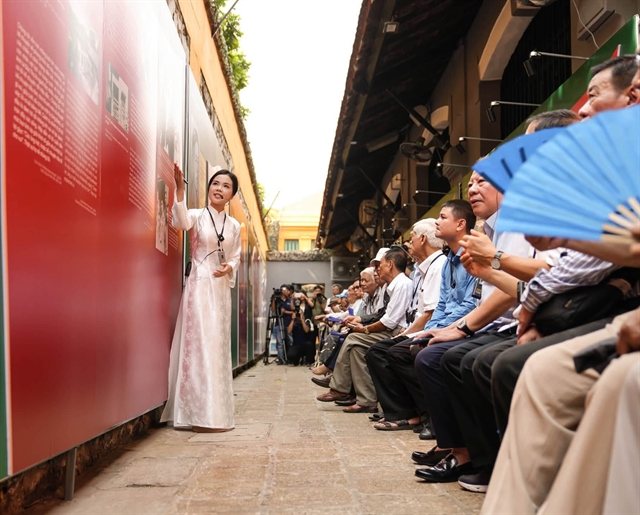
Vietnam is quietly building a digital copy of its past. At Hanoi's Temple of Literature, one of the country's most treasured heritage sites, staff have digitised more than 200 historical documents, photographs and inscriptions in 2D, plus 155 artefacts in 3D. All 82 stone stelae honouring doctoral graduates — a UNESCO-listed collection — now exist as 3D models, alongside digital records of 43 buildings and 360-degree panoramas of 94 spots around the complex. Nearby, Hỏa Lò Prison, the infamous 'Hanoi Hilton', is mid-way through a project scanning its artefacts and cell blocks for a database that will support virtual tours.
The push goes beyond pretty models. Laser scanning, photogrammetry, Heritage Building Information Modelling, digital twins and VR are being used to monitor structures, track deterioration and assess risk — the kind of baseline data that makes long-term conservation possible, not just glossy visitor content.
But experts speaking at a recent workshop in Hanoi warned that the tech has limits, and the caveats matter for anyone consuming heritage content online. AI-generated reconstructions can look convincing while misrepresenting a building's actual history, materials or condition. In old wooden houses and communal halls, tool marks, joints and traces of past repairs are themselves historical evidence — 'cleaning them up' digitally can erase the story. Architect Đinh Việt Phương argued for a national database that clearly separates verified measurements from hypotheses and AI imagery.
There are also practical wrinkles. Phạm Thị Khánh Ngân of the Department of Cultural Heritage noted that Vietnam's heritage databases remain fragmented; the solution, she says, is common standards and connected systems. Hanoi has set itself a deadline of digitising every special national heritage site by the end of this year, and the whole effort aligns with the Party's Resolution 57 (December 2024), which frames digital transformation as a national priority.
For travellers, this is worth knowing for two reasons. First, expect more Vietnamese heritage sites to offer virtual tours and AR layers — useful for previewing a visit or reaching sites you can't fit in. Second, the quality of those experiences will vary until the underlying data is verified, so treat slick AI reconstructions with a little scepticism and lean on the in-person expertise of local guides, who the experts themselves credit with knowledge no scan can capture.