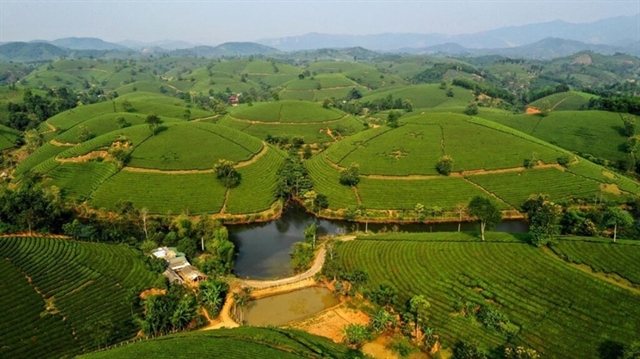
The dome-shaped tea hills of Long Cốc, in northern Vietnam's Phú Thọ Province, have long been a photogenic oddity — rows of small green mounds that look like inverted bowls scattered across the countryside. Now this farming commune of about 1,174 hectares of tea is using smartphones, social media and QR codes to pull in more visitors and better prices for its growers.
The most eye-catching move is the Amazing Long Cốc social media channel, fronted by the commune's own Party Committee secretary, Nguyễn Hoàng Trung. A small team films with ordinary phones and edits with free apps, funded by community contributions. Within a week of launching, the videos had racked up more than a million views, with the secretary walking viewers through tea fields, chatting with farmers and explaining how the leaf goes from bush to cup.
The numbers behind the scenery are substantial: over 1,143 hectares in production, roughly 18,820 tonnes of fresh tea buds a year worth about VNĐ75.28 billion (US$2.9 million). Tourism is still small-scale — around 4,000 visitors annually and six homestays — but the commune is positioning itself as a community-based destination, pairing the hills with the cultures of the local Mường and Dao ethnic communities.
Digital tools are changing how tea actually gets sold, too. One grower, Hà Thị Tuyến, used to rely on regular buyers and traders; after learning to photograph her product and post it online, she now reaches customers further afield, with QR-coded product information and cashless payment making deals simpler. The Long Cốc Organic Tea Cooperative is also trialling organic cultivation on 19 hectares, betting that higher-quality, certified tea will earn more than selling raw material in bulk.
For travellers, the practical payoff is a digital tourism map in development and 3D destination previews, plus signposted routes linking three attractions: the historic Hùng Kings Temple complex, the Long Cốc hills themselves and Xuân Sơn National Park — an easy multi-stop itinerary through one of Vietnam's quieter provinces.
There are honest caveats. Local officials admit tourism infrastructure is thin, experiences need variety, and producers and homestay operators don't yet coordinate well enough to sell bundled sightseeing-plus-stay packages. That means visiting now feels genuinely off-the-beaten-path — bring flexibility, book homestays ahead, and expect a rustic rather than polished experience.
The digital push goes beyond tourism. With over 85 percent of residents from ethnic minority groups, the commune has helped roughly 700 people register phone numbers in their own names so they can use electronic ID and online public services, with village-level volunteers coaching older residents. It's a reminder that in places like Long Cốc, better connectivity is what makes community tourism possible at all.
If you want tea-country landscapes without the crowds of Thailand's or Malaysia's better-known highlands, Long Cốc is one to watch — ideally visited before the tour buses find it. — Vietnam News Life