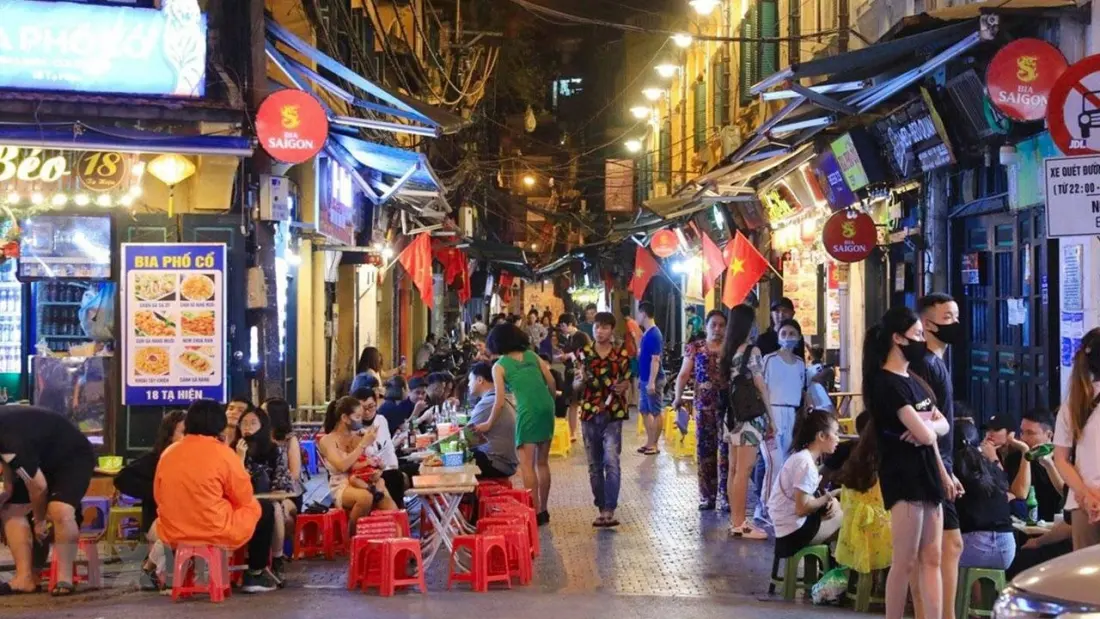
Southeast Asia had a strong showing in the Wanderlust Reader Travel Awards 2026, with Thailand voted the world's most desirable gastronomy destination. Malaysia came eighth and Vietnam tenth, squeezing into a top 10 otherwise packed with European heavyweights — Italy, France, Greece, Spain, Türkiye — plus Japan and South Korea. The awards drew more than 251,000 readers, who cast over 8.2 million votes across 23 categories.
Thailand's win is no fluke. According to Wanderlust, Bangkok now has more restaurants on the Asia's 50 Best Restaurants 2026 list than any other Asian city, including Tokyo. But the appeal stretches far beyond fine dining in the capital: think fiery northeastern Isan cooking, Burmese-influenced dishes up north, and the traditional desserts of Phetchaburi, a UNESCO City of Gastronomy. It's the combination of $2 street noodles and world-class kitchens that keeps Thailand at the top.
Vietnam's tenth-place finish tells a similar story of range and value. The country's food changes completely as you move around: Hanoi's phở and smoky bún chả, the fiery bún bò Huế in the centre, and the crunchy bánh mì of Ho Chi Minh City. Most of the best eating happens at markets, roadside stalls and family-run spots where a filling meal costs next to nothing. Meanwhile, the fine-dining scene is catching up — since the Michelin Guide arrived in Vietnam in 2023, 11 restaurants have earned a star.
Malaysia, at eighth, rounds out the region's presence with its multicultural plate: nasi lemak, laksa and roti canai, shaped by generations of Malay, Chinese, Indian and European influence.
For travellers, this is really a nudge rather than news. If food drives your trip choices, Southeast Asia offers something its European rivals can't match at the same price: you can eat brilliantly all day for the cost of one starter in Paris. Vietnam in particular rewards wandering — cooking classes, street-food tours and regional markets are affordable, and they pull visitors beyond the usual hubs of Hanoi, Hoi An and Saigon into places where the regional specialities actually come from. If Thailand's food-brand playbook is anything to go by, expect more organised culinary tourism in Vietnam soon — which makes now a good time to go while the sidewalk phở is still the main event.