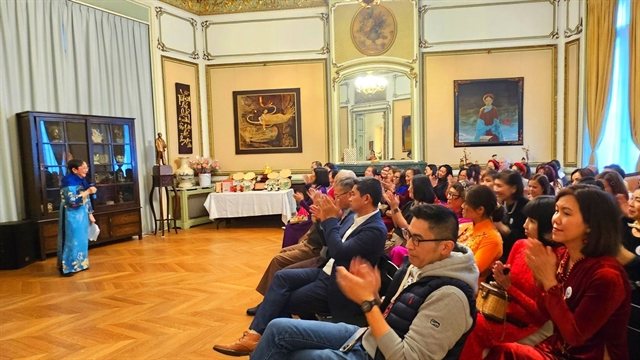
The Vietnamese Embassy in Belgium recently hosted a gathering that brought together women from across Europe — students, psychologists, businesspeople and community association members — for a day of panel talks, tea and traditional food. On the surface it sounds like a diaspora get-together, and it is, but the conversations reveal something travellers to Vietnam (and to Vietnamese communities abroad) will recognise immediately: how stubbornly and skillfully Vietnamese culture travels.
Ambassador Nguyễn Hương Trà opened the event by framing Vietnamese women as cultural bridges — the people keeping overseas communities connected to each other and to Vietnam itself. A talk from Trịnh Thanh Dung, representing the first generation of Vietnamese women in Belgium, traced their arc from the struggle for independence through to modern international integration.
The panel offered three generations in one room. Nguyễn Ngọc Mai Phương, a master's student in global logistics at KU Leuven, made a point that rings true for anyone who has eaten a home-cooked meal in a foreign city: every Vietnamese student cooking for international friends becomes a kind of unofficial cultural ambassador. Trần Thị Hồng Nhi, a clinical psychology expert, looked at the tug-of-war inside immigrant families — parents raised on traditional values, children shaped by a new environment, and social media and AI now adding a third voice to the conversation. Nguyễn Thị Kim Chi, of the Vietnamese Community Association in the Netherlands, pushed a more personal message: continuous learning and independence as the foundation for keeping a culture alive voluntarily rather than out of obligation.
The cultural programme did more talking than the panels, arguably. Counsellor Nguyễn Bá Sang led a Vietnamese tea session covering the history of tea cultivation, the country's distinct tea-growing regions and how to appreciate it properly — a subject that overlaps neatly with Vietnam's growing reputation among travellers for its tea and coffee culture. The day closed with traditional dishes and a performance of Nối Vòng Tay Lớn (The Great Circle of Vietnam), a song about solidarity that sent everyone home with the event's central message intact.
Why does this matter to a traveller? Because cultural survival at this level is visible on the ground. The Vietnamese communities in Brussels, Leuven and the Netherlands sustain restaurants, markets and festivals that let you taste and hear Vietnam without boarding a long-haul flight — and they point, always, back to the source. If Vietnam is on your list, the tea regions and culinary traditions highlighted at this event are a genuinely good thread to pull on when you get there.