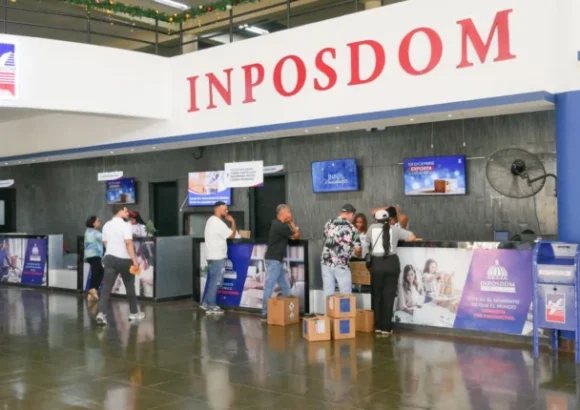
Spanish citizens living in the Dominican Republic will get a streamlined postal voting operation for Spain's general elections on 29 November 2026. The Dominican Postal Institute (Inposdom) and the Consulate General of Spain in Santo Domingo are running a coordinated push to speed up the handling of electoral mail, so ballots cast in the Caribbean arrive in time to count for Spain's Congress of Deputies and Senate.
The arrangement came together after the Spanish Consulate formally asked Inposdom, which is led by Erick Alberto Guzmán Núñez, for support. The postal service has committed to prioritising the receipt, processing and delivery of electoral correspondence — essentially fast-tracking envelopes that would normally move through standard mail queues.
The numbers behind this are bigger than you might expect. According to Spanish government data as of 1 January 2026, 35,588 Spanish citizens call the Dominican Republic home. That's a sizeable expatriate community spread across Santo Domingo, the north coast and beyond, and one that Spanish electoral law allows to vote from abroad through the Electoral Census of Absent Residents, known as CERA.
The practical details are straightforward. Voters registered with CERA can post their ballots to the Spanish Consulate in Santo Domingo up to 24 November 2026 — a five-day buffer before polling day in Spain. Anyone who'd rather vote in person has a six-day window at the consulate, from 21 to 26 November inclusive. The consulate sits at Avenida Independencia No. 1205 in the Zona Universitaria district of Santo Domingo. For questions about electoral mail specifically, Inposdom has set up two contact extensions — 247 and 250 — on 809-534-5838.
Why does this matter beyond the ballot box? For one, it signals how large and settled the Spanish community in the Dominican Republic has become — a reminder that this is more than a short-stay beach destination. Long-term relocation, dual-country living and retirement in the Caribbean are real, growing patterns, and having two national institutions cooperate on something as mundane-but-critical as electoral mail shows the infrastructure exists to support residents, not just tourists.
If you're a Spanish national in the Dominican Republic, the takeaway is simple: check your CERA registration well before November, don't leave your ballot to the last post, and mark the in-person window in your calendar if posting isn't an option. Missed deadlines in overseas voting are the most common reason ballots go uncounted, and this operation exists precisely to prevent that.
For travellers with no stake in Spanish politics, this is still a mildly useful data point: it underlines that Santo Domingo functions as a genuine hub for international residents, with consular services, reliable postal logistics and a sizeable European community. That tends to translate into good Spanish restaurants, direct air links to Madrid and a city that works year-round rather than only in high season. If you find yourself in the Zona Universitaria area — a lively student district west of the colonial centre — you'll be passing through a neighbourhood built for locals and expats alike, not for postcards.