Each year in the ninth lunar month, the small coastal commune of Tân Hải in Lâm Đồng Province, southern Vietnam, fills with thousands of visitors for one of the region's most distinctive spiritual gatherings: the Thầy Thím Temple Cultural and Tourism Festival. The 2026 edition ran from October 23-25 and pulled in more than 20,000 worshippers and travellers over three days.
The festival honours a couple locals have venerated for roughly 130 years, respectfully known as "Thầy" (Master) and "Thím" (Madame). Legend has it they used their powers to heal the poor and build boats for local fishermen, which is why the temple remains a spiritual anchor for a community that lives off the sea — people still come to pray for calm weather and good fortune.
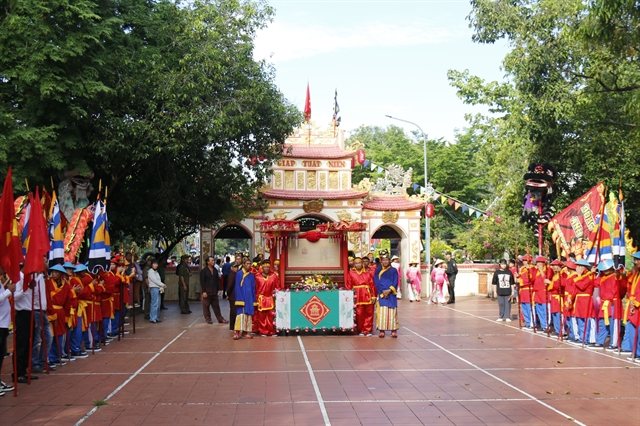
The centrepiece is the Nghinh Thần, or Deity Welcoming, ritual, held at dawn on the opening day. Thousands of people in traditional dress process from the temple to the couple's tomb, followed by incense offerings and prayers. It's a spectacle that feels genuinely local rather than staged for tourists, though visitors are very much welcome to watch, join the offerings and take in the illustrated legend displayed at the temple.
Beyond the ritual, the festival doubles as a showcase of coastal life. Expect folk games and competitions with real seaside character: net-weaving, basket boat rowing, fish-carrying races, human chess and beach volleyball. There are also traditional art performances and an exhibition of local food specialities and OCOP products — Vietnam's "one commune one product" scheme, a good way to taste and buy regional goods directly from makers.
The event earned national intangible cultural heritage status in 2022, and local authorities are working to tie the temple into wider tourism experiences around Tân Hải — coastal sightseeing, seafood and a look at everyday life in a working fishing commune. For repeat visitors like one family from Tây Ninh Province quoted by organisers, an annual pilgrimage to offer incense has become a tradition combined with exploring the surrounding coast.
Why it matters for travellers: this is a chance to see living heritage rather than a reconstructed show. If your Vietnam trip falls in the ninth lunar month (usually October), timing it with the festival gives you rituals, games and food in one compact commune — and a part of Lâm Đồng most itineraries skip in favour of Đà Lạt's highlands.