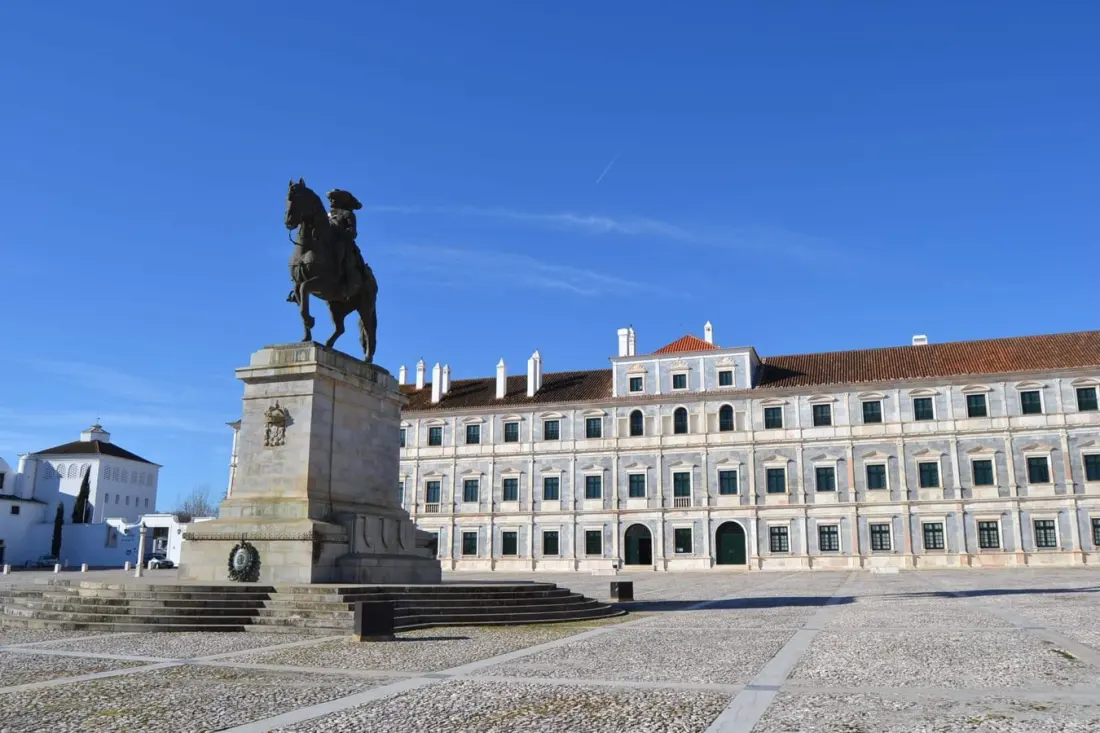
The Alentejo town of Vila Viçosa, marble country and one-time seat of Portugal's most powerful noble family, could be a step away from UNESCO World Heritage status. Its nomination dossier, titled "Vila Viçosa: Ducal Seat", is now with UNESCO in Paris, and a technical meeting is expected in November or December. Mayor Inácio Esperança told Lusa the resulting report will decide whether the bid goes before the World Heritage Committee in Istanbul from June 27 to July 7, 2027 — and he's confident the verdict will be positive.
The bid covers a compact but remarkably rich ensemble: the historic town centre, the vast Ducal Palace, its churches and pantheon, aristocratic residences, and the Tapada Real, the old royal hunting estate. Vila Viçosa has been on Portugal's UNESCO tentative list since 2017, after architect Nuno Portas first pushed the idea back in 2001. A previous attempt was rejected at national level in 2021, but the council and the Casa de Bragança Foundation regrouped, and the current bid was formally approved by the Portuguese government in December 2025. An ICOMOS evaluator has already visited the town. Work is also under way to have the complex declared a National Monument, with a decision hoped for by the end of 2026.
Why does it matter? Vila Viçosa's story is unusually layered. It received its first royal charter in 1270, and King Dinis built the medieval castle around then. From 1461 the town belonged to the House of Braganza, whose dukes reshaped it into one of Portugal's great aristocratic strongholds. Construction of the Ducal Palace began in 1501 under Jaime, the 4th Duke, and when the Braganzas took the throne in 1640, the town's profile rose further — João IV proclaimed Our Lady of the Immaculate Conception, whose sanctuary stands in Vila Viçosa, patron saint of Portugal in 1646. Local marble, quarried for centuries, threads through much of the town's architecture.
For travellers, this is a good moment to visit. Vila Viçosa remains one of the quieter corners of the Alentejo, and unlike Évora to the west, it hasn't been overwhelmed by tourism. The Ducal Palace is the headline sight, but the appeal is the whole ensemble: marble-strewn squares, a castle you can climb, and the Tapada estate on the edge of town. If the UNESCO bid succeeds, expect visitor numbers to climb and hotel rates to follow — so the window for seeing it unhurried may be now. An official listing in 2027 would put this ducal town on far more itineraries.