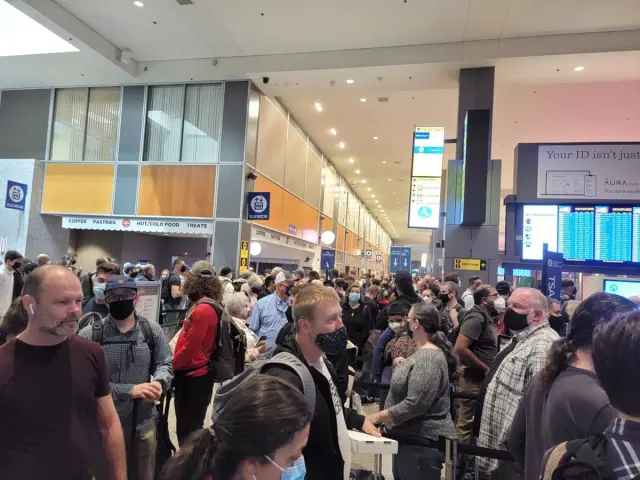
Every year, US airport checkpoints swallow an astonishing volume of passenger property: knives, wrenches, shampoo bottles, water bottles and, increasingly, loaded handguns. Oddly, no one keeps a full national count. Since August 2008, the Transportation Security Administration has stopped logging routine surrenders, so the only category with a reliable annual tally is firearms — and that number has surged 152% in a decade, from 2,653 detections to 6,678 in 2024, 94% of them loaded.
The scale of everyday abandonment is estimated rather than counted. The TSA thinks travellers leave 90,000 to 100,000 personal belongings in screening trays every month — over a million phones, laptops, keys and belts annually. Before the reporting blackout, the figures were staggering: 6.1 million items intercepted in 2003, peaking at nearly 15.9 million in 2005 when cigarette lighters were banned. Once the lighter ban lifted and the agency quit counting, surrendered gear started being weighed in bulk instead.
Where does it all go? Lost phones and laptops head to airport lost-and-found, while unclaimed IDs and passports are shredded after 30 days. Pocket knives, multitools and oversized liquids are stored for one to three months, then handed to state surplus agencies, which bundle them by the pound and sell them on auction sites like GovDeals. Washington Dulles alone hands over roughly 4,000 pounds of surrendered items a year.
Guns follow a different path. When an X-ray operator spots a pistol, the lane freezes and airport police are called. Prosecutions are surprisingly rare — Atlanta police prosecuted just two of 87 handgun detections in early 2025 — but the TSA's civil penalties are stiff: fines that totalled over $52 million in three years, plus a minimum five-year ban from TSA PreCheck. Geography matters more than passenger volume: Atlanta led with 440 firearms caught in 2024, Dallas/Fort Worth had 390, Houston 272 and Phoenix 247, while eight New England airports combined stopped fewer than 50 across 33 million passengers.
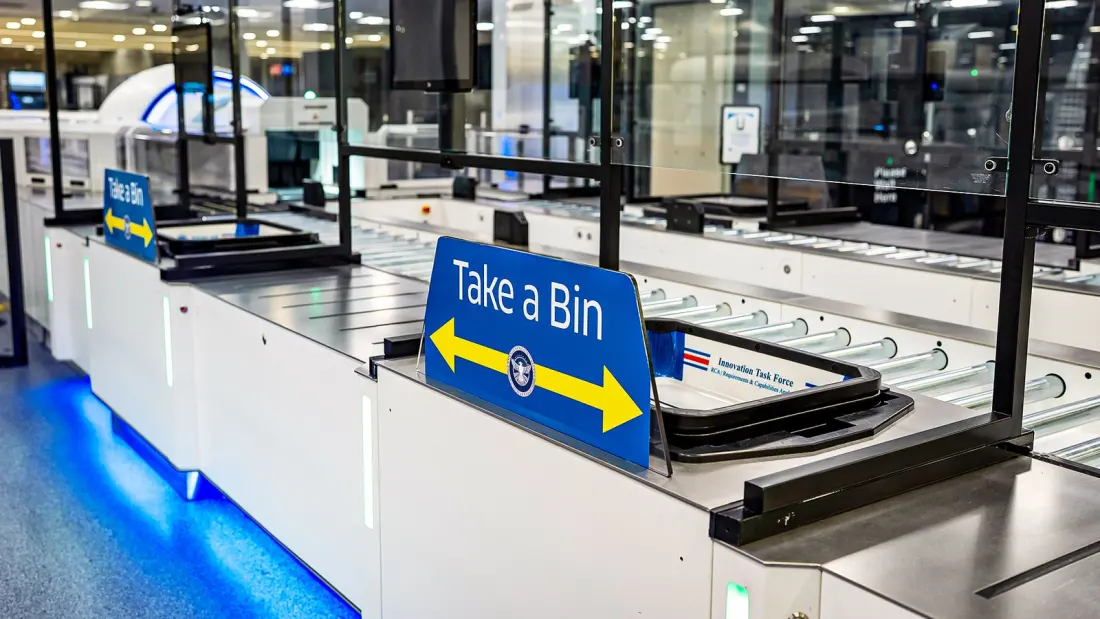
Why do so many items still get ditched at the last minute? Partly because the fix is underfunded. New 3D CT scanners, deployed at 296 airports with 1,162 units, build full 3D images of bags and can theoretically let you leave laptops and liquids in place — but most US checkpoints still enforce the 3.4-ounce liquid rule because older X-ray lanes lack the cleared software. The CT machines are also heavy (up to 5,400 pounds) and slow, triggering more secondary searches on dense everyday objects like cheese blocks, hardcovers and tangled cables. Meanwhile, about a third of the $5.60 passenger security fee — roughly $1.6 billion a year — is diverted to deficit reduction rather than checkpoint upgrades.
For travellers, the practical takeaway is simple: pack carefully before you leave for the airport. Check your carry-on for forgotten multitools, and remember that US liquid rules haven't relaxed the way some European hubs' have, despite newer scanners. Rushed people in security bins cost the country tons of usable gear every year — don't add to the pile.