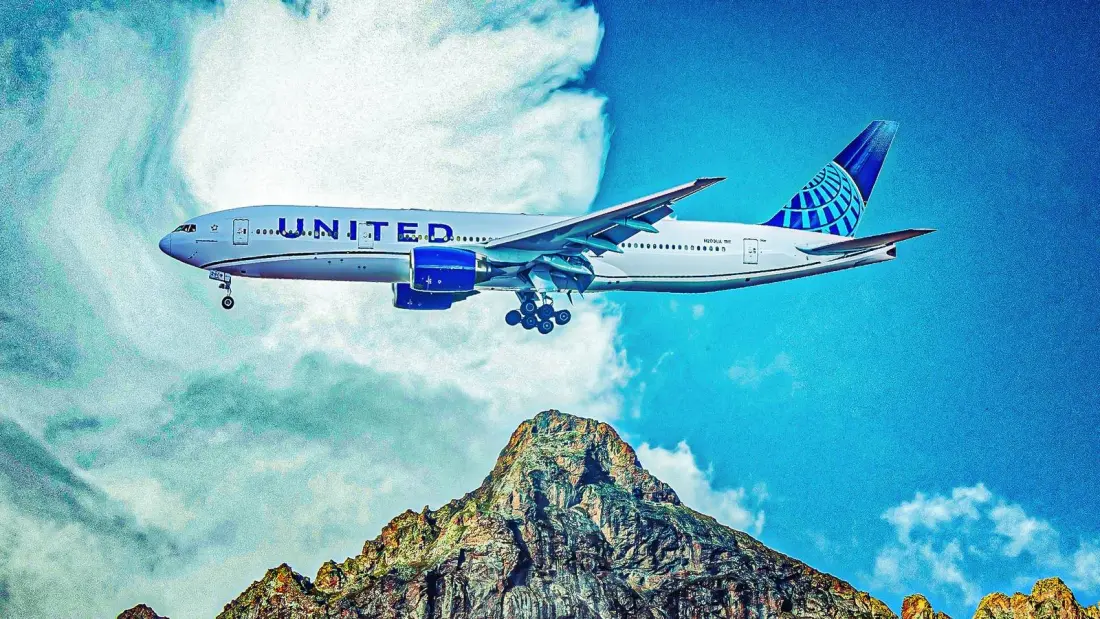
United Airlines is the world's biggest long-haul operator, running an average of 157 daily long-haul departures from its US hubs. But even giants shrink sometimes. Cirium Diio data shows the airline has abandoned 24 long-haul destinations over the past two decades — and the list says a lot about how transatlantic and transpacific travel has shifted.
Europe accounts for the bulk of the cuts: 15 airports, all of them served from Newark or Washington Dulles. The drop-offs include some big names — Copenhagen and Moscow Domodedovo (2012), Istanbul (2013), Oslo and Newcastle (2016), Birmingham and Belfast (2017), Hamburg (2018), Prague (2019), Manchester (2020) and Bergen (2022). The most recent exits are Stockholm Arlanda and Tenerife South, both cut from Newark in 2025. A few of the airports themselves have vanished too: Istanbul Atatürk closed, and Berlin Tegel has been replaced by Brandenburg on United's network. Many of these routes came via Continental's old network and were consolidated after the 2010 merger.
Over in Asia and Africa, United's record is thinner. It tried summer-seasonal 787-8 flights to Xi'an in 2016-17 and year-round 787-9 service to Hangzhou from San Francisco — both ended before the pandemic, and neither city has US nonstops today. Chengdu lasted from 2014 to 2020 before COVID ended it, though Sichuan Airlines still connects that city to Los Angeles. Mumbai's Newark link died in 2022. And in a rare quick failure, Dakar lasted just months: Washington Dulles flights ran from May 2025 to January 2026.
The Middle East story is mixed. Kuwait City was served from Dulles from 2006 to 2016 (with Bahrain added from 2010), and Doha got two years of one-stop service via Dubai. Amman, launched in May 2022 on a 787-8, actually performed well with an 86.7% load factor thanks to diaspora traffic, government travel and connections to Lebanon, Syria and Iraq — yet Royal Jordanian now serves Washington instead. One notable exception to the retreat list: Dubai. United has stayed away since sanctions closed Iranian airspace, but is scheduled to return in March 2027.
Does any of this matter if you're booking a holiday? If you live in one of these cities — Stockholm, Manchester, Prague, Dakar, Mumbai — it explains why your United options vanished and why you're now connecting through partners like Lufthansa, Brussels Airlines or Royal Jordanian rather than flying United metal. For US-based travellers, it's a reminder that Star Alliance and joint-venture partners usually fill the gap, so award availability and through-ticketing often still work on the same corridors. And route cuts can be temporary: airlines frequently return when aircraft, geopolitics or demand allow, as the Dubai restart shows. Watch for rival carriers moving in, too — Air Canada is launching two new routes to Tenerife just as United pulls out.