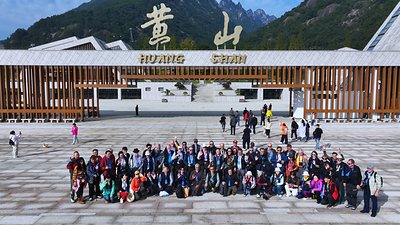
A three-part photography marathon across Anhui province has come to an end, and it left behind more than 11,000 high-resolution images of one of China's most storied regions. The "Picturesque Anhui • Imaging Anhui" season finished on November 4, having run from summer into autumn across three separate tours.
The scale was genuinely international. Co-hosted by the Fédération Internationale de l'Art Photographique (FIAP), the Anhui Provincial Department of Culture and Tourism and the province's foreign affairs office, the event pulled in 116 photographers from 38 countries and regions. Between them, they shot 46 cultural and tourism sites spread over five cities: Hefei, Chizhou, Anqing, Huangshan and Xuancheng.
Each session had its own flavour. The first, based in Hefei, contrasted the provincial capital's tech-forward cityscape with the old villages and intangible cultural heritage of nearby Chizhou. The second went deeper south into Huangshan and Anqing — ancient Huizhou villages, dramatic mountain scenery and Huangmei Opera, one of China's major opera forms. The final session, held in Huangshan and Xuancheng, timed itself for peak autumn colour and turned its lens on traditional Huizhou architecture plus the workshops behind the Four Treasures of the Study: the brush, ink, paper and inkstone that have been made in this region for centuries.
For anyone who has only ever seen the classic mist-wrapped granite peaks of Huangshan (the Yellow Mountain) on a scroll painting, this is a useful reminder that Anhui is more than a single postcard view. The province packs UNESCO-listed villages, opera traditions, riverside cities and a craft heritage you can watch being made by hand — all within a few hours' drive of each other.
There's a practical payoff for travellers too. Those 11,000 images will be circulated internationally over the coming months, which means expect to see a lot more Anhui in travel media and on mood boards. It also signals that the provincial tourism authorities are pushing hard to court international visitors, so expect improving signage, tours and access at the sites that featured in the programme.
If this event sparks something, the obvious window is autumn, when the terraced fields and village lanes around Xuancheng and Huangshan turn gold and red against whitewashed walls and dark tile roofs. But the summer green of Chizhou's ancient villages — the other end of this year's season — shows Anhui photographs well in any season. Either way, you'd be following in the viewfinders of photographers from 38 countries who just spent months proving the point.