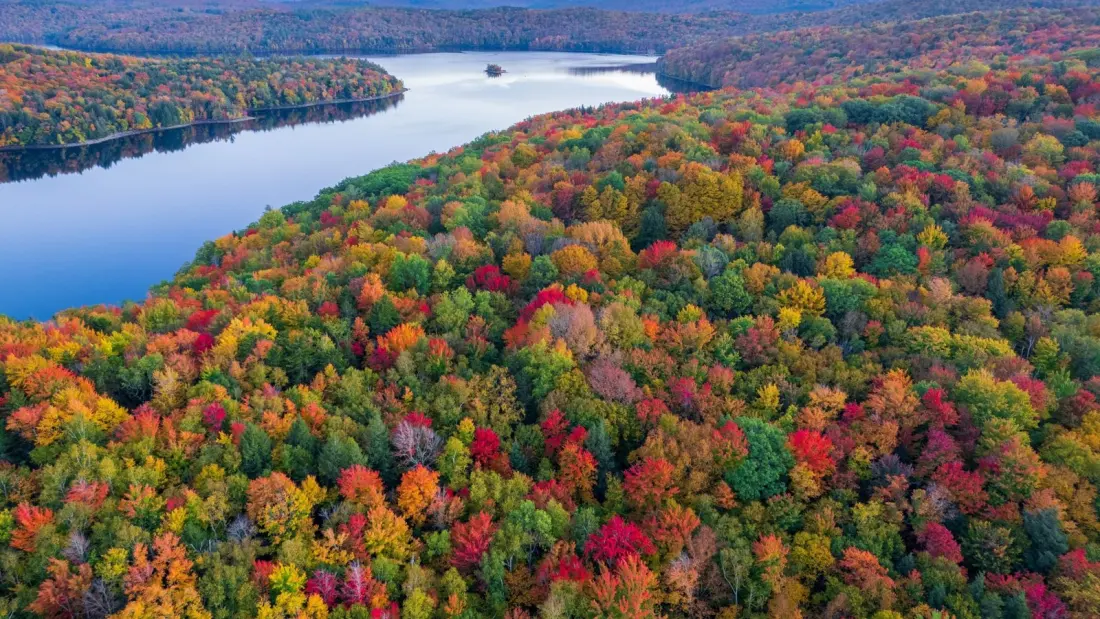
Chasing peak autumn colour used to be simple: pick a date from historical averages, book the trip, done. New research suggests that playbook is falling apart. Warmer summers, shifting rainfall and shrinking snowpack are scrambling the traditional leaf-peeping calendar across US national parks — and the real casualty isn't the colour itself, it's the predictability.
A 2026 study in Agricultural and Forest Meteorology, covering more than 100 woody plant species, found that warm summers delay the start of colour in eastern forests, while out West, moisture matters more: wet winters push leaf change later, drought hurries trees into an early, duller decline. Another 2026 study found foliage dates in North America barely moved between 2000 and 2020 — not because the climate was stable, but because rising temperatures push colour later while a drier atmosphere pulls it earlier, cancelling each other out.
The picture varies by park. In Rocky Mountain National Park, where quaking aspens usually turn gold from mid-September, temperatures have risen about 3.4°F over the past century and spring snowmelt now comes two to three weeks earlier, leaving trees water-stressed before autumn arrives. Yellowstone's growing season has stretched by roughly 30 days in places, with about 80 more above-freezing days a year near the Northeast Entrance than in the 1960s — and researchers have spotted young aspens at elevations they never used to occupy. At Acadia, scientists reconstructed peak-foliage dates back to 1950 and found colour now arrives almost two weeks later on average, linked to warmer, wetter Septembers.
There's good news for travellers, though. Great Smoky Mountains National Park's enormous elevation range — colour runs from mid-September at the top to early November in the valleys, across more than 100 native tree species — means you can move uphill or downhill to find the show. Shenandoah posts weekly fall reports and runs live cameras, including a USGS one on Stony Man Mountain. Cuyahoga Valley in Ohio typically peaks around the third week of October, but a short dry spell can still brown the maples early even in a wet year.
The practical takeaway: treat historical peak dates as a starting point, not a promise. Check drought and foliage reports before locking in dates, favour streams, north-facing slopes and healthy aspen stands in the drier western parks, and build flexibility into mountain trips by scouting several elevations. The colours will still come — they just won't follow last year's calendar.