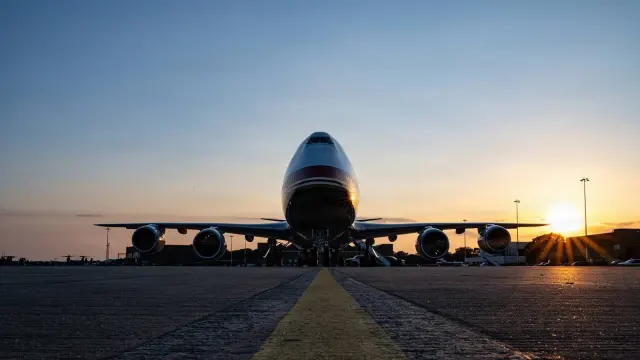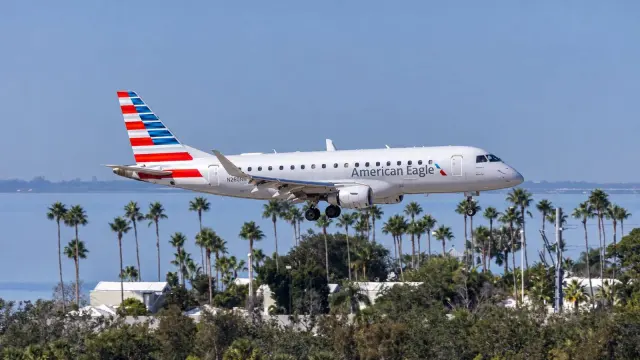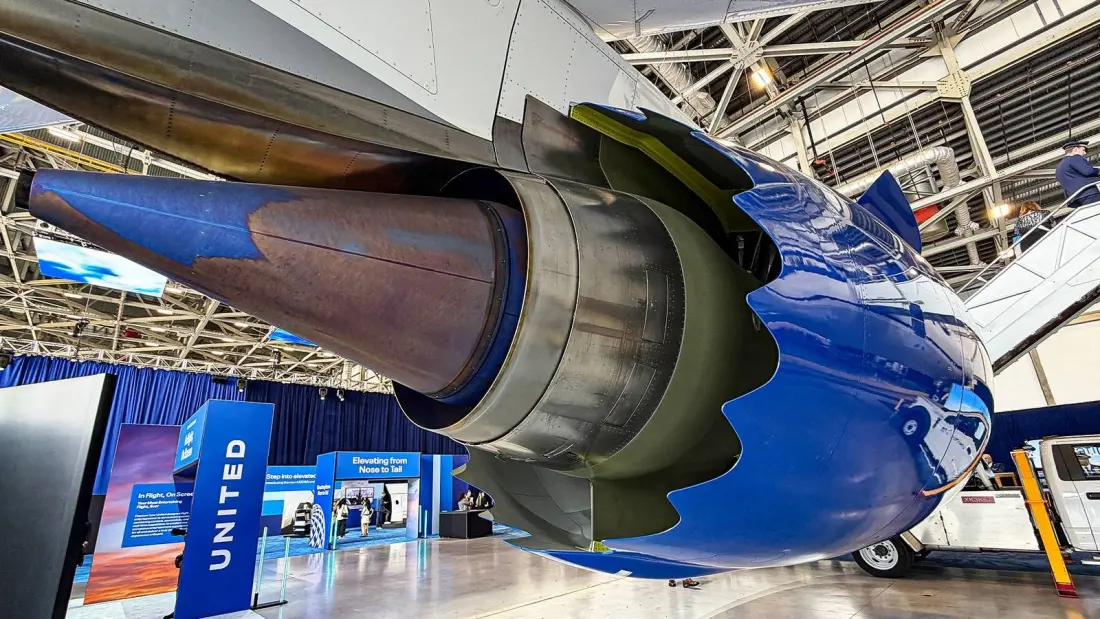
Look at the back of a Boeing 787 Dreamliner, 737 MAX or 747-8 engine and you'll notice a scalloped, sawtooth edge on the exhaust nozzle. Those serrations, known as chevrons, were Boeing's answer to airport noise rules — and they've become one of the more interesting engineering debates in modern aviation, because no other aircraft maker copied them.
The idea, developed with General Electric and NASA, is clever. Turbofan engines make noise largely where the hot core exhaust meets the cooler bypass air. Chevrons generate small vortices that blend those two streams more gradually, cutting perceived noise during takeoff and climb. For passengers and people living near airports, it works: the Dreamliner is notably quiet on departure.
The catch is that those vortices never switch off. Chevrons are fixed structures, so the extra mixing creates drag and a small thrust loss throughout the whole flight, including cruise, where noise barely matters. Analyst Petter Hörnfeldt of Mentour Pilot puts the penalty at roughly 0.5% of thrust. That sounds trivial, but airlines fight over single-digit efficiency gains, and a MAX flying multiple short sectors a day racks up the loss across thousands of flights a year.
Airbus, notably, never adopted the design — first because Boeing's patent blocked it, and later because it didn't want to. A350 chief engineer Dougie Hunter has said plainly that the noise benefit wasn't worth the fuel consumption hit. Airbus instead quieted its jets through nacelle linings, fan design and high-bypass engines, without touching the exhaust geometry.
Boeing itself has since come around to the same view. Its upcoming 777X flagship ditches chevrons entirely. The new GE9X engine uses a nozzle built from ceramic matrix composites — lighter and heat-tolerant enough to achieve similar noise levels with less drag, and reportedly about 20% lighter than older nozzle designs. In effect, Boeing spent serious money removing its own signature feature.
There's a defence of the chevrons, though, and it's specific to the 787. Quieter engines let Boeing strip out up to 600 pounds (around 272 kg) of fuselage sound insulation, and that weight saving on a long-range aircraft largely offset the aerodynamic penalty. On the smaller, harder-working 737 MAX, no such offset exists, which is why the criticism grew louder as the design spread across the fleet.
For travellers, the practical takeaway is modest but real: if you've flown a 787 and noticed how calm the cabin is on takeoff, the chevrons deserve some credit. They're a reminder that aircraft design is a series of trade-offs, and that the quietest solution isn't always the most efficient one. The next generation of jets, led by the 777X, is finding ways to be both.