A viral tweet asking why flight attendants in Asia skew young and glamorous while US crews skew older set off the usual 'DEI' replies. The real answer is a mix of law, economics and history — and US airlines once marketed sex appeal just as hard as anyone.
In the regulated era before 1978, American carriers couldn't compete on price, so they competed on experience: fancy meals and young, single, conventionally attractive women in the cabin. National Airlines ran 'Fly Me' ads; Braniff insisted a hostess 'should look like a girl' and had crew change uniforms mid-flight.
Three court cases dismantled that model. Diaz v. Pan Am (1971) ended men-only exclusions, Sprogis v. United (1971) killed the no-marriage rule for women, and Wilson v. Southwest (1981) sank the airline's claim that hot pants and go-go boots were essential to its 'Love Airlines' business. The judge noted Southwest's own survey ranked punctuality and convenient schedules above hostess appeal.
Deregulation then pushed fares down and broadened the passenger mix beyond male business travellers, while union seniority rules made flying a long career — the older, more experienced crew you see is partly the workforce aging in place through hiring freezes and furloughs.
Asia tells a different story. Low-cost carriers like VietJet — the self-styled 'bikini airline' — have leaned on overt image marketing. SpiceJet's 2018 recruiting demanded single women under 28 with height and weight standards; Malindo Air made candidates undress for inspection in 2017 interviews; Hainan Airlines suspends crew 10% over weight limits, and Malaysia Airlines once fired an attendant for being 1.5 pounds over.
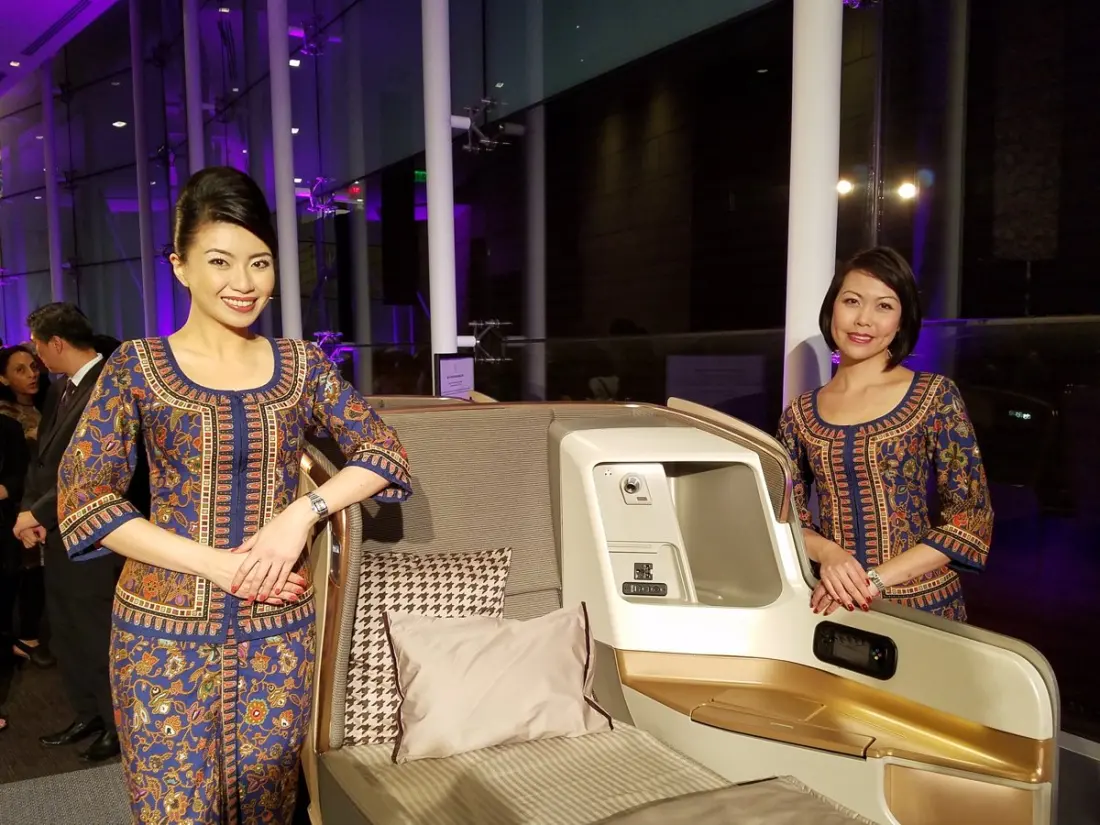
Premium flag carriers are subtler but just as deliberate. At Singapore Airlines' training centre, new crew spend a day and a half on hair and makeup alone, working from grooming cards with a handful of approved hairstyles and specific makeup colours — some trainees spent up to four hours getting ready for class. Crew are hired on five-year renewable contracts judged partly on grooming and bearing. The polish is part of the product, tied up with national branding at Cathay Pacific, Korean Air and EVA.
Gulf carriers like Emirates and Qatar Airways recruit globally — over 120 nationalities at Emirates — offering around $3,061 a month plus shared housing. That package naturally draws younger, mobile applicants, no age cap required.
The takeaway for travellers: crew appearance reflects hiring markets, labour law and marketing strategy, not service quality. What matters in the cabin is training and staffing levels, which Asian full-service carriers do invest in heavily alongside the grooming rules. Source: View from the Wing.