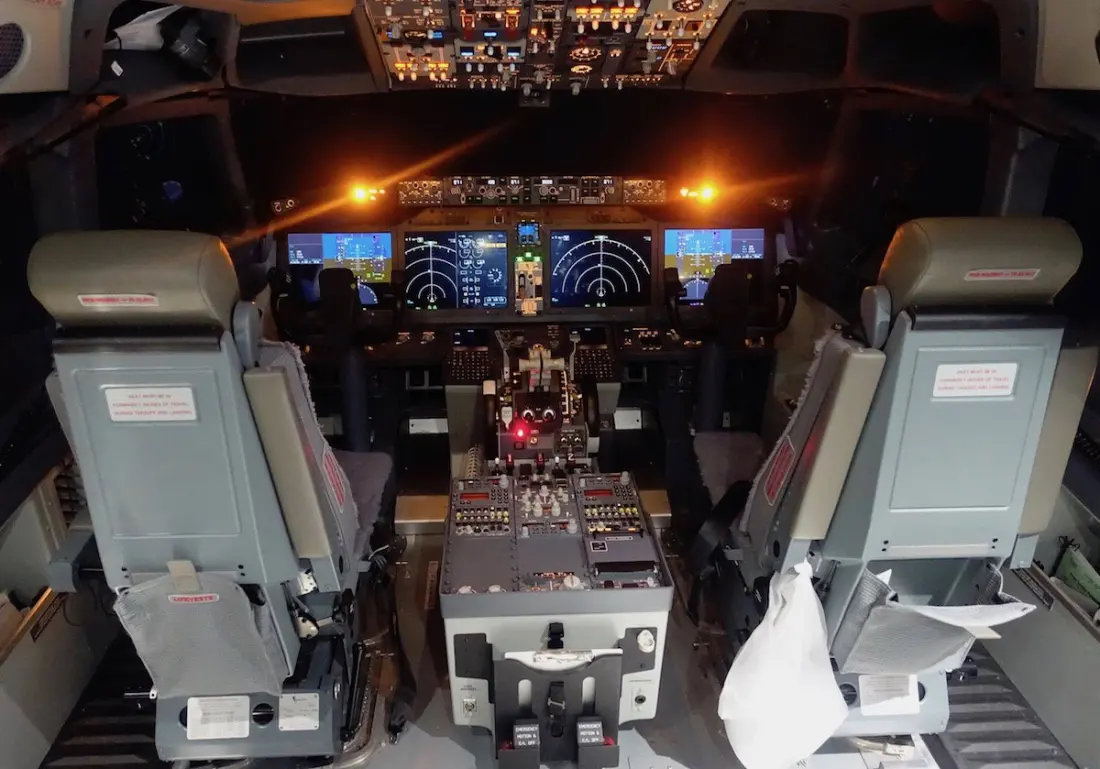
On US flights, someone always stands guard in the flight deck. If one of the two pilots steps out — usually for the bathroom — a flight attendant takes their seat until they return. It's a simple rule, born from the recognition that a reinforced cockpit door cuts both ways: it keeps threats out, but it also means whoever is inside has total control.
Most of the world doesn't do this. At the majority of airlines outside the United States, pilots routinely spend stretches of the flight entirely alone in the cockpit. The argument for it isn't strong on incapacitation grounds — cockpit door codes automatically unlock if the remaining pilot doesn't respond within seconds. The real risk is deliberate action, and pilot mental health is the uncomfortable gap in an otherwise outstanding safety record.
The recent history is hard to dismiss. In November 2013, the captain of a LAM Mozambique Embraer E190 locked his first officer out and deliberately flew the plane into the ground. Malaysia Airlines Flight 370, which vanished in March 2014 with 239 aboard, is widely believed to have been flown into the ocean by its captain. And in March 2015, the first officer of a Germanwings A320 locked the captain out and crashed the aircraft in the French Alps, killing all 150 people on board. Three deliberate acts in roughly eighteen months, each possible only because one pilot had the cockpit to themselves.
After Germanwings, Europe's regulator EASA recommended the two-person rule — then walked it back about a year later, telling airlines to assess their own risk. Even Lufthansa Group, Germanwings' own parent, dropped the policy. The logic behind pilot mental health being neglected is grim but understandable: pilots facing depression or anxiety often hide their conditions because disclosure can cost them their licence, so treatment never happens. And an attacker acting alone in a locked cockpit never has to face their victims, or record a struggle on the cockpit voice recorder.
A recent incident involving a flydubai Boeing 737 underlined the stakes from the other direction. A first officer attacked the captain in the flight deck — but because the captain survived long enough to open the door, crew could intervene and the plane was saved. The airline has no two-person rule, and had the attacker instead locked the captain out first, the outcome could have been catastrophically different.
So why should a holidaymaker care? Because this is one of those invisible variables you can't choose when booking. Whether your airline keeps a second person in the flight deck depends almost entirely on where it's regulated, not on ticket price or aircraft type. US carriers follow the rule; most carriers elsewhere do not. Aviation remains extraordinarily safe overall, but if you're someone who feels a flicker of unease when a pilot steps out mid-flight, the data on deliberate crashes suggests that instinct isn't irrational. It's a fair question to ask why a policy this cheap and simple isn't simply global standard practice.