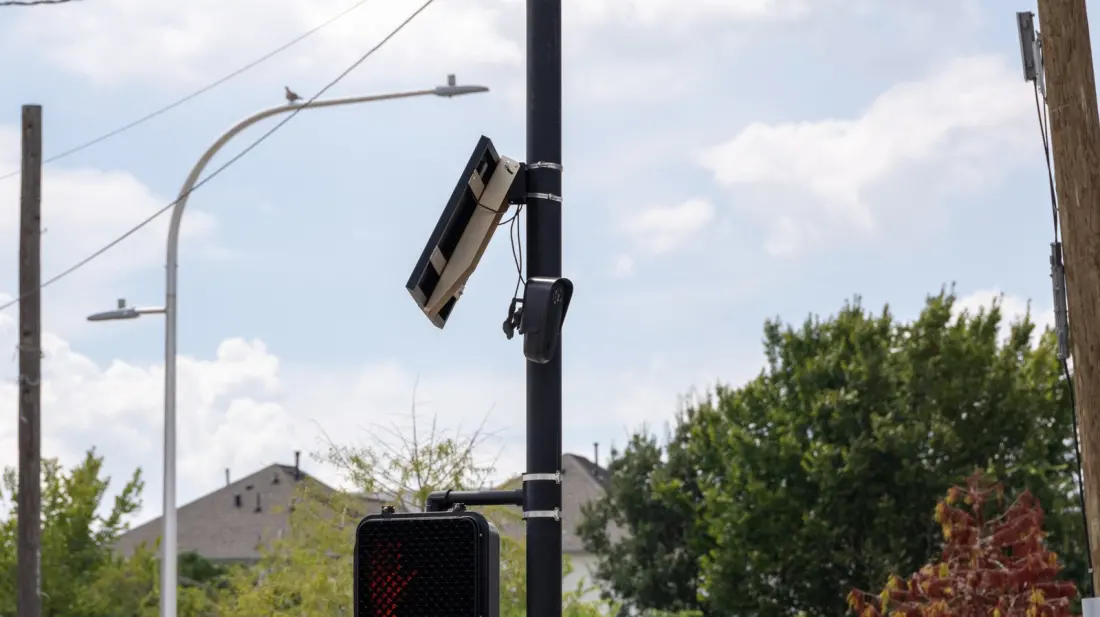
If you're road-tripping through Houston, there's a good chance your car is being photographed. The city has more documented Flock Safety cameras — automated license plate readers mounted on poles — than anywhere else in the United States, with over 2,250 of them recorded by the independent Finding Flock tracker. That works out to roughly four cameras per square mile, based on OpenStreetMap volunteers who log them in the field.
The cameras are small vertical units, often solar-powered, positioned at intersections, highway entrances and residential streets. They capture license plates plus details like a vehicle's make, model, color and location, feeding police a searchable record of where cars have been. Houston signed a $6.39 million five-year contract in 2022 covering the hardware, installation and data storage. A police community relations officer told The Houston Chronicle the system can produce a persons-of-interest list within 30 minutes of a reported crime.
Why should a visitor care? Mainly because the data doesn't stay local. Agencies that opt into the network can search thousands of camera feeds without a warrant, according to The Texas Tribune, and officers in Texas and elsewhere have faced investigations over alleged misuse of Flock data, including stalking allegations. The wider Houston region is especially dense with the devices, since HOAs and businesses install their own on top of the city's network.
For travellers who'd rather not leave a trail, there are workarounds. Route-planning tools like FlockHopper and avoidFlock map documented cameras and steer you around them, and Finding Flock publishes its own map if you want to see where the devices cluster. Some suburbs are pushing back, too: Manvel voted unanimously to end its contract, Willis has switched its cameras off indefinitely pending a council review, and the backlash is worth watching if you drive through the metro area often.
None of this changes the fundamentals of driving in Houston — traffic, sprawl and aggressive freeway merges remain the bigger hazards. But for anyone renting a car or passing through on a Texas road trip, it's a useful heads-up that in this city, assume the road is watching you back.