
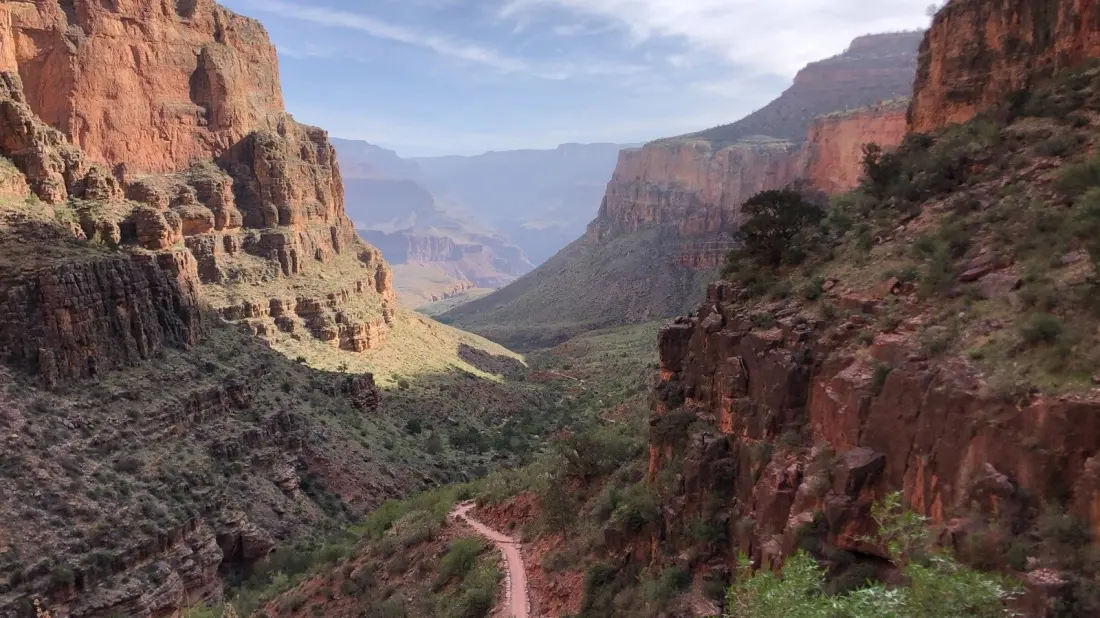
There's a reason even the great naturalist John Muir called the Grand Canyon "untellable." The one-armed Civil War veteran John Wesley Powell, who ran the first boat expedition through the canyon in 1869, said its wonders couldn't be captured in words. And modern visitors agree: photos, as one hiker put it online, only remind you of the feeling of being there. The scale simply doesn't translate — you have to stand on the rim yourself.
That's not just romantic talk. U.C. Berkeley psychology professor Dacher Keltner, author of the 2023 book "Awe: The New Science of Everyday Wonder," defines awe as the feeling of being in the presence of something vast that exceeds your understanding of the world — and argues it's hard to find anything better for body and mind than seeking awe outdoors. Research suggests awe makes us feel more connected to the world around us, and plenty of Grand Canyon first-timers report a genuinely emotional reaction, from tears to a lasting sense of change.
So how do you maximise the experience? There are two very different ways to see the canyon, and picking the right one matters.
The fast option is the Skywalk at Grand Canyon West, on Hualapai tribal land about two hours from Las Vegas. It's a glass-floored arc jutting over the edge, delivering vertigo-inducing views with minimal effort. Some visitors love it; others call it a tourist trap. If your goal is a managed, quick thrill, it delivers. If your goal is immersion in nature, it isn't the pick.
For the real thing, head to the South Rim in the national park — roughly 4.5 hours from Las Vegas or four from Phoenix. The famous Bright Angel Trail starts right in Grand Canyon Village, but it's also famously dangerous and often crowded, which can smother that hushed, humbled feeling you came for. Better bets: the South Kaibab Trail, reached by shuttle from the Grand Canyon Visitor Center, offers some of the most dramatic, cathedral-like views on the rim. It's popular and demanding, but shuttle-only access naturally limits the crowds. Go at sunrise, when the canyon walls catch a constantly shifting light show that can feel almost otherworldly.
Want solitude? Take the shuttle to the Hermit Trail — rugged, less travelled, and one of the few where you can genuinely find yourself alone on the trail for stretches at a time. That quiet is exactly what turns a nice view into the kind of memory that stays with you.
Why it matters: a Grand Canyon trip rewards a little planning. The difference between a rushed photo stop and a sunrise hike into the canyon's upper reaches is the difference between ticking a box and experiencing something that might genuinely reset how you feel. If awe is the goal — and science says it's worth chasing — the South Rim's quieter trails are where you'll find it.