Ryanair has spent four decades proving an uncomfortable point: most passengers will trade nearly everything for a cheap ticket. The Irish carrier is Europe's most profitable airline, out-earning legacy flag carriers that pour billions into lounges, lie-flat seats and free meals — and it does so by treating comfort as an optional extra rather than a baseline.
The playbook is ruthlessly simple. Remove every cost that doesn't get a passenger from A to B. One aircraft type — the Boeing 737 — keeps maintenance and training costs low. Secondary airports near big cities, like Paris Beauvais or Barcelona Girona, charge lower landing fees than major hubs. Fast turnarounds of around 25 minutes mean each plane flies more sectors per day, spreading fixed costs thinner. Unbundling does the rest: baggage, seat selection, priority boarding and even water are all revenue lines, which means Ryanair often makes money even when ticket fares are rock bottom.
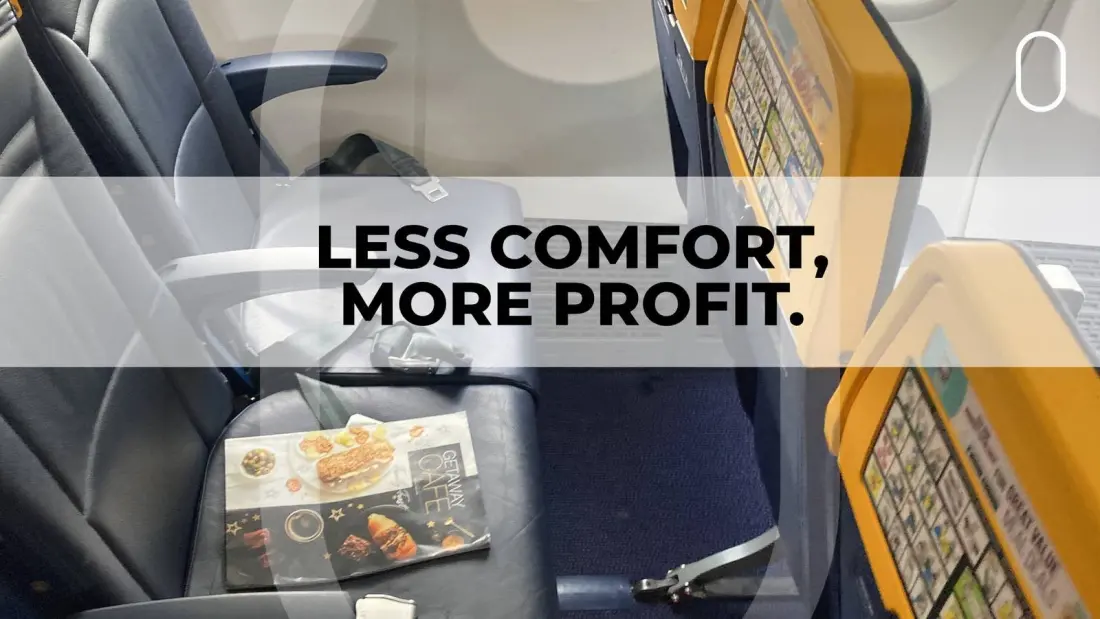
The irony is that the discomfort is partly strategic. A slightly miserable experience nudges frequent flyers toward paid upgrades and priority products, while headline fares of €20 or €30 keep the seats full. Ryanair carries more international passengers than any airline in the world, and its no-frills model has been copied by carriers on every continent.
For travellers, the lesson isn't that Ryanair is bad — it's that it's a different product. Used well, it's arguably the best value in European aviation: a no-connection hop across the continent for less than the cost of a train to the airport. Used carelessly, the add-ons can double your fare. Check in online, weigh your bag before you leave the house, and don't expect much legroom or a quiet terminal. If you go in knowing exactly what you've bought, the blue-and-yellow paradox works firmly in your favour.