A few doors off Zagreb's busiest shopping street, the twentieth century never quite ended. Along Ilica and in the courtyards of the Lower Town, a handful of workshops still run much as they did when craft guilds shaped the city's economy, and their doors are open to anyone curious enough to step inside.
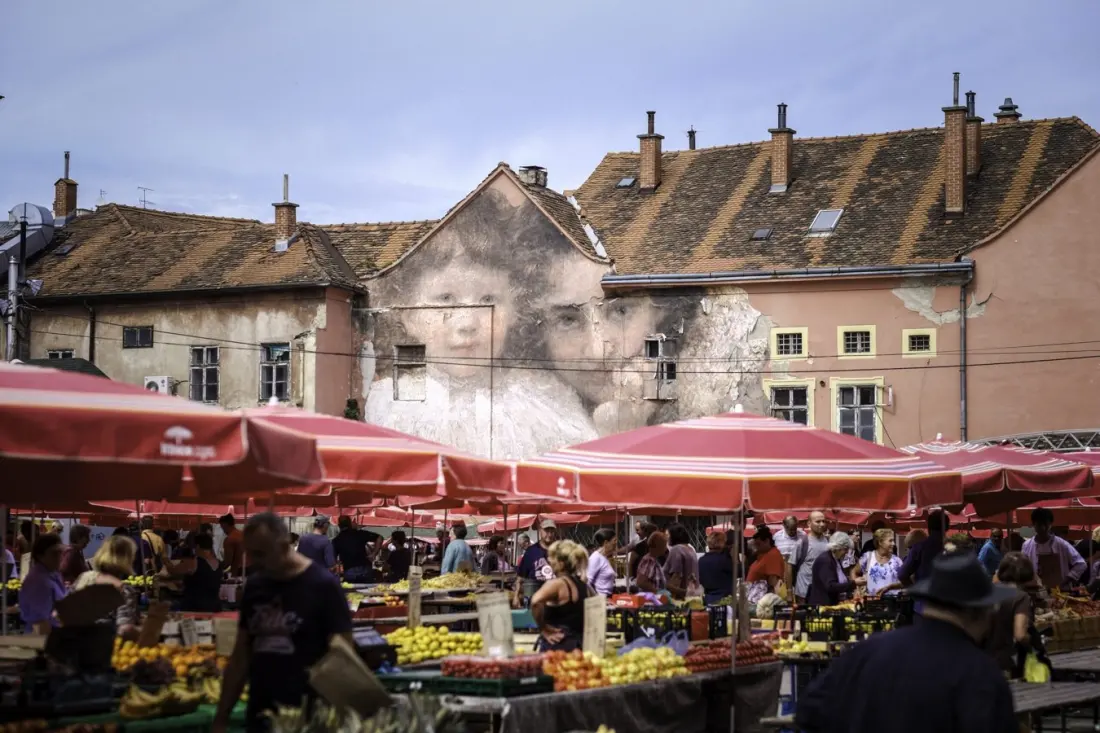
The most famous of them makes the city's signature object: the Šestine umbrella, the crimson, horizontally striped parasol with a chestnut handle that shades the stalls of Dolac Market. Every authentic one is still built by hand at the Cerovečki Umbrella Workshop on Ilica, founded in 1912 and now run by the fourth generation. It is the last survivor of eight umbrella workshops that once worked the capital, and Croatia's Ministry of Culture has listed the craft as intangible cultural heritage. Inside, the smell of steamed chestnut wood and cotton tells you immediately this is not souvenir-shop territory — these umbrellas are built to last decades.
Hats have a stronghold too. Kobali Hat Shop and Salon Šešira Cahun, located in the Octagon passage and along Ilica, still block, steam and stitch felt fedoras, bridal fascinators and traditional folk caps on century-old wooden moulds. Customers get measured and fitted in person, surrounded by walls of hatboxes — the kind of service that disappeared from most high streets long ago.
Then there are the cobblers. Postolar Bočak on Ilica is one of the few workshops in the city still making shoes from scratch rather than only repairing them. A single handmade pair involves dozens of steps: carving a custom wooden last, hand-stitching calfskin uppers, fitting natural leather soles. Given how much of central Zagreb is cobbled, sturdy footwear is not a luxury here — it is practical advice.
Many of these businesses hold the official "Tradicijski obrt" (Traditional Craft) designation, a certification that their techniques have been passed down through generations. The Zagreb Tourist Board and the Croatian Chamber of Trades and Crafts actively support them as cultural assets, which is part of why the city's old trades have survived mass production and fast fashion better than in most European capitals.
For travellers, the appeal is simple. Instead of leaving with a keyring, you can watch a master at work, commission something made to measure, and hear the story behind it from the person making it. An afternoon hopping between the umbrella makers, hatters and cobblers of Ilica and the Lower Town doubles as a walking tour of the city's identity — and everything you buy is built to outlast the trip. Zagreb does slow retail better than almost anywhere, and these workshops are the reason.