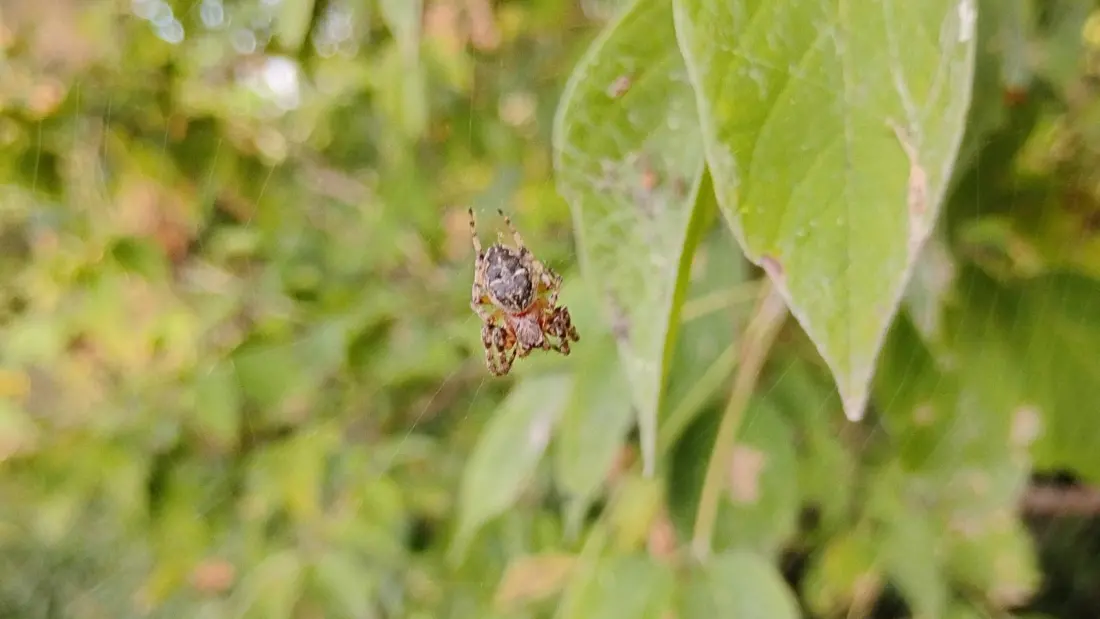
Hiking in late September and you're ducking orb webs every few metres? You're not imagining it. Across the northern hemisphere, the tail end of summer into autumn is peak spider season, and Backpacker's editor-in-chief Adam Roy saw it firsthand on Wisconsin's Ice Age Trail, where webs hung across the underbrush and wolf spiders scurried through the leaf litter every dozen feet or so.
The experts at the Butterfly Pavilion in Westminster, Colorado, point to two simple reasons for the seasonal surge. First, spiders have spent all spring and summer eating and growing, and many are now at their full adult size — so they're simply easier to spot, even if their numbers haven't actually changed. Second, it's mating season. Wandering males are out looking for partners, which is why a spider suddenly strolling across the trail in front of you isn't lost so much as lovestruck.
Before anyone swears off autumn hiking, the reassuring part: in the United States, virtually every spider you'll meet on a trail is harmless to people. Only two groups can potentially warrant a doctor's visit — brown recluses, which mostly live indoors rather than out in the wild, and black widows. Even widows are shy, avoiding humans and rarely biting. Roy, who keeps a rescued female Western black widow named Jolene at home, notes they gravitate toward human-built structures anyway. On a hike, your most likely widow encounter is in a privy or shelter corner, not on the path itself.
For holidaymakers planning autumn walking trips, this is genuinely useful rather than creepy. Spiders are part of the season the same way falling leaves and hot cider are, and the ones spinning webs across trailside bushes — often spectacular in morning dew and low light — are typically orb weavers minding their own business. If you do spot one, the advice is simple: pause, take a photo, and move on. Shake out boots and gloves that have been sitting in a shelter overnight, and give any spider in an outhouse its space rather than startling it.
Who's this for? Anyone booking fall foliage hikes in the US or elsewhere in the northern hemisphere — think New England, the Great Lakes states, or national parks in peak colour. Spider season overlaps with some of the best walking weather of the year: cooler air, thinner crowds, and vivid scenery. An arachnid or twenty along the way is a feature of the season, not a reason to postpone. asdf