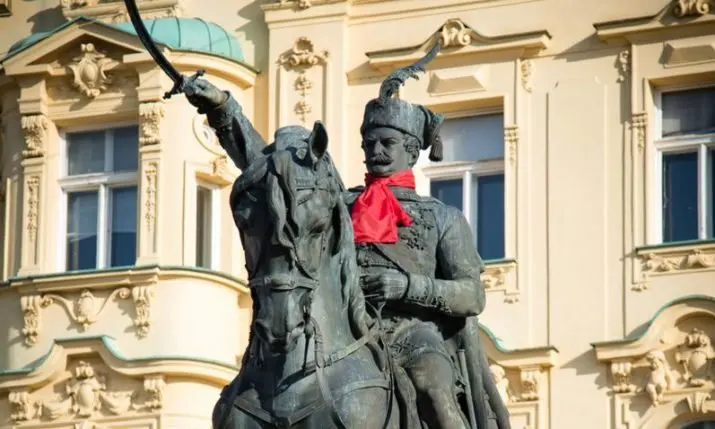
Every 18 October, Zagreb's main square fills with red scarves and marching uniforms for World Cravat Day — a celebration of the fact that the humble necktie is, essentially, a Croatian invention.
The story goes back to the 17th century, when Croatian soldiers serving abroad wore scarves knotted around their necks as part of their uniform. The look caught the eye of the French court, and the style spread from Paris across Europe. The word itself tells the tale: 'cravat' comes from the French cravate, a corruption of 'Croat'. Several languages still carry that Croatian origin in the name they use for a tie today.
One of the earliest visual records is a 1622 portrait of Ivan Gundulić, the poet born in Dubrovnik, painted wearing a scarf tied at his neck in unmistakable cravat style.
This year's celebrations in Zagreb were organised by Academia Cravatica, the group that founded World Cravat Day in 2008 — the same year Croatia's Parliament unanimously declared 18 October the national Cravat Day. On Ban Josip Jelačić Square, the Cravat Regiment staged a ceremonial parade and changing of the guard, plus a re-enactment of Croatian cavalrymen arriving at the court of King Louis XIV, the moment that supposedly kick-started France's love affair with the neckcloth. Monuments around the city centre, including the statue of Ban Jelačić and one of first president Franjo Tuđman, were symbolically dressed in giant cravats.
Why does this matter to a traveller? Because it's a genuinely fun slice of cultural history you can experience in person, and it's a good excuse to visit Zagreb in autumn. If your trip coincides with 18 October, the parade and the sight of monuments in oversized neckwear make for great photos and a bit of local colour most visitors miss. Even outside the festivities, the cravat is woven into Croatian identity — you'll find silk ties and cravat-themed souvenirs in Zagreb's shops, often made by local producers who treat the necktie as a national craft.
Pair the day with Croatia's other draws: Dubrovnik, Gundulić's birthplace, is a short flight away, and October is a pleasant, quieter month for the Dalmatian coast. It's also a handy conversation starter back home — few people know the tie on their suit traces its roots to Croatian soldiers and a French king's court.