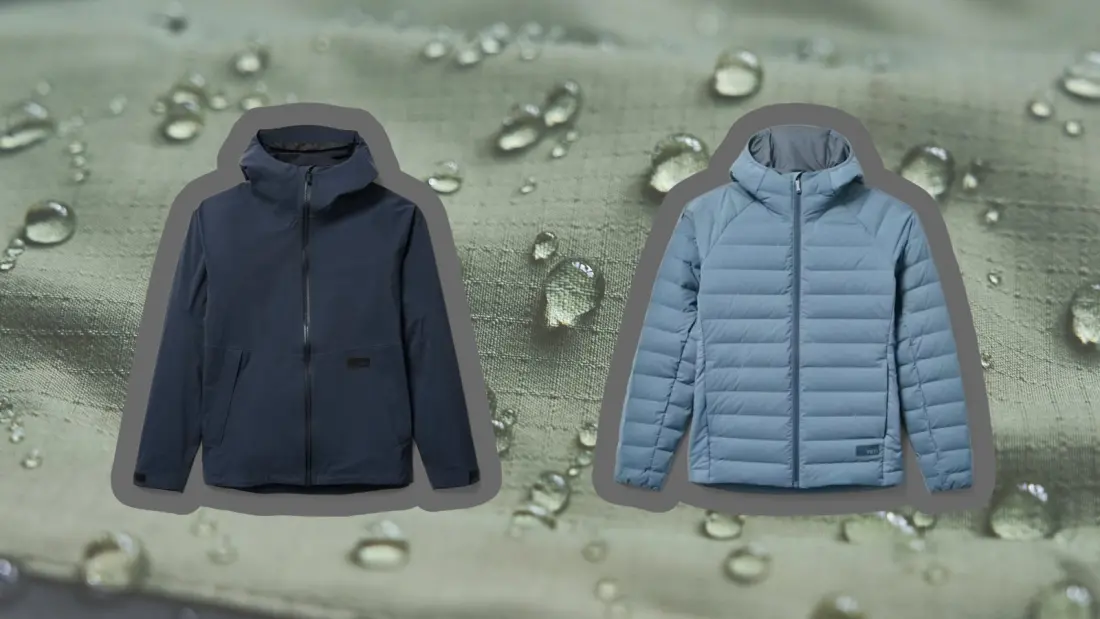
Yeti, the Texas company best known for beer-cooling hard coolers, has launched its first technical apparel line, and the spec sheet on the flagship piece is turning heads in the outdoor world.
The debut collection covers ten pieces in men's and women's fits: a hardshell rain jacket, a down hoodie, a PrimaLoft fleece, and a set of merino midlayers. The headline item is the Tilloo Hooded Rain Jacket at $350, built from a three-layer stretch nylon with fully taped seams and a waterproof YKK Aquaguard zipper. Yeti claims a waterproof/breathability rating of 40K/45K — figures that would top even Gore-Tex Pro, which typically tests around 28K/25K. For context, anything above 20K/20K is considered excellent for demanding, wet sports like skiing. That said, those numbers are almost certainly manufacturer-reported and unverified, and details serious buyers care about — fabric denier and total garment weight — are missing from the listings. Pit zips are absent too, though the brand argues the fabric's breathability makes them unnecessary.
The rest of the line follows a similar pattern of intriguing but incomplete information. The Tensleep Hooded Down Jacket mixes down insulation with wool fibres for moisture management and odour control, yet no fill-power or weight is published. The remaining layers — the Hueco and Caprock merino zips and the Sansaba fleece — use NuYarn merino and PrimaLoft materials that testers have rated highly in other brands' products, so expectations there are reasonably grounded.
Is $350 for a rain shell outrageous? Not by today's market. Independent testing outlets have clocked the average price of top-rated men's rain jackets at around $333, with premium options like the Helly Hansen Verglas Infinity Shell 2.0 at $370. Budget-conscious shoppers still have solid choices: the REI Co-op Rainier sells for about $100 and the Patagonia Torrentshell 3L for $189.
Worth noting is that this expansion comes without an acquisition. Yeti bought bag maker Mystery Ranch and cast-iron cookware brand Butter Pat Industries in 2024, but the apparel line appears to be an in-house effort. Given the company's track record of successfully moving beyond coolers into drinkware, bags, and even cookware, most observers lean towards this launch being a contender rather than a dud.
Who should care? Anyone kitting out for a hiking, ski, or rainy-climate trip this season. The specs look genuinely competitive on paper, but without field testing, seam durability, zipper performance, and real-world breathability remain open questions. If you need a proven shell right now, established tested options are the safer bet; if you're a Yeti loyalist or a spec-sheet nerd, the Tilloo is one to watch — proper lab and trail verdicts will follow once reviewers get samples in hand.