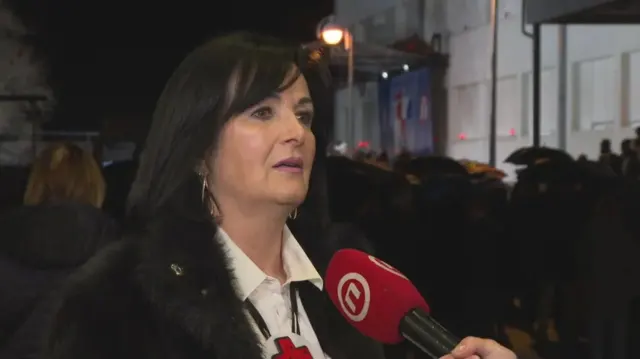
Zagreb has landed near the bottom of a new European air quality league table, scoring 19.1 points out of a possible 60 and finishing 38th among 40 cities. Only Bucharest and Athens did worse. The ranking comes from Clean Cities' 'Free to Breathe' study, which assessed cities on current pollution levels, compliance with upcoming EU limits, ten-year trends, and sustainable transport policies. The results were presented in Croatia by the Cyclists' Union.
The picture across Europe is sobering. Just three cities — Copenhagen, Stockholm and Helsinki — already meet the EU's new limit values for nitrogen dioxide and fine particulate matter, the two pollutants of most concern for health. That means 93% of the cities analysed fail the incoming standards, 37 of 40 exceed at least one limit, and 18 miss all four.
For Zagreb specifically, the detail behind the score is what stings. The city managed 13.6 out of 30 for current air quality and 4.5 out of 10 for its ten-year trend, but on transport policy it scored just one point out of ten. Against the stricter EU rules arriving in 2030, Zagreb earned zero. In other words, the problem isn't only the air itself — it's the near-absence of measures, like traffic reduction, better public transport and cycling infrastructure, that have worked elsewhere.
There are bright spots, and they're instructive. Copenhagen, London, Paris and Stuttgart have cut pollution significantly over the past decade through low- and zero-emission zones, electric buses, school streets and expanded cycle networks. Some cities have reduced nitrogen dioxide levels by more than a third, with a few approaching 50%. Athens, for contrast, recorded the worst NO₂ reading in the study at 37.6 micrograms per cubic metre. Other poor performers cluster in Southern, Central and Eastern Europe: Turin, the Milan area, Kraków, Wrocław, Warsaw, Rome, Prague and Budapest.
Why should travellers care? For most visitors a short stay in Zagreb won't pose serious health risks, but air quality is worth factoring in if you're sensitive to pollution, travelling with young children, or planning an extended stay. It's also a practical heads-up for trip planning: Zagreb remains a rewarding city break — cafes, museums, Upper Town strolls — but visitors with respiratory sensitivities might favour the warmer months when heating-related smog is less of an issue, or pair a city visit with time on the coast, where the air is a different story. For locals and regular visitors, the study suggests the city has a long way to go before 2030, and that cycling infrastructure and public transport improvements would benefit tourists and residents alike.
The EU's revised Ambient Air Quality Directive will force member states to meet tougher limits by 2030, bringing standards closer to World Health Organisation recommendations. Alongside the study, Clean Cities launched its Free to Breathe campaign urging faster action. Zagreb's zero score in the readiness category makes clear how much work lies ahead.