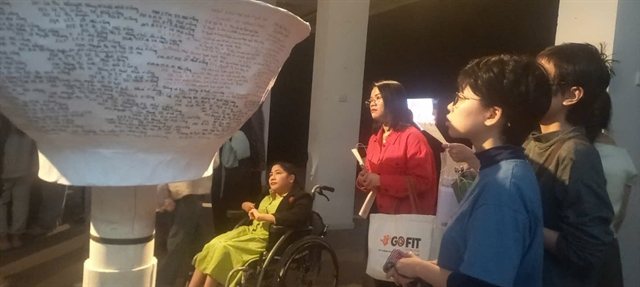
At the Vietnamese Women's Museum in Hanoi, a single enormous ceramic bowl carries the names and places of death of 346 women. They were killed or driven to suicide in gender-based violence, documented through press reports between 2018 and 2024. The installation, titled A Bowl of Love, runs from November 12 to 30 and is one of the more sobering things you can see in the Vietnamese capital this month.
The exhibition is the centrepiece of a wider project called Lost Souls, White Bowls, which pushes for better reporting on femicide — the intentional killing of women and girls for gender-related reasons, most often by their partners. It was co-produced by an unusual coalition: bereaved families, social scientists from the UK and Vietnam, activists, and artisans from Bát Tràng, the centuries-old pottery village outside Hanoi. Behind it stand organisations including the Institutes of Development Studies, the Centre for Health and Population Initiatives (CCIHP), Varan Vietnam, the museum itself and the GBVNet network.
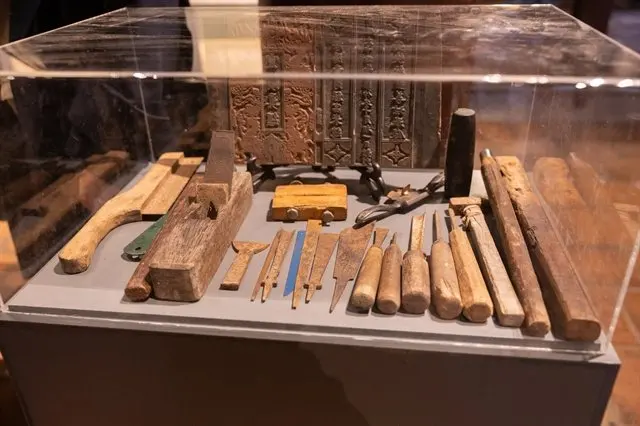
What makes the show distinctive is its restraint. There are no graphic reconstructions of violence. Instead, bowls — objects that in Vietnamese homes signal family meals and care, and in memorial rituals hold burning incense, their smoke linking the living and the dead — become vessels of remembrance. Bát Tràng clay was also used to cast imprints of women's backs, each carrying her story, alongside works in silk, metal, wood, bamboo frames and votive paper offerings.
Sixteen women helped create the exhibition — traders, lawyers, journalists, researchers, social workers and survivors of violence among them. They take turns presenting at the museum and appear in a short film by Nguyễn Ánh, speaking candidly about femicide. The project was led by Pauline Oosterhoff, a Dutch medical anthropologist and visual artist whose work bridges art and social science.
Visitors are not left as passive observers. You can search for names on the giant central bowl, and on leaving, write a wish for the victims on a card and hang it in the gallery. On November 30, when the exhibition closes, those cards will be burned in the big bowl at a pagoda, following the Vietnamese belief that smoke carries wishes to those who have gone.
For travellers, this is a different lens on Hanoi than street food and Old Quarter beer corners — a chance to engage with contemporary Vietnamese society, where domestic violence remains a real and often hidden issue. The museum itself, on Lý Thường Kiệt street, is a well-curated institution devoted to women's lives across Vietnamese history, including their roles in war and the market economy, and pairs naturally with a visit to the nearby Hanoi Citadel area.
Hoàng Tú Anh, director of CCIHP, is clear that the 346 cases are not official national statistics but real people — and she hopes every visitor leaves with something concrete they can do: listen when someone reaches out, speak up against control and violence, or help someone in danger reach support. That is a request worth carrying home from any trip.
Reported by Vietnam News Life.