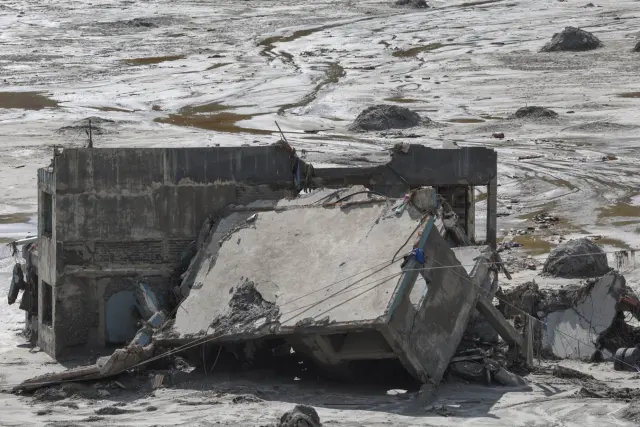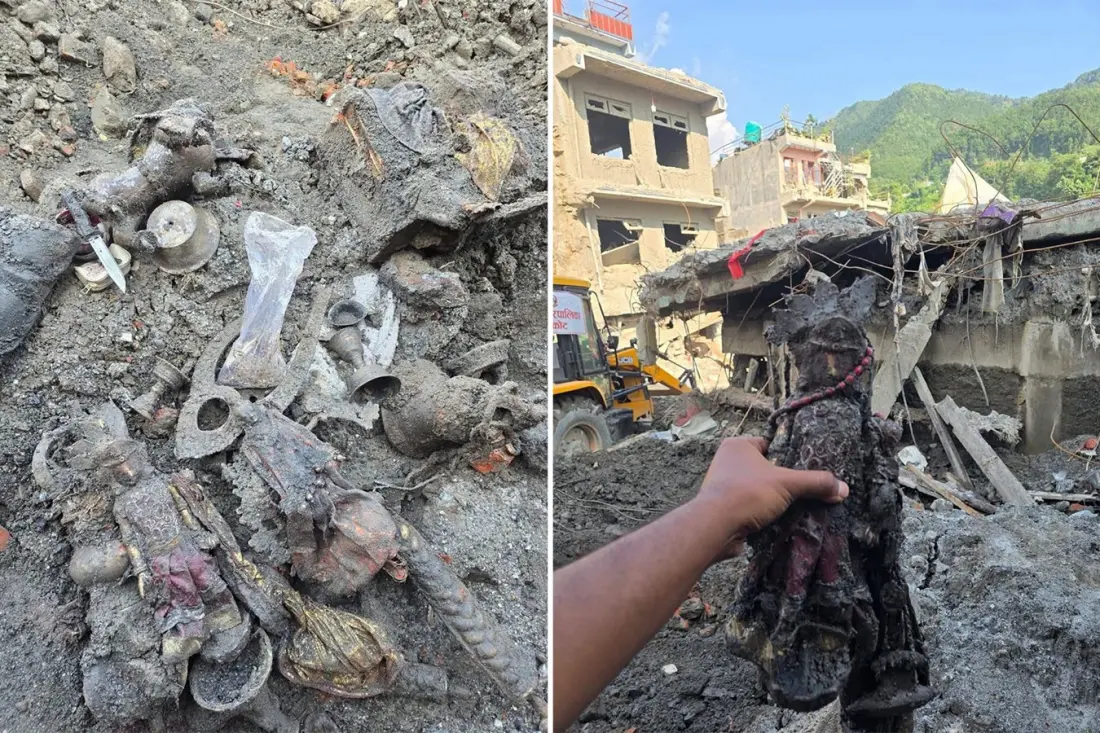
When floodwater tore through Nepal's Trisuli corridor in August, it took more than bridges and homes. Whole temple complexes were swept off their foundations — and with them went cremation sites, shrines, and the rituals tied to those places. Heritage expert Rajan Khatiwoda recounts families along the river asking whether a straw effigy could stand in for loved ones whose bodies were never recovered. That question, he argues, gets at what heritage loss really means: a rebuilt temple is possible, but the knowledge and meaning attached to it may not survive.
The Trisuli valley through Rasuwa and Nuwakot has long been a trade corridor linking Tibet and India via Kathmandu, and its religious sites reflect that layering — Hindu, Buddhist, shamanic and folk traditions all leave their mark. One striking example is the annual Bhairavi Jatra at Devighat, where a procession walks from Nuwakot to honour Jalapa Devi at the meeting of the Trisuli and Tadi rivers. The event's meaning lives in the route, the participants and the shared ritual, none of which a photograph can capture.
For eight years, Heidelberg University's Nepal Heritage Documentation Project (NHDP) documented monuments and living traditions across the country — around 2,000 sites in total, including more than 80 temples, shrines and cremation sites along the Trisuli. Twenty-one of those were destroyed by the August flood. Unlike the 2015 earthquake, which left damaged monuments standing on their original ground, the flood removed entire sites, displaced the communities that maintained them, and reshaped the riverbanks. Decisions about whether to rebuild in place, relocate, or leave things be are now contested within and between families, clans and ritual trusts (guthis).
NHDP has now wrapped up, and the worry is what happens next. Its records — photographs, drawings, maps, and details of religious practice and custodianship — are supposed to feed into the Department of Archaeology's national database, CHIMS, which would also help match recovered objects, like an idol of Karunamaya from the Machhindranath temple in Trisuli Bazar, to their original sites. But CHIMS is not functioning as intended. Technical and bureaucratic obstacles have stalled updates, and Khatiwoda argues the department needs to collaborate with outside specialists and communities rather than gatekeep the work alone.
For travellers, this matters more than it might first appear. The Nuwakot and Trisuli area sits on trekking and overland routes between Kathmandu and Langtang, and much of what makes a visit there rewarding is exactly the layered, living heritage now at risk. Documentation cannot decide who rebuilds or how rituals adapt — those are community choices — but good records let future visitors, researchers and locals alike understand what stood before, and what might stand again.