Come autumn 2027, you'll be able to fly nonstop from Montreal to Seville — but only outside the summer months. Air Canada has announced a winter-weight route to the Andalusian capital, a genuinely unusual move when almost every new transatlantic launch from North America leans on peak-summer demand.
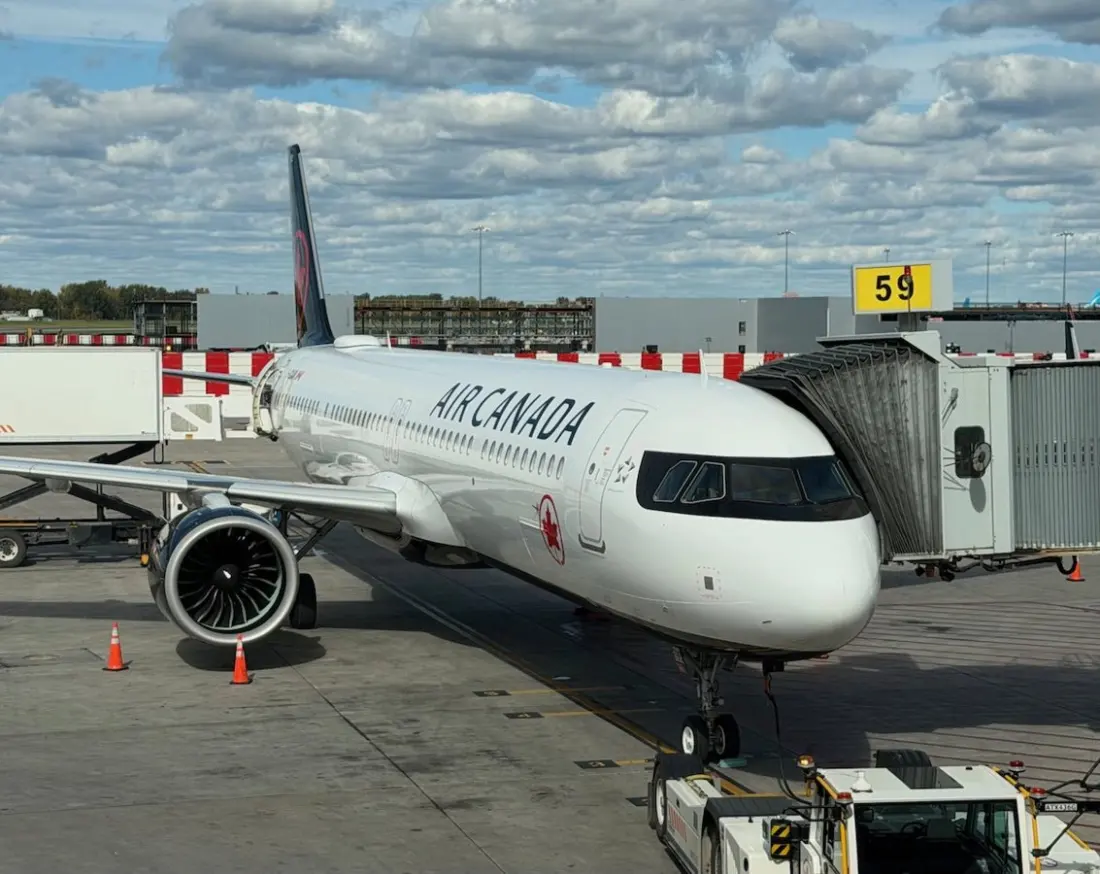
The service starts on September 8, 2027, running up to four times weekly on an Airbus A321XLR with 182 seats — 14 in business, 168 in economy. Eastbound flights leave Montreal at 8:30pm and land at 9:30am the next morning; the return departs Seville at 12:45pm. Block time is around seven to eight hours over 3,461 miles.
The schedule has a quirk worth noting. The route operates from September 8, 2027 to January 8, 2028, pauses for roughly six weeks, then resumes February 18 through June 3, 2028. So it skips both the height of the Andalusian summer and the quietest stretch of deep winter. That gap probably reflects a mix of low January demand and the fact that Seville, while mild by Canadian standards, is hardly at its best in midwinter.
The logic is sound. Seville routinely hits the mid-90s Fahrenheit in July and August — brutal sightseeing weather, and a common complaint among North American visitors who descend on Europe each summer. By flying shoulder seasons and winter instead, Air Canada matches its capacity to when the city is actually pleasant, while solving a real fleet puzzle: its growing A321XLR fleet is busy on summer seasonal routes to places like Palma de Mallorca and Tenerife, and needs somewhere to go in the off months. Seville fills that hole nicely.
For travellers, the headline fact is simple: this becomes the only nonstop link between Seville and North America. Until now, reaching Andalusia's capital meant connecting through Madrid or another hub. Air Canada says the route makes it the largest airline between Canada and Spain by seats, and it opens up the whole region — Granada, Córdoba, Cadiz and the white villages beyond — without a transfer.
It's also a template worth watching. Most legacy carriers treat winter as a problem for narrow-body long-haul aircraft; Air Canada's network team has instead found a city whose best months are exactly the ones other airlines avoid. If it works, expect more counter-seasonal European routes from North America in the years ahead. For anyone who's sweated through a July afternoon in southern Spain and wondered why nobody flies there in spring, this is your route.