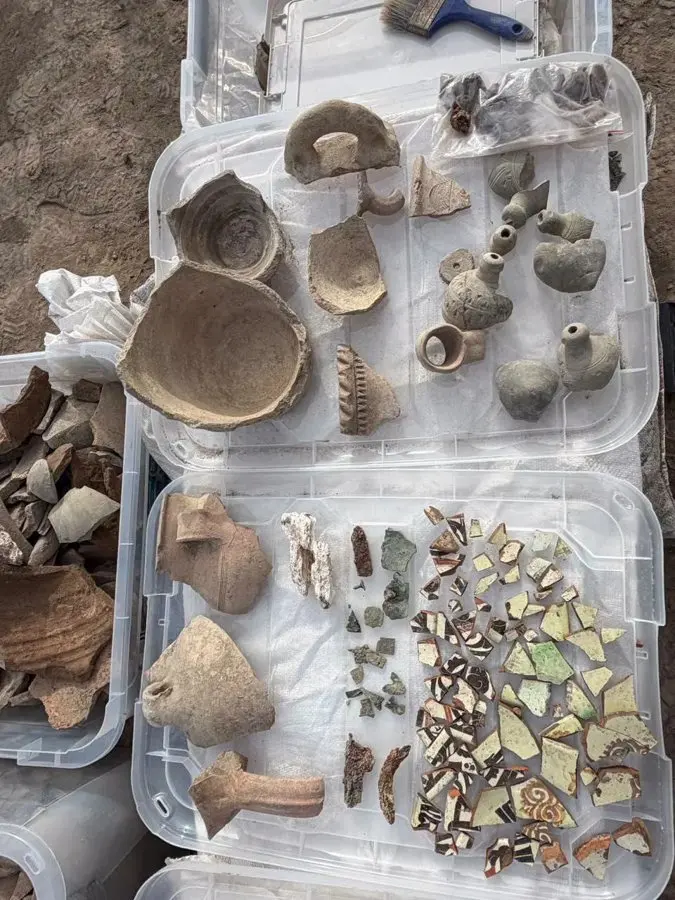
A craft workshop dating to the 11th–13th centuries has surfaced at the ancient settlement of Kochkor-Bashy, near the village of Kum-Dobo in the Kochkor district of Kyrgyzstan's Naryn region. The dig yielded ceramic and porcelain tableware alongside glass and metal objects — everyday items that, according to researchers, show craft production and urban culture were flourishing locally roughly a millennium ago.
For anyone who thinks of Naryn purely as a horse-trekking and lake country, this is a nudge to add archaeology to the itinerary. The workshop find offers a window into how ordinary residents of the ancient city lived, what their household items looked like, and how developed local craftsmanship had become.
The workshop isn't the only thing being excavated at Kochkor-Bashy. A same-era public bathhouse is also under study, and it's arguably the more intriguing structure. Earlier seasons revealed bathing rooms, water-heating areas and a heating system. In 2026, researchers reached the boiler room and worked out that the walls themselves were warmed by special channels through which heat circulated — a sophisticated setup more commonly associated with Roman and Ottoman baths than with medieval mountain Central Asia.
Excavations at the settlement are ongoing, which means the site's story is still being written. Finds like these support a growing case for Kyrgyzstan as more than a stop on the Silk Road highway: the country holds layered urban settlements that are only now being systematically explored, often with excavation seasons that welcome interest from visitors and researchers alike.
Why should a traveller care? First, Naryn region remains one of Kyrgyzstan's least-visited areas, so even popular highlights like Song-Kul lake feel uncrowded — and an active archaeological dig nearby adds a genuinely rare stop. Second, the timing is good: discoveries like this tend to drive investment in site access, signage and local guiding, and going now means seeing the story unfold rather than a finished museum display. Third, Kochkor village itself is already on the adventure map as a base for Song-Kul yurt-stay treks, so pairing a homestay and a day at the excavations with horse riding requires no detour.
If you're plotting a route, Naryn sits a long day's drive from Bishkek over dramatic mountain passes, and the Kochkor turnoff comes well before the regional capital. Combine the dig area with Song-Kul in summer, or push on to Naryn town and the Torugart pass if you have more time. Just check locally before visiting any active excavation — access depends on the season's work schedule, and a local guide in Kochkor can arrange permissions and context that make the stones far more readable.
Story via Kyrgyzstan: 24.kg