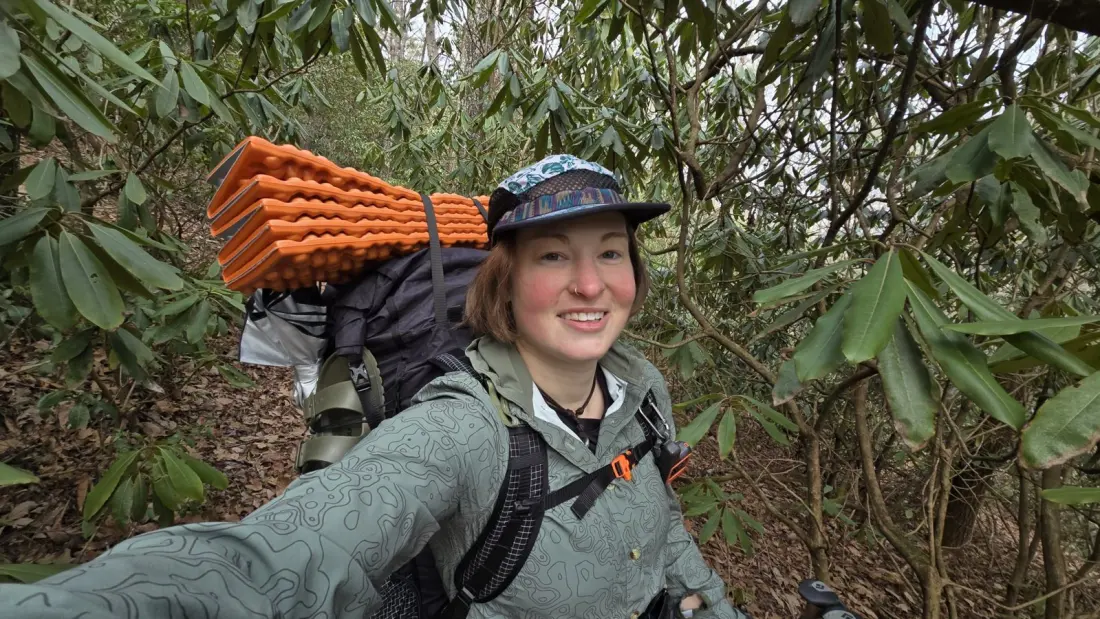
Six years after their first thru-hike, one backpacker returned to the southern Appalachian Trail in late February 2026 — and found a trail that felt noticeably emptier. Rolling into Stover Creek Shelter at 3pm on day one, they had the place to themselves; on the same date back in 2020, the shelter was already packed. The post-pandemic thru-hiking boom has cooled, and the difference is visible on the ground: fewer faces at shelters, and hikers passing only occasionally rather than constantly.
The timing was lucky. Just three days earlier, a severe cold snap had pushed temperatures below zero in north Georgia's mountains, leaving hikers who started on the 21st or 22nd with brutal war stories to trade. This pair started as things warmed up, though nights in the low 40s still meant puffy coats, booties and mittens worn inside the sleeping quilt — a good reminder that early-season starts on the AT are winter camping in all but name.
Weather also shaped the daily rhythm. With rain incoming, the plan shifted from tenting to racing other hikers to Gooch Mountain Shelter, where three walls and a roof beat a wet tent. They arrived by 2pm to claim a spot before a steady trickle of arrivals — including a few faces from the night before. In the early weeks, shelter spots fill fast whenever the forecast turns, so an early finish each day matters.
And then there are the people. Within 36 hours the trail had delivered its first round of eccentrics: a middle-aged man planning to hole up in the shelter for days with an overstuffed bear canister, walk eight miles to a Walmart and back rather than hitch a resupply ride — because he was, he said, training for Naked and Afraid auditions (and carrying two phones, one his girlfriend doesn't know about). A man in short-shorts marched off happily into cold rain at 5pm. A section hiker insisted he only drinks from "spring" sources, distrusting Appalachian streams — a standard most long-distance hikers would find hilariously strict. Then came a late arrival whose sleeping-pad inflation took an eternity, followed by snoring of such volume it earned him the private trail name "Snorlax."
Why does this matter for anyone eyeing the trail? Early starts in Georgia now mean more shelter space and less competition than in the crowded post-2020 years, though loud bunkmates remain an eternal risk — ear plugs are non-negotiable. The social side of a thru-hike still works the same way: bonds form slowly, through repeated crossings, until you're hiking around people, then with them.