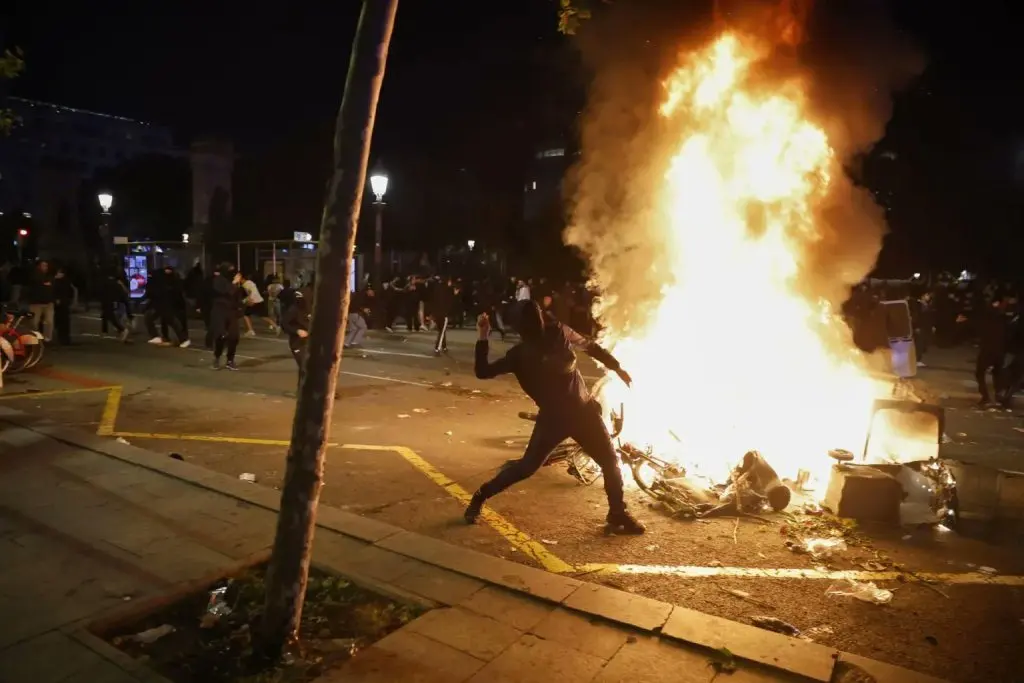
A social-media-called youth gathering in central Barcelona turned into one of the city's uglier evenings in recent memory on Saturday, with looting, burning bins and running clashes between police and crowds around Plaça de Catalunya. By Sunday, Catalan police had confirmed 128 arrests — and more than half of those detained, 72, were minors.
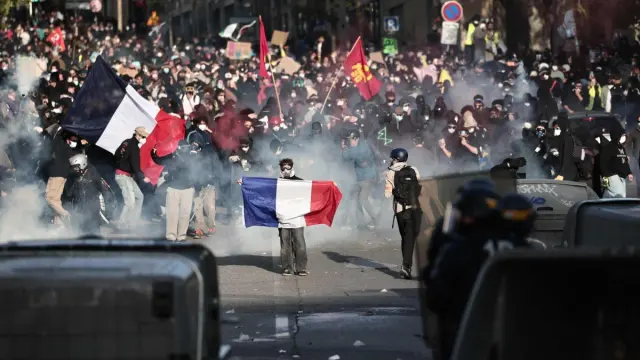
The trouble started around 6pm, when roughly 600 young people assembled at the square after a call circulated online under the name Institut Indignats, apparently echoing France's Lycéens Indignés student movement. The gathering was never formally notified to authorities. Some participants, many in black hoods, began wrecking street furniture before scattering into nearby streets. Groups threw stones at officers, built barricades, torched rubbish bins and smashed shop windows, with looting reported at multiple businesses. Police ultimately counted 23 vandalised premises, 33 firefighter callouts and 15 injured officers — 14 of them Mossos d'Esquadra, four seriously.
For anyone in the city that evening, the disruption was immediate. The trouble unfolded amid weekend shopping crowds of residents and tourists; businesses dropped their shutters, the Guàrdia Urbana sealed off streets between Urquinaona and Universitat, and the RENFE and FGC stations at Plaça de Catalunya closed temporarily, with trains skipping the stop.
City hall is promising consequences. Mayor Jaume Collboni said the council will join legal proceedings and pursue financial compensation from those responsible, including the parents of minors. Catalan president Salvador Illa backed the police response while insisting the violence was separate from legitimate protest, and interior minister Núria Parlon and Mossos chief Sílvia Catà both described the events as 'gratuitous violence' by a disorganised crowd — police noted only two detainees had prior public disorder records.
One important nuance for visitors: the rioting happened just metres from a long-running but peaceful housing rights encampment in Plaça de Catalunya, part of a broader housing protest movement in Spain. Officials were careful to distinguish the two, and the encampment itself has not been the source of trouble.
If you're travelling to Barcelona, there's no indication of an ongoing risk — this was a single evening of disorder. Still, it's a reminder to keep an eye on local news and official channels (the Mossos post safety warnings on X) when large gatherings are announced, especially in the Plaça de Catalunya area, which is the city's busiest junction and a hub for metro and regional trains. If a square suddenly empties or shutters start coming down, move away calmly and give police cordons a wide berth. Most central attractions, restaurants and hotels operate normally, and Barcelona remains well-policed and safe for the vast majority of visitors — but knowing which stations serve your hotel means a temporary closure is an inconvenience rather than a crisis.