Ever heard of Curia? Most people haven't — which is exactly its appeal. This small village in central Portugal, between Coimbra and Aveiro, was once the playground of the Portuguese elite, and the bones of that golden era are still very much on show.
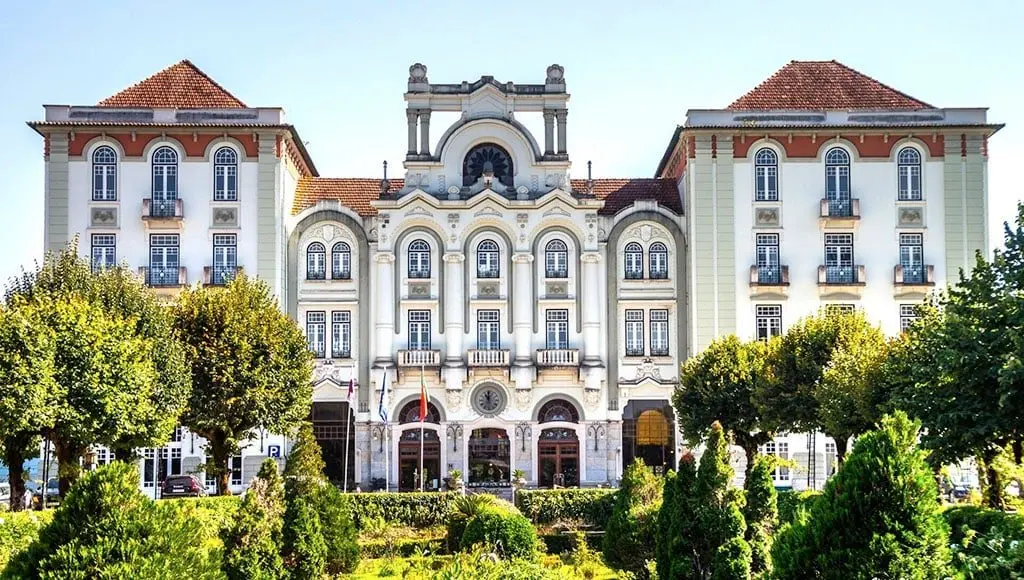
The centrepiece is the Curia Palace Hotel, opened in 1926 and designed by architect Norte Júnior in a Belle Époque style with Art Nouveau and Art Deco flourishes. Built by hospitality pioneer Alexandre de Almeida, it once boasted a barber, manicurist, chapel, a ballroom seating 600 and a grand pool opened in 1934, all wrapped in a 12-hectare park. It's a little tired these days, but you can still ride the original German-made lift — apparently shipped to Korea by mistake en route — and admire the old switchboard in the lobby. It even made the 147-strong shortlist for the New 7 Wonders of Portugal.
Across the village sits the Hotel das Termas inside the 14-hectare Parque da Curia. Spa tourism here dates back to a Frenchman who supposedly cured himself in the local waters in 1863; King D. Carlos granted a royal charter for the springs in 1902, and by the 1920s high society was arriving by train to take the waters. There was a casino with concert halls and gaming rooms — gambling was technically banned, but a 1927 decree made Curia a temporary gambling zone, a status that lasted until 1958 legislation shut it down. The park's big artificial lake, once among the largest of its kind in Iberia, now belongs to ducks, fat fish and the occasional pedalo.
Curia's liveliest spot today is the wine shop in the old railway station waiting room, a stop on the Rota da Bairrada. Portugal's fast Alfa Pendular train will halt there if enough passengers want to hop off for a tasting, and maverick producer Luís Pato pours nearby.
The writer behind this piece moved his young family into a long-closed guesthouse in the village, and his verdict is affectionate: Curia's quiet streets, flat walking, cafés, delis and grand old hotels make it an almost perfect off-the-beaten-track base — he reckons it would make a superb retirement or slow-travel spot, with Coimbra and Aveiro a short train ride away. Faded glamour, yes, but the stage is still set.