Day 16 of a Camino de Santiago walk sounds idyllic until you factor in 40-degree rain, a 550-foot climb and a chest infection slowly making itself at home. That was the reality for one trekker heading from Castrojeriz to Frómista, a 15.5-mile stretch through the heart of the Spanish Meseta.
The day started with a split: his hiking partner, Knockerz, bailed onto transport to Frómista to escape the wet cold, wisely nursing her own lung infection. He pushed on alone, layering up in what he calls a "rainbow" of gear — thrifted silk base layer, Merino sweater, quick-dry pants and a tie-dyed buff — which made him easy to spot among a sea of muted rain jackets.
The route out of Castrojeriz crosses a swamp on a 2,200-year-old Roman viaduct, built to haul gold from nearby mountains into town. Then comes the climb: half a mile of steep track onto a vast, flat mesa of farm fields. The reward came when the sun cracked through — a rainbow over a distant village, wildflower fields rolling in the wind, and snow-capped peaks on the horizon that turned out to be the Picos de Europa, not clouds after all.
Highlights along the way: the 13th-century San Nicolás chapel albergue, lit only by candlelight and no electricity; storks with six-foot wingspans circling on thermals; a ham sandwich and banana bread in the hamlet of Itero de la Vega; and a stunningly plain-looking church in Boadilla del Camino hiding a beautiful interior (with stork nests crowning the belltower). The final 3.5 miles follow the Canal de Castilla, a waterway started in 1750 that took nearly a century to finish — a lazy stretch of reeds, frogs and monarch butterflies on the towpath.
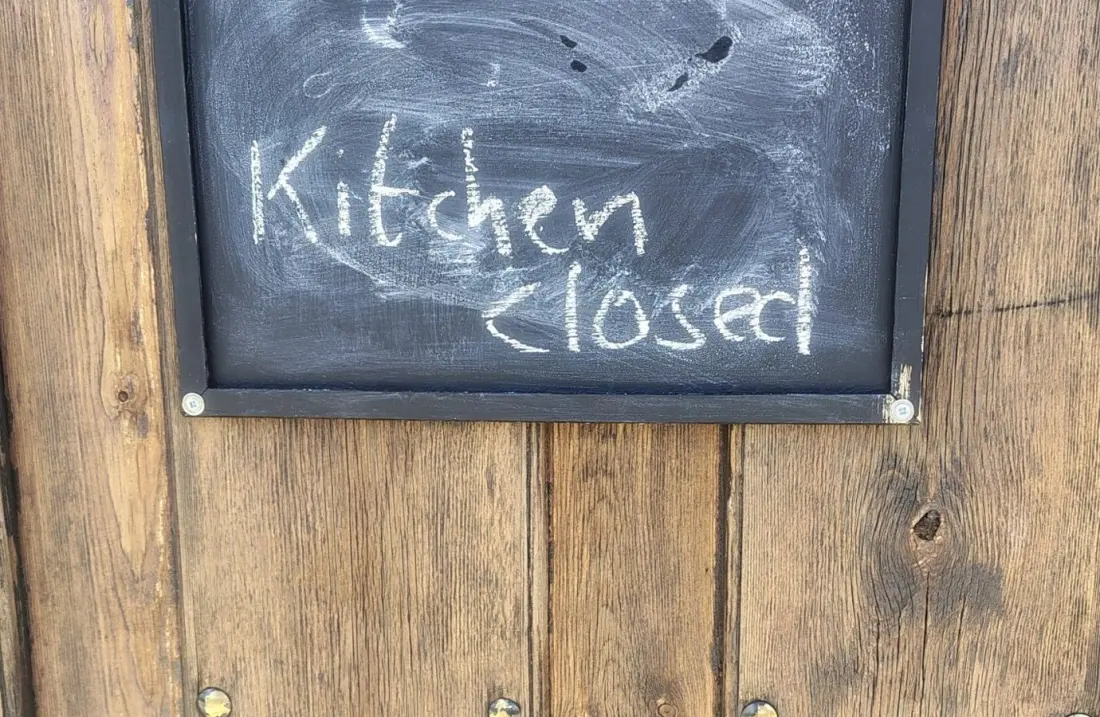
There are two practical lessons buried in the story. First, the Camino's cafes keep Spanish hours: arriving in Boadilla after 2 p.m. meant "kitchen closed" and a mediocre bar dinner rescued only by cheap wine. Time your lunches before the siesta or pack snacks. Second, illness on a long hike doesn't care about your itinerary — ignoring a chest infection to rack up miles is a gamble that usually ends badly. The writer conceded by evening that the "unwanted guest" had officially joined the tramily.
For anyone considering this stage, it's a good sample of the Meseta: lonely, exposed, and weather-dependent, but with Roman engineering, medieval villages and big-sky views that hit harder than any cathedral. Pack layers, start early, and don't argue with your lungs.